
China's Liaoning Is Testing the First Island Chain Again
 Marcus Chen
China's Liaoning Is Testing the First Island Chain Again
The Chinese aircraft carrier Liaoning crossed the Luzon Strait and entered the South China Sea just as the United States and Japan were preparing to begin Keen Sword 27. That timing matters more than the routine-training label attached to the deployment. Beijing is not demonstrating that one carrier can defeat a U.S.-Japan force. It is demonstrating that the carrier can move through the seams of the first island chain, generate a limited number of sorties, and force the opposing alliance to spend attention and sensors tracking it.
The Movement Is Operationally Useful
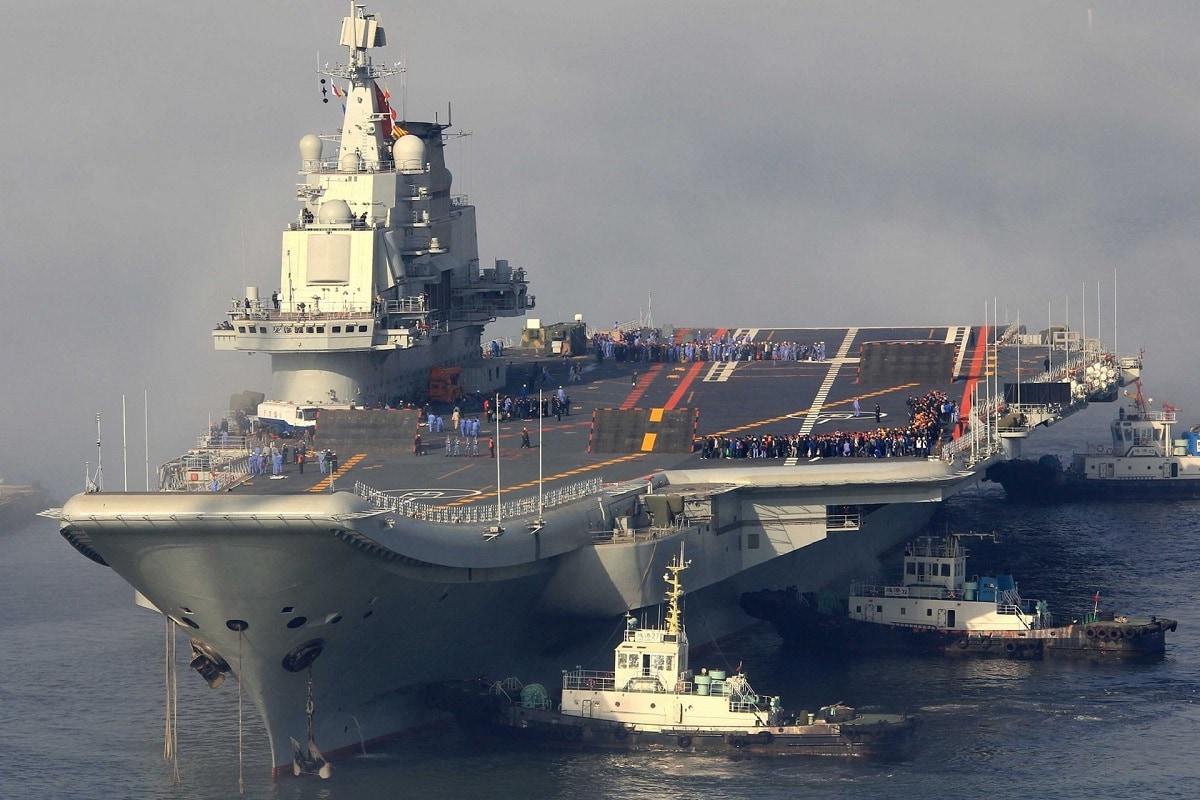
According to the U.S. Naval Institute's Western Pacific Pulse published October 16, the Liaoning carrier strike group sailed through the Luzon Strait after operating in the East China Sea. Japan tracked the group, and the carrier conducted 10 take-offs and landings while approximately 155 miles south of Ishigaki Island. The group included the carrier, cruisers Anshan and Wuxi, and destroyer Huainan; the Japanese destroyer Yugiri shadowed it.
Ten launch-and-recovery cycles are not a wartime surge. They are a signal of presence and a rehearsal of the mechanics that make presence credible. A carrier that cannot safely navigate, communicate, screen itself, and operate aircraft outside home waters is a prestige object. A carrier that can repeat those actions near Japan, while U.S. and Japanese forces are assembling for a major bilateral exercise, becomes a problem that must be incorporated into the operational picture.
What the Liaoning Can Actually Deliver
The Liaoning is a roughly 60,000-ton ski-jump carrier. Its short takeoff but arrested recovery design allows it to operate J-15 fighter aircraft and helicopters, but the ski jump limits launch weight compared with a catapult carrier. That affects fuel, weapons, and therefore time on station. The ship can put aircraft into the air, but it cannot produce the sustained, heavily armed sortie rate associated with a U.S. Nimitz- or Ford-class carrier.
That limitation is not a reason to dismiss the deployment. In the first island chain, China does not need the Liaoning to act alone. Land-based aircraft, long-range missiles, surveillance satellites, and shore-based command networks can provide much of the striking power. The carrier's job is to complicate the geometry: add aircraft from an unexpected axis, extend the sensor picture, protect the surface group, and make Japanese and U.S. planners allocate submarines, aircraft, and surface ships to maintain contact.
The escort composition matters as well. A carrier accompanied by modern large surface combatants is practicing more than navigation. It is exercising air defense, anti-submarine coordination, communications, and the command relationships required to keep a formation alive under surveillance. The Liaoning is an older training platform by Chinese standards, but a training platform that repeatedly enters the Western Pacific still generates operational learning.
Keen Sword Turns the Deployment Into a Test
USNI News reported that the U.S. carrier strike group led by USS Theodore Roosevelt arrived at Yokosuka on October 16, the first visit by a non-forward-deployed U.S. carrier there in four years. The group includes cruiser USS Chosin, destroyer USS Decatur, and the medium unmanned surface vessel Seahawk. Keen Sword 27 begins October 19.
This creates a useful comparison, although not a clean carrier duel. The U.S. group has greater aviation capacity, a mature logistics system, and decades of experience integrating with Japan. The Chinese group has the geographic advantage of operating closer to mainland support and inside a surveillance environment China has spent years building. Neither side needs to fire a shot for the deployment to produce data. The important questions are who detects whom first, how quickly contacts are classified, whether the groups can maintain communications under pressure, and how much of the U.S.-Japan exercise must be adjusted to account for the Chinese formation.
Japan's decision to shadow the group is therefore not a theatrical response. It is the basic work of sea control and sea denial. A ship that is being tracked is less free to choose its route and less likely to surprise an opponent, but the tracker is also consuming fuel, watchstanders, aircraft sorties, and command attention. That is the exchange Beijing wants to study.
The Next Step Is Persistence
One transit does not prove that China has solved the carrier problem. The hard part is persistence: replenishment at sea, maintenance, pilot training, sortie generation after several days of operations, and coordination with land-based forces while the group is being watched. The Liaoning's 10 reported take-offs and landings offer a snapshot, not a full readiness assessment.
But dismissing every deployment as routine training misses the cumulative effect. Each voyage through the Luzon Strait gives Chinese crews another chance to refine procedures and gives Japanese and U.S. forces another contact to track. The value is not measured only in aircraft launched. It is measured in how much of the opposing force's plan must be spent observing one Chinese carrier group.
The judgment is straightforward: the Liaoning is not yet a substitute for a U.S. supercarrier, but it is becoming a reliable instrument for operational pressure. China is learning to use the first island chain as a contested operating space rather than a barrier. If the U.S.-Japan alliance treats these movements as background noise, it will eventually discover that the routine patrol was the rehearsal.
Sources
- U.S. Naval Institute News, Western Pacific Pulse, October 16, 2026: carrier movements, Liaoning deployment, and Keen Sword 27.
- Japan Times, October 18, 2026, Joint Japan-U.S. military drill set to break new ground.
- Taiwan News, October 18, 2026, reporting on Taiwan's tracking of Chinese military activity around the island.
The Chinese aircraft carrier Liaoning crossed the Luzon Strait into the South China Sea on October 16, 2026, conducting 10 take-offs and landings while being tracked by Japanese forces. This deployment coincided with the U.S.-Japan Keen Sword 27 military exercise, highlighting China's intent to exert operational pressure in the region. The Liaoning's movements are part of a broader strategy to complicate the operational environment for opposing forces.
- The Liaoning carrier crossed the Luzon Strait into the South China Sea.
- The carrier conducted 10 take-offs and landings approximately 155 miles south of Ishigaki Island.
- The Liaoning was tracked by Japanese forces during its operations.
- The deployment coincided with the U.S.-Japan Keen Sword 27 exercise.
- The Liaoning's operations are intended to complicate the operational picture for U.S. and Japanese forces.