
China's Military Industrial Supply Chain Security Self-Inspection Starts in October, PLA Aims to Address Shortcomings in Chips and Industrial Software First
 Li Minghui
China's Military-Industrial Supply Chain Security Self-Inspection Starts in October, PLA Focuses on Chips and Industrial Software to Address Shortcomings
A piece of news disclosed on August 31 could easily be regarded as a routine policy update, but in my view, it is more worthy of attention than a new aircraft's maiden flight. China will initiate a security inspection of the supply chain for military hardware, materials, and specialized production equipment based on the newly revised National Defense Mobilization Law, officially implemented from October 1. On the surface, this appears to be a systematization effort; however, at a deeper level, it is actually aimed at addressing the most inconspicuous and challenging shortcomings in the modernization of the PLA.
Why This Is Not an Ordinary Inspection
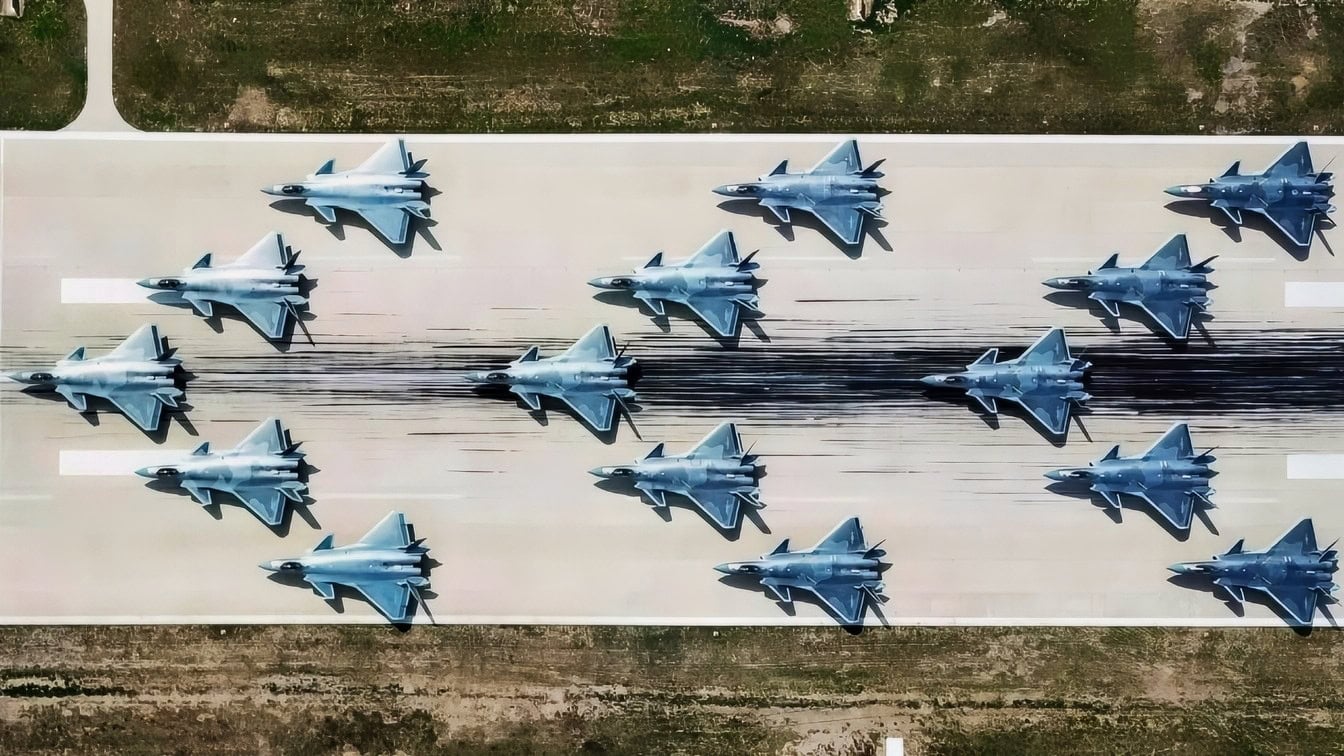
In recent years, the outside world has been more focused on what new platforms the PLA has introduced, such as the J-20, the Type 076 amphibious assault ship, various drones, and hypersonic weapons. However, the more advanced the platforms, the more fragile the supply chain behind them becomes. According to a report by Bloomberg cited by the Business Times, this inspection is being driven by the Central Military Commission and relevant departments of the State Council, focusing not just on whether there is enough inventory, but also on whether there are any breakpoints in the supply chain, whether substitute parts can be provided, and whether key processes are under domestic control.
In simple terms, what the PLA fears most now is not that a single piece of equipment lacks impressive parameters, but rather that in a wartime or high-pressure sanctions environment, a certain segment of materials, chips, industrial software, or precision equipment suddenly gets stuck, leading to a slowdown in the entire production line. The modern military-industrial system is not about how fast a single aircraft can fly, but about whether a hundred aircraft can be continuously produced, upgraded, and maintained.
The Real Shortcoming Is Not at the Assembly Plant, But in the Upstream Links
Public information shows that China has made rapid progress in special alloys, hypersonics, and other areas in recent years, but there are still external dependencies on high-end chips, EDA design software, certain high-end sensors, and highly reliable manufacturing equipment. This is also why the new law not only requires an assessment but also emphasizes enhancing the resilience of the supply chain. I believe this statement is crucial; it means that the goal is not just a one-time clearance of mines, but to make "replaceable, convertible, and sustainable" a requirement of the system.
- The first layer is raw materials and key components, especially high-performance chips, special electronic components, and precision bearings, which may seem inconspicuous but are actually the most likely bottlenecks.
- The second layer is industrial software and design systems, including the design, simulation, and testing tools essential for military research and manufacturing.
- The third layer is maintenance and reproduction capabilities, meaning that after equipment is deployed to the troops, the ability to replenish combat losses and continuously upgrade must keep pace.
What This Means for PLA Modernization
The signal released by this self-inspection is not that the PLA's growth rate will slow down, but that modernization efforts will further shift from "platform breakthroughs" to "system chain supplementation." In the previous phase, the task of China's military industry was to produce advanced equipment; in the next phase, the more challenging task is to strengthen the production capacity, support, and maintenance chain. Without this step, any seemingly dazzling new equipment may remain at the demonstration level.
Another easily overlooked background is that major military powers around the world have been re-evaluating national defense supply chain security in the past two years. The United States is investigating the sources of defense contractors from adversary countries, and India is also emphasizing military localization. At this time, China is incorporating military supply chain inspections into its legal framework, essentially acknowledging a reality: future arms competition will not only be about technological peaks but also about the recovery speed after being impacted.
What to Watch Next Is Not the Slogans
Compared to the phrase "self-controllable," what is truly worth observing are three things: first, whether there will be a clearer domestic substitution list in the military electronics and industrial software fields; second, whether dual-use suppliers will be reclassified to form a stronger security review mechanism; and third, whether the delivery rhythm of key models will experience short-term adjustments as a result. If we can see these changes in the future, it would indicate that this round of inspections is not just a publicity move, but is laying the foundation for the PLA's high-intensity production capacity over the next five to ten years. The real question is, how much cost is the Chinese military-industrial sector prepared to bear to tackle the toughest challenges of chips and software?
China is initiating a self-inspection of its military supply chain starting October 1, 2023, focusing on hardware, materials, and production equipment. The People's Liberation Army aims to address vulnerabilities in high-performance chips and industrial software to enhance supply chain resilience. This initiative reflects a global trend among military powers to reassess defense supply chain security.
- China is launching a military supply chain self-inspection starting October 1, 2023.
- The inspection focuses on hardware, materials, and production equipment.
- The People's Liberation Army aims to address vulnerabilities in high-performance chips and industrial software.
- The initiative is part of a broader effort to enhance supply chain resilience and self-sufficiency.
- This move reflects a global trend among military powers to reassess defense supply chain security.