
China's YY-20 Tanker Patrol Shows Taiwan's Air Defense Clock Is Shrinking
 Marcus Chen
China's YY-20 Tanker Patrol Shows Taiwan's Air Defense Clock Is Shrinking
Twenty-nine PLA aircraft in one day is not the important number. The important number is one tanker.
Taiwan's Ministry of National Defense reported that from 6 a.m. May 25 to 6 a.m. May 26, 2026, it detected 29 People's Liberation Army aircraft, seven PLAN ships, and one official ship operating around Taiwan. Twenty-four of those aircraft crossed the Taiwan Strait median line and entered Taiwan's northern, central, southwestern, and eastern air defense identification zones. A separate MND press release on May 25 released the more useful detail: a Taiwan F-16 photographed a Chinese YY-20 tanker supporting fighters near the island, while the frigate Kun Ming monitored the Type 052D destroyer Yinchuan, hull number 175.
That is not just another ADIZ count. It is a rehearsal of endurance.
The Tanker Changes The Sortie Math
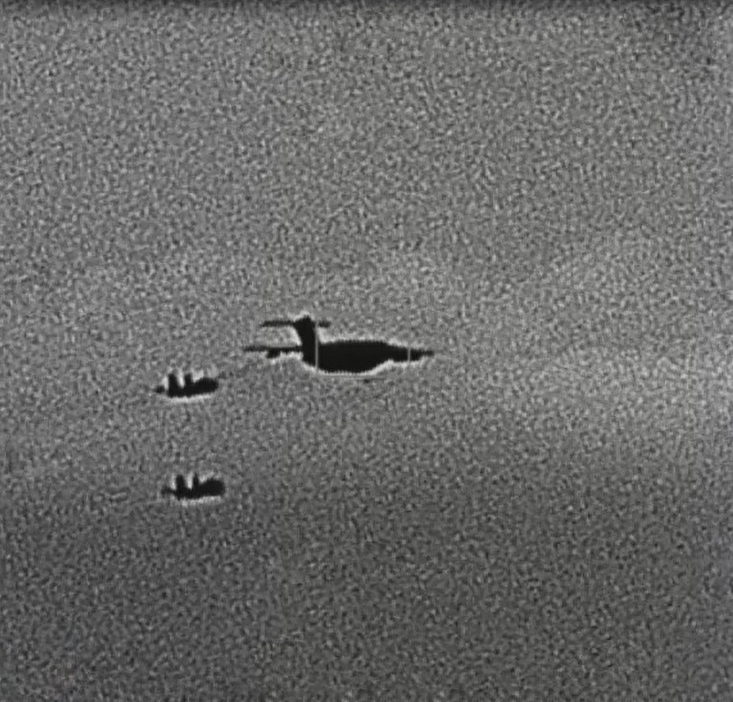
The YY-20, also referred to as the Y-20U, is China's large tanker variant of the Y-20 transport. Open-source estimates generally put its transferable fuel load far above the older H-6U tanker and in the range needed to support J-10, J-16, and J-20 operations beyond the comfortable radius of coastal bases. GlobalSecurity cites a Chinese Air Force figure of roughly 75 tons of fuel delivery capacity for the Y-20 tanker. Janes has reported that the type entered service with the PLAAF and has trained with J-16 and J-20 aircraft. The precise number matters less than the category shift: this is a heavy tanker, not a token range extender.
For Taiwan, a tanker in the package means the PLA is practicing how to keep pressure on multiple axes without cycling aircraft back to bases after a single pass. A J-16 flying from eastern China already has enough range to reach the island's approaches. With aerial refueling, the question becomes how long it can loiter, how many times it can re-attack, and whether it can stay on station long enough to complicate Taiwan's fighter recovery cycle.
Anyone who has stood watch on a destroyer knows the difference between a contact that is passing through and a contact that can wait you out. Tanking turns a pressure sortie into a timing problem for the defender.
The Package Was Air And Sea Together
The MND's May 26 daily report said 24 of 29 aircraft crossed the median line or its extension. That is an unusually high crossing ratio: about 83 percent. On the previous evening, the ministry described 21 aircraft, including J-10, J-16, KJ-500 airborne early warning aircraft, drones, and the YY-20-supported fighters, operating with PLAN vessels under the label of a joint combat readiness patrol.
The Type 052D destroyer Yinchuan is the other part of the picture. The Luyang III class is normally credited with 64 vertical launch system cells, a Type 346-series phased-array radar, area air-defense weapons, anti-ship missiles, and anti-submarine weapons. One destroyer does not create a blockade by itself. But a 052D sitting in the patrol geometry gives the PLA a surface radar, missile magazine, command node, and political signal in the same hull.
That matters because China's pressure campaign around Taiwan is no longer just about counting aircraft. It is about linking aircraft, ships, airborne early warning, drones, coast guard hulls, and public imagery into a routine pattern. The more routine the pattern becomes, the harder it is for Taiwan or the United States to distinguish harassment from the early phase of a coercive operation.
Taiwan's Response Is Expensive
The MND said Taiwan responded with combat air patrol aircraft, naval ships, and coastal missile systems. That is the right response. It is also exactly the cost-imposition problem Beijing wants to create.
A fighter sent up to identify and monitor a YY-20-supported package burns airframe hours. A frigate shadowing a 052D burns crew endurance and maintenance margin. Coastal missile units can be alerted repeatedly, but each alert cycle trains people and equipment to live at higher stress. None of that is catastrophic on one day. It becomes a readiness tax when repeated twice a week, then three times, then whenever Beijing wants the island's defense staff to lose sleep.
The tactical question is not whether Taiwan can respond to 29 aircraft and seven ships. It can. The question is whether Taiwan can respond at that tempo while preserving enough ready fighters, missile batteries, trained maintainers, and decision bandwidth for the day the pattern changes.
That is why the tanker photograph matters. Aerial refueling lets the attacker choose time more flexibly. It lets a patrol linger while Taiwan's pilots, controllers, and ship crews are forced to make conservative decisions. If the PLA can hold aircraft east or southeast of Taiwan longer, it can stretch the island's radar picture and force defenders to cover more airspace with the same number of aircraft.
The Median Line Is Now A Fuel Planning Line
For decades, the median line had political value even when it had no treaty status. Its erosion is now old news. The newer development is that the PLA is treating the airspace beyond it as a training range for sustained joint operations.
With a YY-20 in the formation, China is not merely saying it can cross the line. It is showing that its aircraft can cross, remain useful, coordinate with surface combatants, and leave on Beijing's schedule. That changes the defender's clock. Taiwan's fighters are not only racing to intercept; they are racing against the endurance of the other side's support architecture.
Washington should read the event in the same way. U.S. planning for Taiwan often emphasizes long-range fires, distributed bases, and allied access. Those are necessary. But if Chinese tankers can support fighter packages around Taiwan while PLAN destroyers build an outer screen, U.S. and allied forces must also plan to hold the tanker and command-and-control network at risk. Shooting down the spear is not enough if the shaft keeps feeding new spears into the fight.
The Operational Lesson
The PLA did not need 100 aircraft to send the message. It needed enough aircraft to make Taiwan launch, enough ships to make the patrol joint, and one tanker to show that the clock belongs to Beijing unless Taiwan can disrupt the support system.
This is the uncomfortable part of the math. Taiwan's air defense problem is not just inventory. It is tempo. Every YY-20 patrol near the island teaches the PLA how long it can keep pressure on the board and teaches Taiwan how expensive it is to answer. If Taipei and Washington treat the tanker as background equipment, they will miss the point. In a Taiwan fight, fuel is not logistics after the battle starts. Fuel is the battle's schedule.
The People's Liberation Army (PLA) conducted a significant operation involving 29 aircraft and 7 ships around Taiwan from May 25 to May 26, 2026. A YY-20 tanker was observed supporting PLA fighters, indicating a shift in operational capabilities. This operation included a high crossing ratio of aircraft over the Taiwan Strait median line, complicating Taiwan's air defense response. Taiwan's Ministry of National Defense reported its response with combat air patrols and naval assets to monitor the situation.
- Taiwan detected 29 PLA aircraft and 7 PLAN ships operating around Taiwan.
- A YY-20 tanker was photographed supporting PLA fighters near Taiwan.
- 24 of the 29 aircraft crossed the Taiwan Strait median line.
- The YY-20 tanker allows for extended operations of PLA aircraft.
- Taiwan's response involved combat air patrols and naval ships.