
CX2 turns FPV drones into hunters of enemy drone pilots
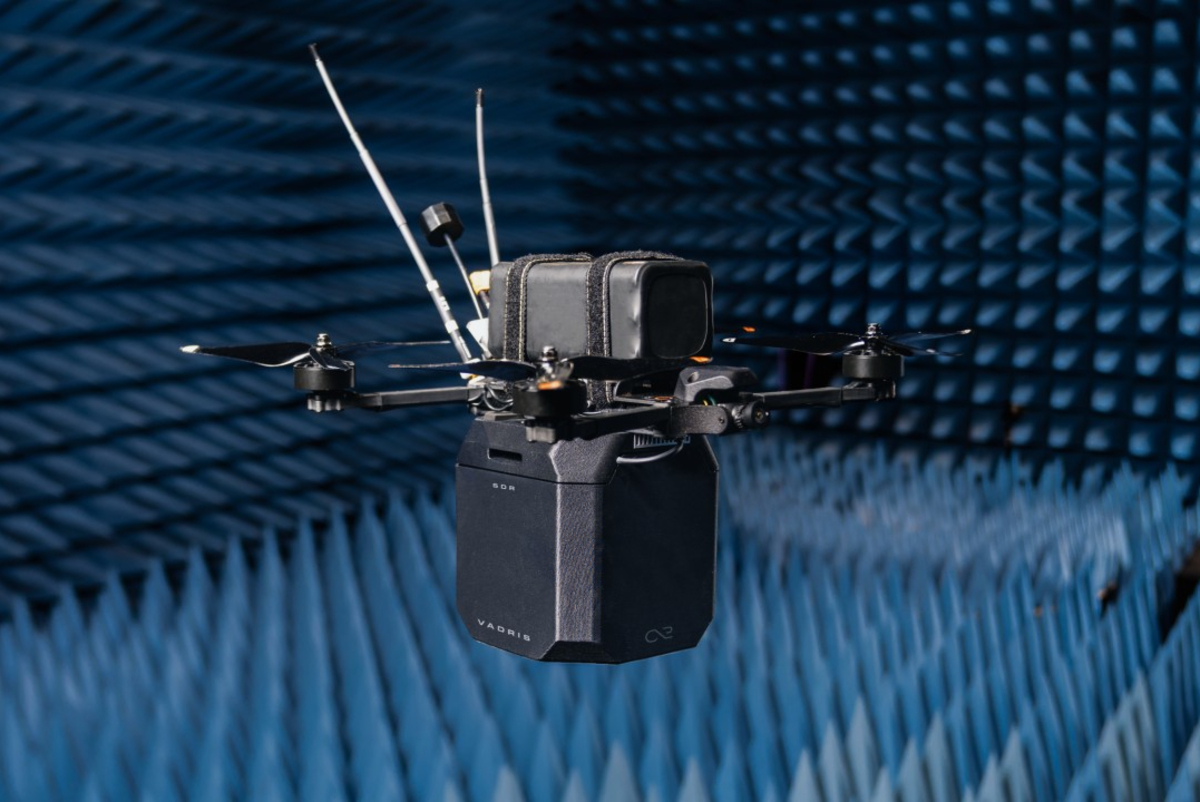
U.S.-based defense technology firm CX2 has released a new version of Vadris, a small radio sensor that rides on an FPV drone and steers it toward the source of an enemy drone’s control signal, now able to pick up several of the most common drone control systems instead of just one.
CX2 announced Vadris SDR on Oct. 1. The original Vadris was built to detect ExpressLRS, an open-source radio control link widely used on first-person-view drones by hobbyists, commercial users and militaries. The new software-defined radio version adds TBS Crossfire and DJI’s OcuSync, two other widely used control links, and CX2 says it can add more through software updates as new links appear, without fitting new hardware each time.
Vadris is mounted directly on an FPV drone. It detects radio activity, works out the direction it is coming from, and overlays directional cues on the operator’s video feed, letting the pilot fly toward the transmitter. CX2 describes the goal as “Hunt the Archer, Not the Arrow,” meaning the system goes after the ground station or pilot controlling an enemy drone, rather than chasing the drone itself.
“Drones speak different languages. If you want to hunt drones, you need sensors that can speak all of those languages. Vadris does that. Moving ahead, Vadris can speak any language for counter-UAS,” said Porter Smith, CEO of CX2.
The company says more than 450 Vadris systems have already been fielded to the U.S. Department of War. It did not say which units have them, how they have been used, or whether any customer has ordered the new SDR version. It also did not give prices, detection ranges or a delivery date.
The pitch rests on cost. Attaching a cheap sensor to an expendable FPV drone gives small units their own way to find and strike enemy drone teams, a task that otherwise requires larger, dedicated electronic warfare equipment. CX2 calls Vadris a low-cost, attritable payload, meaning the military can afford to lose it.
The update targets a problem seen on the battlefield in Ukraine, where both sides change drone radios, frequencies and control links quickly to stay ahead of jamming and detection. A sensor tuned to a single protocol can become far less useful once the other side switches. Radio-based hunting also has a clear limit: drones guided over fiber-optic cable, now common on the front in Ukraine, give off no control signal for a sensor like Vadris to follow.
Content preview only. Full article available at source. View Full Article
CX2 released the Vadris SDR on October 1, a new sensor for FPV drones that detects multiple enemy drone control signals. More than 450 units have been deployed to the U.S. Department of War, targeting enemy drone operators rather than the drones themselves. This update addresses the evolving challenges in Ukraine, where both sides frequently change their drone control systems.
- CX2 released Vadris SDR on October 1.
- Vadris can detect multiple drone control systems.
- Over 450 Vadris systems have been fielded to the U.S. Department of War.
- The system aims to target enemy drone operators rather than the drones themselves.
- The update addresses challenges faced in the Ukraine battlefield.