
Russia's 2026 Jet Drones Hit Kyiv Bridge and Expose Ukraine's Defence Gap
 Alexandra Reeves
Russia's 2026 Jet Drones Hit Kyiv Bridge and Expose Ukraine's Defence Gap
Russia did not need to destroy Kyiv’s southern bridge to make its point. Two drones hitting the Pivdennyi bridge in broad daylight were enough to halt metro traffic, disrupt a major east-west artery and force Ukraine to admit that its capital’s most visible infrastructure is now part of the battlefield.
A bridge strike with a larger purpose
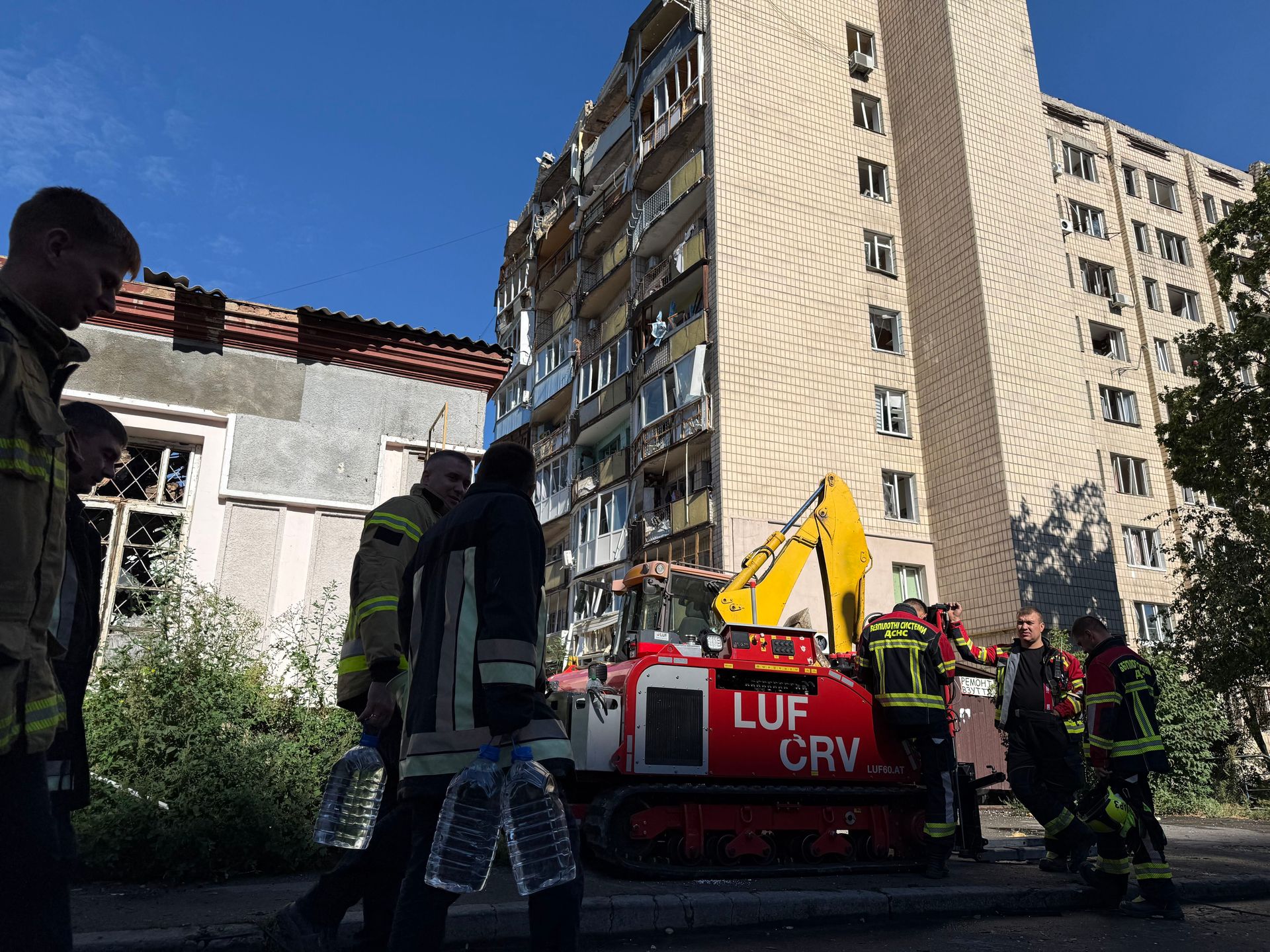
According to the BBC, two Russian drones struck the Pivdennyi, or Southern, bridge while a metro train was crossing. One hit near the base of a central stanchion. Kyiv authorities said preliminary inspections found no critical structural damage, and road traffic later resumed. The metro, however, was suspended, and passengers reported blast dust entering the carriage through the ventilation system.
That distinction matters. This was not a successful attempt to sever Kyiv in two. It was a calibrated attack on a system that millions of people assume will continue working during a war. The bridge connects the western and eastern sides of the Dnipro and is one of the capital’s principal transport arteries. A temporary interruption is militarily modest. A credible threat to repeated interruptions is not.
The Guardian’s Europe live coverage placed the strike within a wider Russian campaign against Ukraine’s energy system and noted that Kyiv had just endured its first coordinated attacks on the capital’s power grid since the end of last winter. The bridge attack therefore looks less like an isolated stunt than a new layer in a familiar Russian method: combine attacks on electricity, transport and public confidence until ordinary life becomes an operational burden.
The weapon is part of the message
Ukrainian officials have not publicly identified the exact drone used against the bridge. That uncertainty should not be filled with speculation. But the BBC reported that a new Russian jet-powered drone entered service this week and that Ukrainian technology adviser Serhiy Beskrestnov said the design carries a 40-kilogram warhead and is intended to damage high-voltage pylons and iron bridge structures.
That is a different problem from the original Shahed threat. Shahed-type drones are relatively slow, numerous and cheap enough to force defenders into difficult cost calculations. Jet-powered systems reduce warning time and compress the engagement window for air-defence crews. Ukraine’s air force said at least 3,177 jet-powered drones were launched during September, according to the BBC. Even if that figure includes several variants and not every launch reached its target, the strategic message is clear: Moscow is trying to turn speed and volume into a single problem.
- Target: a central support area of a major Dnipro crossing, with metro and road traffic exposed.
- Warhead: Ukrainian officials described the new jet-powered design as carrying roughly 40 kilograms.
- Operational pressure: more than 3,000 jet-powered drone launches were reported in September.
- Immediate result: no confirmed critical bridge damage, but metro service stopped and traffic was disrupted.
The economics are uncomfortable. Ukraine cannot spend a high-value interceptor on every low-cost drone, yet a single successful hit on a bridge, substation or rail junction can create disruption worth far more than the attacking munition. Russia is not required to win a clean strike exchange. It only needs to make the defender protect everything, everywhere, all the time.
Why Kyiv is a harder air-defence problem than the front
Air defence around a city is not simply a matter of placing more launchers on a map. Kyiv has to protect government buildings, power infrastructure, rail lines, residential districts, river crossings and the people moving between them. A bridge is also a poor target for defensive improvisation: its approach routes are predictable, its structural supports are exposed, and closing it carries an immediate economic and political cost.
The strike also shows why the language of “interception” can be misleading. Ukraine may successfully stop most incoming drones and still lose the operational contest if the few that get through repeatedly force closures and inspections. In a prolonged war, resilience is measured not only by what is destroyed but by how quickly the city can restore movement without creating a new vulnerability.
That is where the bridge attack becomes relevant beyond Ukraine. NATO states have spent years discussing critical infrastructure protection, but many of those plans assume a limited number of high-end threats. Kyiv is demonstrating a messier reality: a capital can face cheap drones, faster drones, cyber disruption, power attacks and information operations in the same cycle. The problem is not exclusively a missile-defence problem. It is a civil-military continuity problem.
The uncomfortable lesson for NATO
Ukraine’s experience should make NATO planners suspicious of glossy resilience exercises that end when the runway reopens or the power returns. The real test is whether a city can keep functioning while defenders are exhausted, ammunition is rationed and attackers deliberately mix military and civilian targets.
For European allies, three priorities follow. First, short-range air defence needs to be dense enough to protect infrastructure, not merely headquarters and airbases. Second, cities need redundant transport and power plans that are practised under repeated disruption rather than treated as emergency paperwork. Third, the alliance needs better ways to connect military sensors with civilian authorities without slowing decisions through layers of bureaucracy.
None of this means the Pivdennyi bridge is about to collapse. The available reporting says the opposite: initial checks found no critical structural damage. But that is precisely why the strike is strategically useful to Moscow. A bridge can remain standing while its reliability becomes questionable. A metro line can reopen while commuters start expecting the next closure. Deterrence weakens long before concrete fails.
What to watch next
The next indicators are straightforward. Watch whether Russia repeats attacks on Kyiv’s bridges or shifts to rail junctions and substations. Watch whether Ukraine changes the deployment of short-range systems around urban infrastructure, and whether it can maintain protection during the winter energy campaign. Most importantly, watch the tempo of jet-powered drone launches and the cost of the interceptors used against them.
The Pivdennyi strike did not cut Kyiv off from itself. It did something more subtle: it tested how much disruption the capital can absorb before defence becomes a daily negotiation between safety and movement. Ukraine’s bridge is still standing. The harder question is whether its air-defence network can keep every other bridge, power line and railway working at the same time.
Sources
Two Russian drones struck the Pivdennyi bridge in Kyiv on October 1, 2026, disrupting metro traffic and causing a temporary halt in operations. The drones are part of a new jet-powered design intended to damage critical infrastructure. This attack highlights the ongoing challenges faced by Ukraine's air defense against rapid drone assaults.
- Two Russian drones struck the Pivdennyi bridge in Kyiv.
- The attack disrupted metro traffic and caused temporary service suspension.
- The drones are part of a new Russian jet-powered design with a 40-kilogram warhead.
- Kyiv's air defense faces challenges from the speed and volume of drone attacks.
- Initial inspections found no critical structural damage to the bridge.