
Deployment of Type 25 Anti-Ship Guided Missiles on Yonaguni Island in Keen Sword 27 in 2026: Japan-U.S. Distributed Defense Moves to Operational Stage
 Tanaka Takashi
Deployment of the Type 25 Anti-Ship Guided Missile on Yonaguni Island during Keen Sword 27 in 2026: Japan-U.S. Distributed Defense Moves to Operational Stage
During the Japan-U.S. joint integrated exercise "Keen Sword 27," conducted from October 19 to 29, the Japan Ground Self-Defense Force's Type 25 Anti-Ship Guided Missile will be deployed for the first time in a live exercise. Additionally, the U.S. Marine Corps will deploy the NMESIS (Naval and Marine Expeditionary Ship Interdiction System) and MADIS (Marine Air Defense Integrated System) to Yonaguni Island. The significance of Japan and the U.S. simultaneously operating ground-launched missiles on an island approximately 110 kilometers from Taiwan is not small.
Changes in Equipment Visible on Yonaguni Island
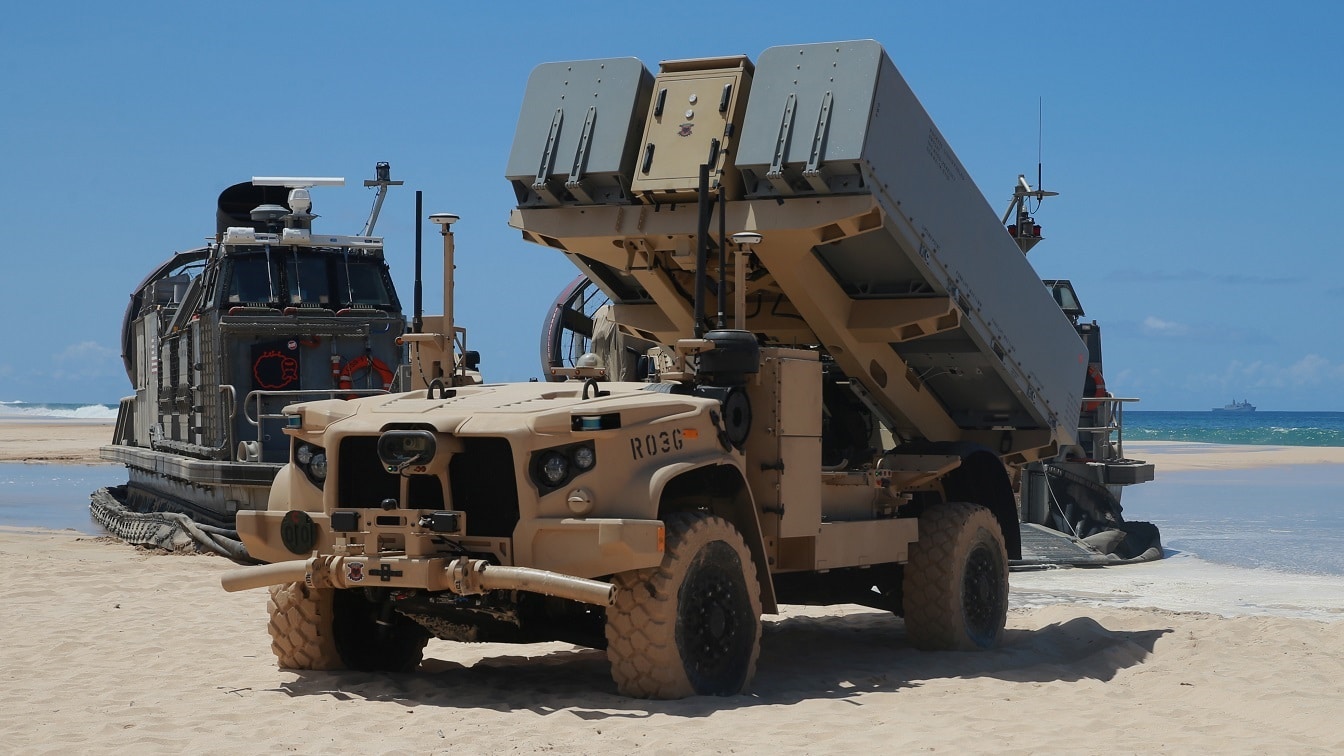
According to the Ministry of Defense, the scale of participation from the Self-Defense Forces is approximately 45,000 personnel. The Type 25 Anti-Ship Guided Missile is a long-range system based on the improved Type 12 Anti-Ship Guided Missile, with a range of about 1,000 kilometers. The Type 88 Anti-Ship Guided Missile and the Type 03 Medium-Range Surface-to-Air Guided Missile (Improved) are also expected to participate in training on Yonaguni Island.
The U.S. Marine Corps' NMESIS is mounted on an unmanned launch vehicle based on the JLTV and can attack vessels approximately 185 kilometers away. MADIS is responsible for countering small unmanned aerial vehicles and other threats. It is believed that the U.S. military has entered a phase of verifying its concept of distributing sensors, anti-ship firepower, and air defense across multiple islands, rather than relying solely on carrier strike groups, using actual roads, ports, and airfields.
Focus of the Exercise Indicated by the Absence of Aircraft Carriers
This time, the prominent presence of aircraft carriers seen in past Keen Sword exercises is not evident. The U.S. military plans to deploy HIMARS to Ishigaki Island and move a medium-range missile launcher, Typhon, to Okinawa. The focus of the exercise is shifting from a ship-centered maritime superiority to a posture that denies access to sea areas by placing mobile firepower on multiple islands.
This is not a concept of pursuing Chinese naval vessels one by one. It presents the "capability" to complicate the sea lines of communication (SLOC) connecting the southwestern islands and the approach routes around Taiwan with distributed missiles and air defense networks. On the other hand, the "intent" is a separate issue. Yonaguni Town has expressed concerns about the impact on road and port usage and residents' lives due to the transportation of large equipment, opposing the scale of the exercise.
Between Deterrence and Sustainability
The initial deployment of the Type 25 marks a turning point for Japan in moving from the concept of stand-off defense to operational deployment. However, deterrence cannot be established solely based on the figure of 1,000 kilometers. If continuous target information cannot be obtained, repositioning after launch, and maintaining supply and maintenance on the islands are not feasible, it could become equipment that is close to fixed targets. The interoperability with NMESIS and MADIS will also test command and control under communication disruption.
The true test is not the range of the missiles, but how many days Japan and the U.S. can maintain firepower, air defense, and supply on a single island.
Furthermore, if the civilian infrastructure on Yonaguni Island is used for military transport, losing the understanding of the residents could turn distributed defense itself into a political vulnerability. The new deterrence of the Japan-U.S. alliance is not just a competition to increase launchers, but a competition for sustainability that includes the capacity of the islands and decision-making.
Main Sources of Information
The Japan Self-Defense Forces deployed Type 25 anti-ship guided missiles and the U.S. Marine Corps introduced NMESIS and MADIS systems to Yonaguni Island during the Keen Sword 27 exercise from October 19 to 29, 2026. Approximately 45,000 personnel participated, marking a significant shift towards distributed defense capabilities in response to regional threats. The exercise emphasized the operational readiness of both nations' military forces.
- The Japan Self-Defense Forces will deploy Type 25 anti-ship guided missiles for the first time during the Keen Sword 27 exercise.
- The U.S. Marine Corps will deploy NMESIS and MADIS systems to Yonaguni Island.
- The exercise will involve approximately 45,000 personnel from Japan and the U.S.
- The Type 25 missile has a range of about 1,000 kilometers.
- The focus of the exercise is on distributed defense capabilities rather than reliance on aircraft carriers.