

A bizarre feature of contemporary American foreign policy is the near collapse of the constitutional separation of powers. Although this process predates current US President Donald Trump, his presidency has absorbed nearly all foreign-policy power, leaving Congress a mere spectator. From unilaterally waiving Russian sanctions to launching kinetic operations in Venezuela and Iran without legislative consultation, the executive branch is operating with unchecked, imperial authority.
This is almost certainly a terrible structural shift for the United States, and it is not even clear that Congress realizes what it has surrendered.
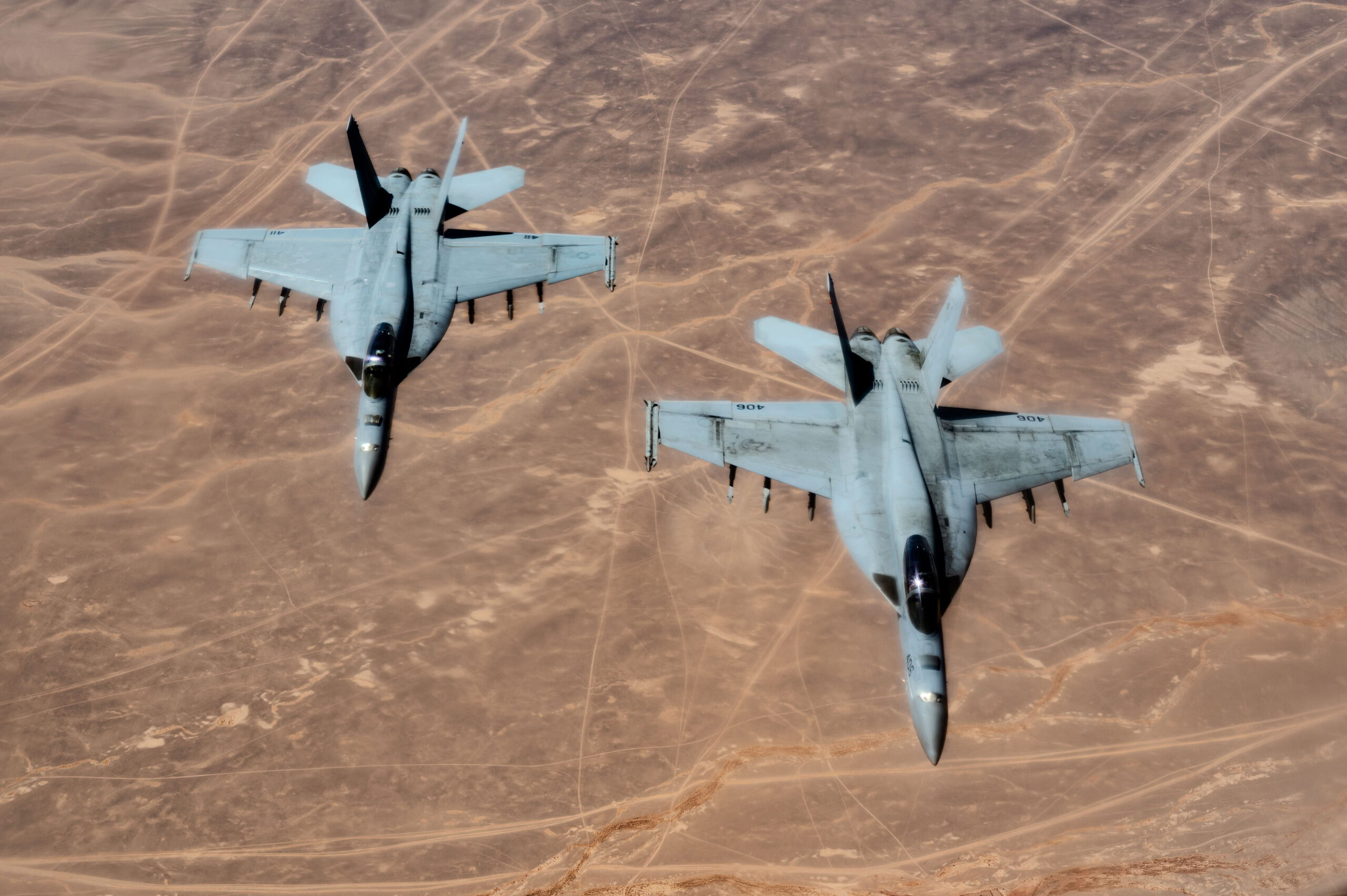
U.S. Navy F/A-18 Super Hornets, assigned to the Harry S. Truman Carrier Strike Group’s Strike Fighter Squadron (VFA) 136, fly a mission over the U.S. Central Command area of responsibility, March 2, 2025. The HSTCSG is responsible for patrolling approximately 2.5 million square miles of ocean and includes the Arabian Gulf, Gulf of Oman, Red Sea, parts of the Indian Ocean and three critical choke points at the Strait of Hormuz, Suez Canal and Strait of Bab al-Mandeb. (U.S. Air Force photo by Staff Sgt. Jackson Manske)
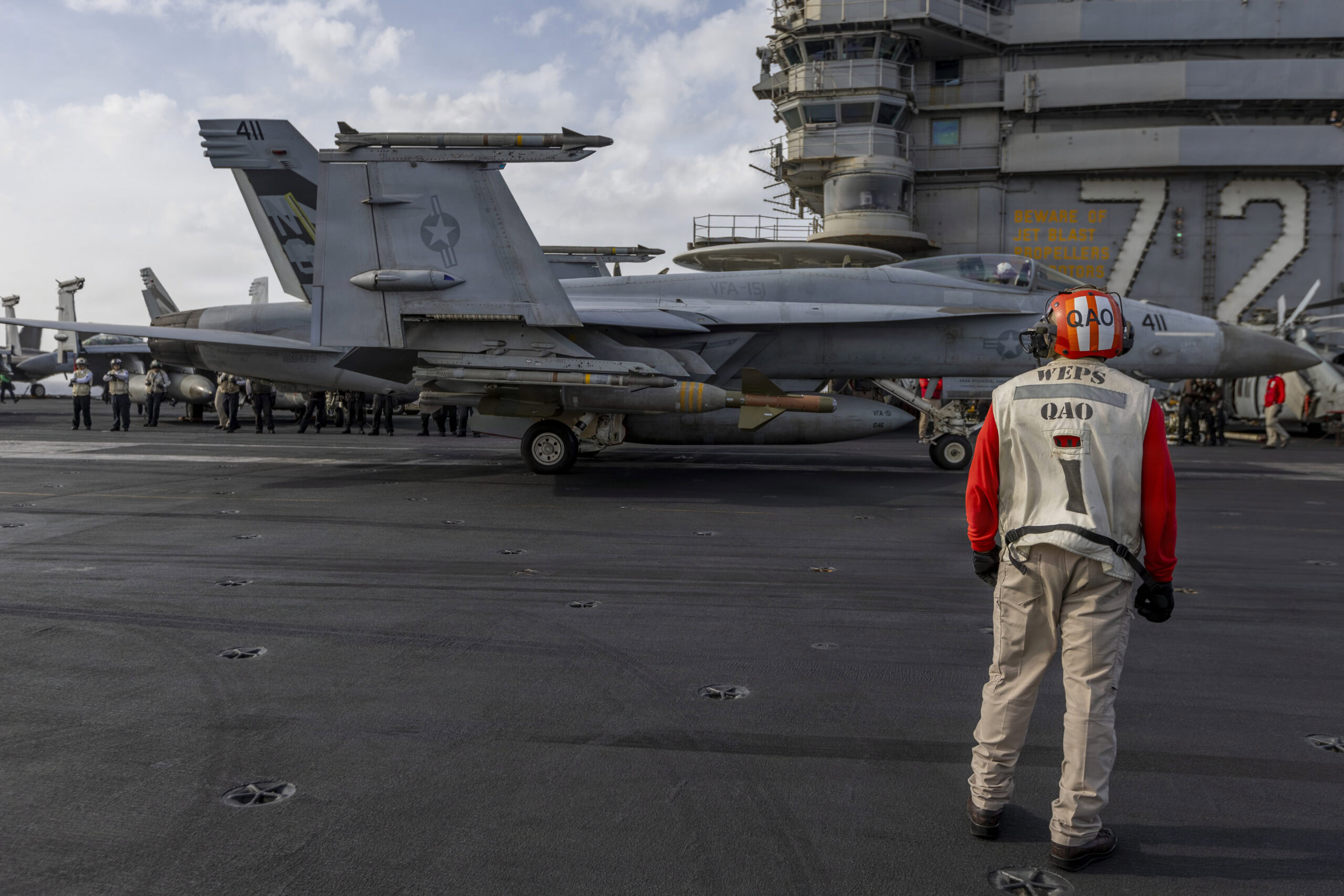
A U.S. Sailor observes an F/A-18E Super Hornet, attached to Strike Fighter Squadron (VFA) 151, prepare for flight operations on the flight deck of Nimitz-class aircraft carrier USS Abraham Lincoln (CVN 72) during Operation Epic Fury, March 30, 2026. (U.S. Navy photo)
Giving Away Sanctions Powers
This month’s illustration of the imperial presidency’s rise is Congress’s willing abdication of its economic leverage. In an effort to punish Russian President Vladimir Putin for his ongoing war in Ukraine, Congress passed severe economic restrictions.
Yet, lawmakers inexplicably granted the executive branch broad waiver authority.
Trump predictably used it to bypass the legislature’s intent. Just last week, he lifted sanctions on Russian diesel until April next year. Ostensibly, this will lower American fuel prices before the midterms, but it also clearly reflects Trump’s affection for Putin, which Congress and the public largely don’t share.
By granting the president this unilateral right to waive sanctions, Congress essentially neutered its own legislation. Sanctions are a powerful tool, but their effectiveness is predictably blunted when the American president can simply drop them for short-term domestic political calculus.
When the executive can unilaterally rewrite economic statecraft without consulting Capitol Hill, the legislative branch loses an element of its ‘power of the purse.’
Wars Without Consulting Congress
The erosion of congressional authority is even more alarming when it comes to the use of force. Earlier this year, Trump launched sudden military operations in South America – against suspected drug-running boats and to remove the dictator of Venezuela. These were executed entirely without congressional approval. Emboldened by lawmakers’ lack of pushback, Trump then applied the same unilateral logic to the Middle East.
He started a war with Iran, which he clearly anticipated would end quickly. Instead, the war dragged on for eight months.
Iran fought back better than expected. Its anti-access/area-denial technologies did an excellent job keeping the US Navy off the Iranian coast.
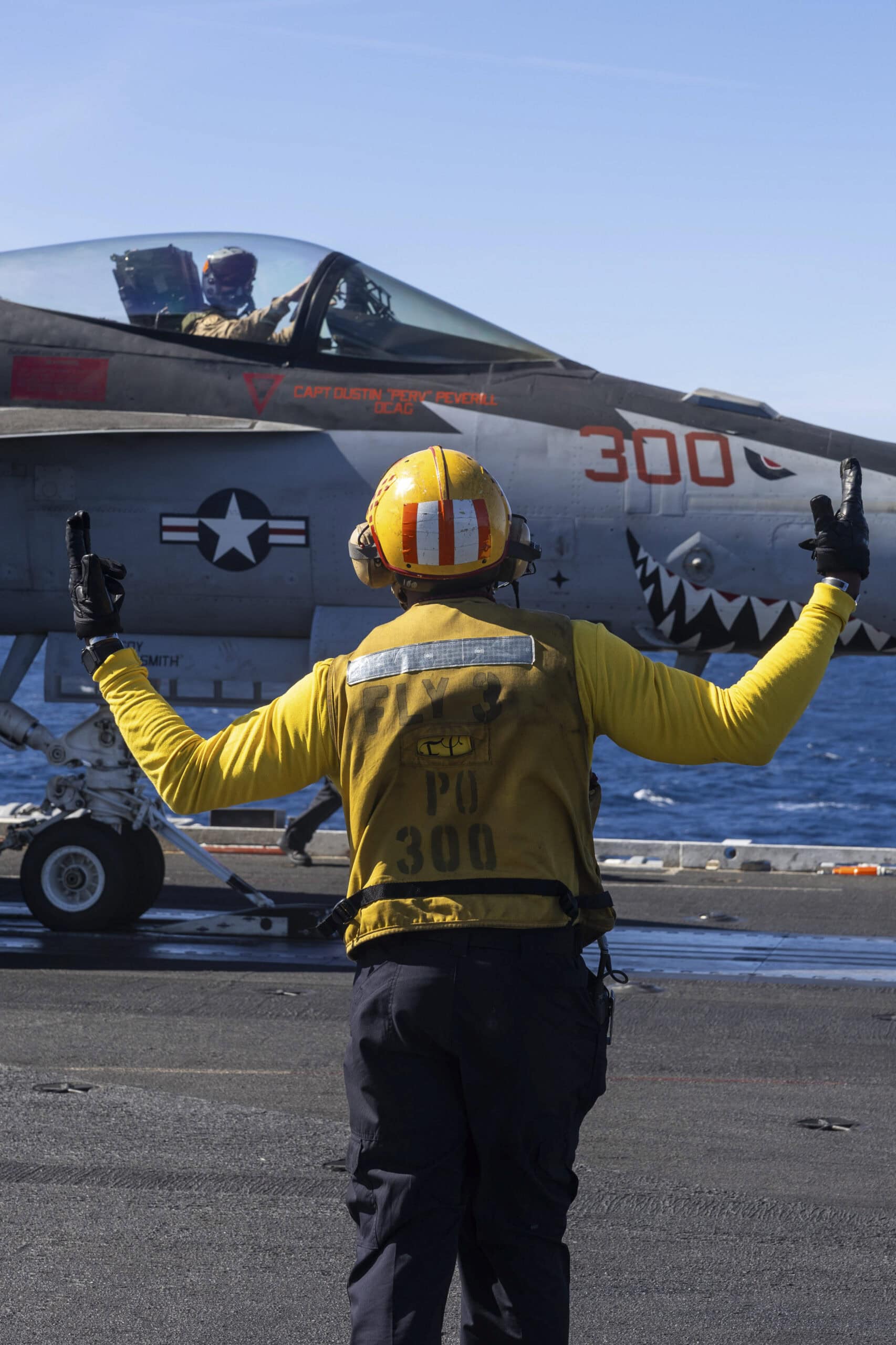
U.S. CENTRAL COMMAND AREA OF RESPONSIBILITY (Dec. 29, 2024) A U.S. Navy Aviation Boatswain’s Mate (Aircraft Handling) prepares an F/A-18E Super Hornet, attached to Strike Fighter Squadron (VFA) 81, for launch from the flight deck of the Nimitz-class aircraft carrier USS Harry S. Truman (CVN 75) in the U.S. Central Command area of responsibility. (Official U.S. Navy photo)
Now, American naval assets are tied down in a slow-motion war, struggling against cheap Iranian drones. The egregious overuse of American exquisite assets in the Persian Gulf is undercutting US deterrence elsewhere, and Congress has been unable or unwilling to act on that erosion.
As many analysts noted throughout the war, the Trump administration lacked a coherent strategy for the conflict. Trump declared large goals, but pursued them with woefully insufficient means. And he cannot escalate on the ground to pursue a decisive victory because the US public strongly opposes it. All of this was initiated without a single vote, authorization, or even meaningful consultation from Congress.
Launching major military operations without democratic consensus is a profound failure of the constitutional system.
Overstretched and Missing Checks-and-Balances
Unilateral executive action is leaving the country isolated. Trump’s second term is turning into a strange campaign to alienate American allies and partners. When Trump leaves office in January 2029, his successor will inherit a United States with fewer friends than at any time since 1945.
As history shows, friendless great powers are rarely successful ones. Congress should check Trump’s impulses regarding US partners, but it does not.
Furthermore, the larger lesson of the Iran war is that the US is reaching for goals in the Persian Gulf it cannot attain. The US is overstretched there; it cannot achieve its goals without levels of force and expense which the country will not accept.
Congress must recognize that this overextension is a direct result of its own passivity. If the United States is to compete with genuine peer rivals like China, it cannot afford to squander resources on unnecessary conflicts initiated on a presidential whim.
The legislative branch must act. Congress must stop writing blank-check waivers into sanctions bills and must use its funding power aggressively to halt unauthorized military adventurism. The presidency was never meant to be unbound in foreign affairs.
Author: Dr. Robert Kelly, Pusan National University
Dr. Robert E. Kelly is a professor of international relations in the Department of Political Science and Diplomacy at Pusan National University in South Korea. His research interests include security in Northeast Asia, U.S. foreign policy, and international financial institutions. He has written for outlets including Foreign Affairs, the European Journal of International Relations, and The Economist, and has appeared on television news services such as the BBC and CCTV. His personal website/blog is here; his Twitter page is here.