
Dongfeng-17 Video Debuts: PLA Rocket Force Showcases 2500 km Strike Range
 Li Minghui
DF-17 Video Release: PLA Rocket Force Displays 2500 km Strike Range
On July 8, Defense News noted a detail: CCTV and CGTN recently released footage of the DF-17 live-fire launch on English communication channels. The DF-17 is not a new piece of equipment; it was publicly showcased during the National Day parade in 2019. What is truly interesting is that this time the display is not a static formation but a narrative of launch, mobility, and salvo firing. For the Rocket Force, such footage is more direct than a parameter table.
The Video Release Does Not Signal a New Model
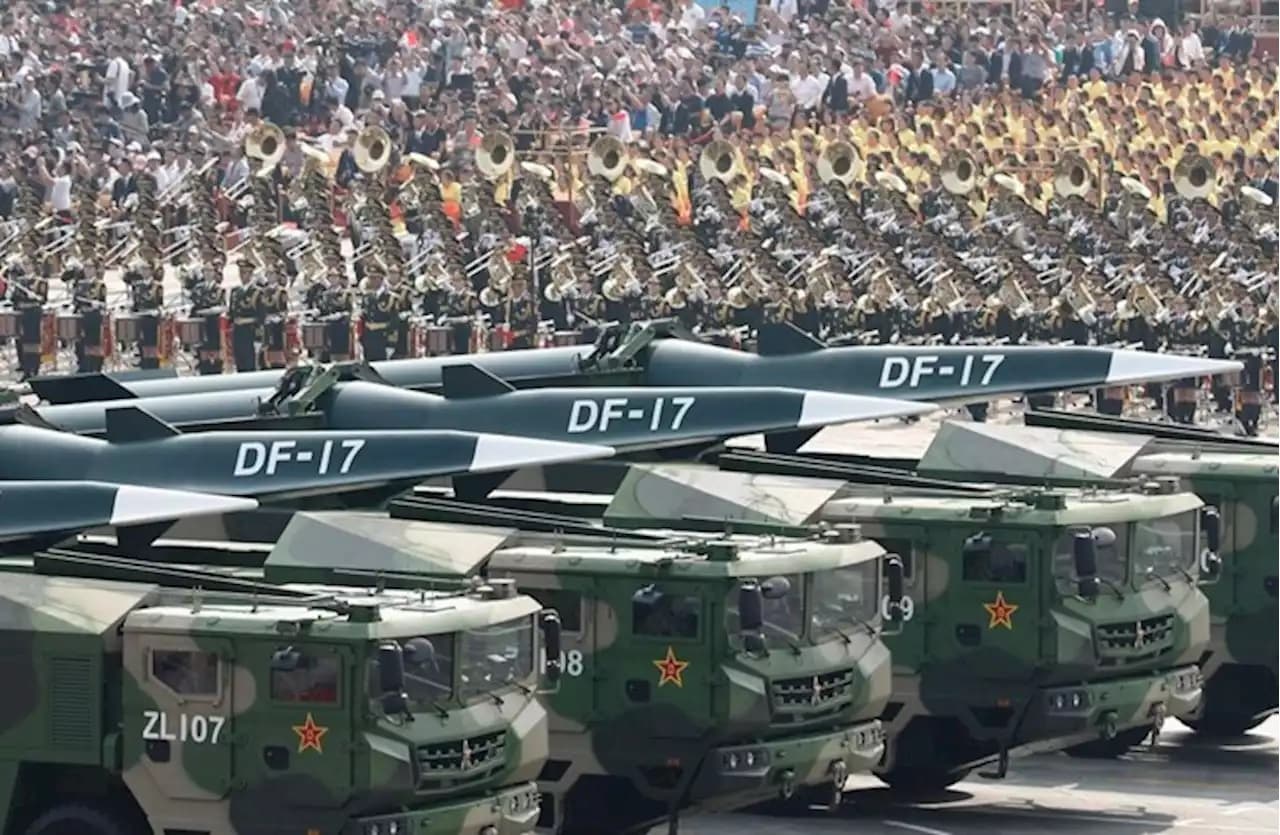
According to CSIS Missile Threat data, the DF-17 is a road-mobile medium-range ballistic missile, approximately 11 meters long, weighing about 15 tons, using a hypersonic glide warhead, with a range roughly between 1800 to 2500 kilometers, entering the public eye in 2019. Its significance lies not in the speed itself but in the lower and more maneuverable trajectory during the glide phase. Traditional missile defense systems are accustomed to calculating the predicted trajectory of ballistic missiles, but the DF-17's boost-glide combination narrows the windows for early warning, tracking, and interception.
In simple terms, the DF-17 does not merely fly a missile faster; it compresses the adversary's air defense and missile defense processes into a more challenging decision-making timeframe. Large surface vessels, forward airfields, fixed radar stations, and regional command nodes are theoretically the most suitable target types for it to exert pressure.
Why Display It Now
Defense News connects this video release with the 2026 Rim of the Pacific military exercises and the U.S.-Japan joint training at the end of June, a judgment that is not far-fetched. Beijing may not be announcing that the Rocket Force has acquired entirely new capabilities, but rather reminding the outside world that the bases, ports, and fleet formations between the first and second island chains are no longer just a matter of naval and air force confrontation; they must also account for the conventional long-range strike pressure from the Rocket Force.
From a map perspective, the range of 1800 to 2500 kilometers is quite awkward. It is sufficient to cover key nodes around Taiwan, the southwestern islands of Japan, northern Philippines, and parts of Guam, yet it is politically a step below intercontinental nuclear capabilities. Because of this, the DF-17 is most suitable for assuming a gray deterrence role: it does not need to be displayed every day, but once publicly demonstrated, it can force adversaries to reallocate resources for missile defense, early warning aircraft, electronic warfare, and dispersed deployment.
Engineering Issues Are More Important Than Promotional Videos
The author believes that the most noteworthy aspect of the DF-17 video release is not the slogans but the supporting systems. If the hypersonic glide warhead lacks reliable target indication, launch site survivability, battlefield communication, and damage assessment, it is merely an expensive single-point weapon. The real threshold for the Rocket Force lies in integrating reconnaissance satellites, drones, coastal radars, electronic reconnaissance, and command links, while maintaining updates under electromagnetic suppression conditions.
- Equipment level: The DF-17 employs road-mobile launch to enhance concealment and mobility.
- Firepower level: The 1800 to 2500 km range covers major military nodes of the first island chain.
- System level: Both anti-ship and precision strikes against land targets rely on continuous target data, which is precisely the part with the least public information.
It is also necessary to temper expectations. The outside world often describes the DF-17 as a carrier killer, but mobile maritime targets are much more challenging than fixed airfields. Detecting an aircraft carrier, maintaining continuous tracking, timely transmitting target data to the launch unit, and allowing the warhead to complete identification and correction in the terminal phase is an entire chain. Any disruption in one link will decrease the probability of a hit. The video can demonstrate deterrent intent but cannot prove that a complete kill chain is stably operating in a complex battlefield.
Actual Pressure on the U.S. and Allies
For the U.S. military, the pressure brought by the DF-17 is not merely the addition of another missile but the continued rise in the costs of forward deployment. Bases in Guam, Japan, and the Philippines will require more mobile air defense, underground facilities, dispersed munitions storage, and decoy targets; carrier strike groups will need to organize operations from greater distances. This number may seem just 2500 kilometers, but it will change the rhythm of fleets approaching the combat zone.
Defense News cites analysts stating that the DF-17 video release is a deterrent response to regional military exercises; CSIS lists it as an operational medium-range hypersonic glide missile system.
Li Minghui is more concerned about the latter question: if the DF-17 has already been used for public deterrence, will China next showcase a more complete conventional strike chain of the Rocket Force, such as multi-source reconnaissance, rapid assembly, and post-salvo assessment of results? What is truly worth watching is not which missiles have appeared this time, but which links Beijing has not yet made public.
Main sources: Defense News report on July 8, 2026; CSIS Missile Threat DF-17 data page; CGTN DF-17 video release title information.
The People's Liberation Army Rocket Force showcased the DF-17 missile in a video on July 8, 2026, emphasizing its operational capabilities. The DF-17, with a range of 1800 to 2500 kilometers, is designed to evade traditional missile defense systems and can target key military nodes in the first island chain. This display is interpreted as a deterrent response to recent military exercises by the U.S. and its allies in the region.
- The DF-17 missile has a range of 1800 to 2500 kilometers.
- The missile was publicly displayed in a video by the PLA Rocket Force.
- The DF-17 is designed to evade traditional missile defense systems.
- The missile can target key military nodes in the first island chain.
- The video release is seen as a deterrent response to regional military exercises.