
Drone over Leipzig-Halle — Germany Closes Russia's Consulate in Bonn and Raises the Price of Hybrid War
 Dmitri Volkov
Drone over Leipzig-Halle — Germany Closes Russian Consulate in Bonn and Raises the Cost of Hybrid Warfare
On September 1, Berlin officially placed the responsibility for the attempt to sabotage a cargo plane at Leipzig-Halle Airport on Moscow, which occurred on August 4, and the very next day Europe set its entire diplomatic apparatus in motion: the Russian ambassador to Germany was summoned to the Foreign Ministry, the European Union and several member states did the same, and discussions about sanctions began in Brussels. Note the sequence: the attack failed, the drone did not explode, and no one was killed. Nevertheless, this episode marks the first time during the entire war that Germany has decided to close a Russian consulate due to a hybrid operation on its territory.
What Happened in Leipzig-Halle
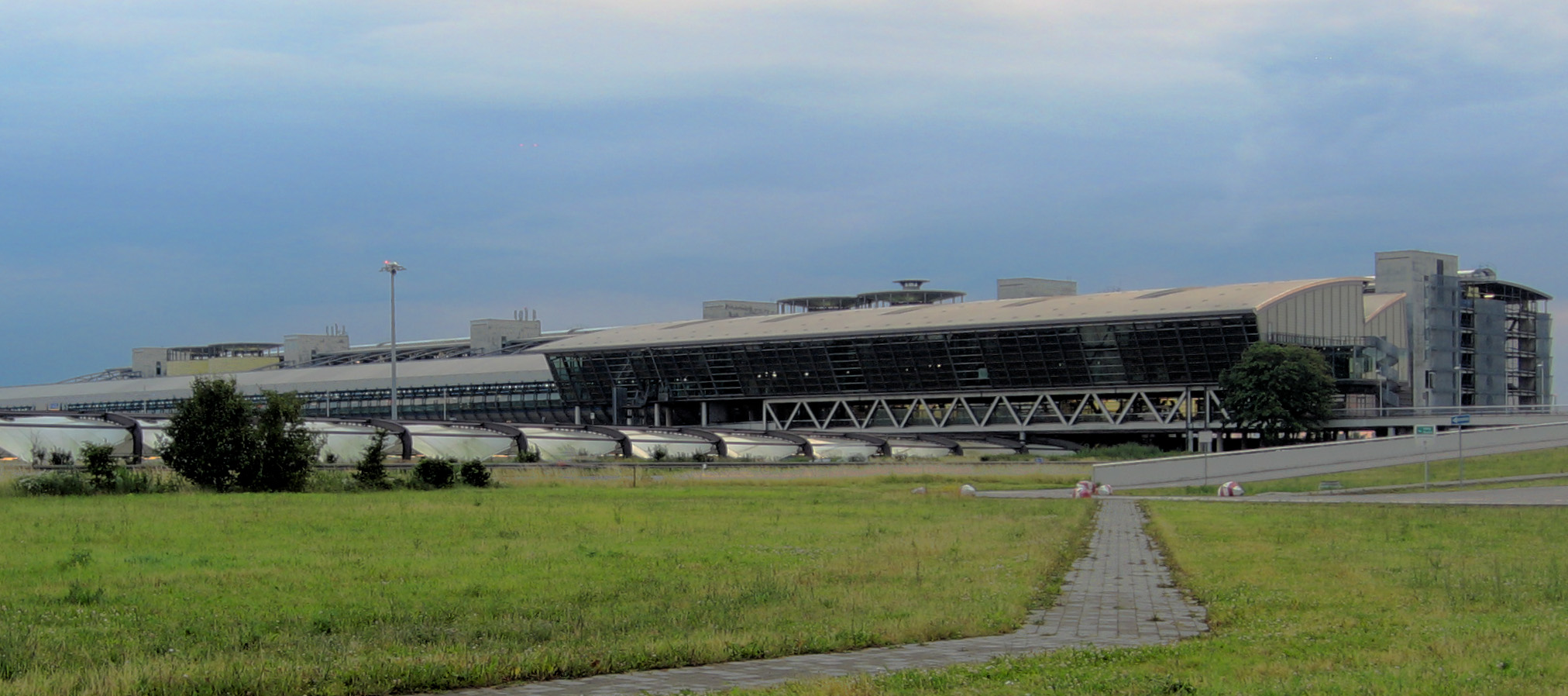
According to German authorities, on August 4, a drone loaded with explosives fell near the parking area of a Ukrainian cargo plane that was being used to transport ammunition to Ukraine. The device did not detonate and was neutralized by bomb disposal experts; in the following days, police discovered two more similar drones in the vicinity of the airport (according to Defense News, September 2026). Leipzig-Halle is not an ordinary hub: it is one of the key nodes of the air bridge for Western military aid, through which both Ukrainian cargo flights and NATO transports pass.
German Interior Minister Alexander Dobrindt stated that "the combination of the police investigation, the nature of the crime, and intelligence data establishes Russia's responsibility." Foreign Minister Johann Wadephul went further and described the incident as part of "a broader picture of Russian hybrid operations in Europe." This is significant: Berlin is not merely documenting the incident for the first time, but is integrating it into a system — and responding to that system.
Countermeasures — The Symbolism of Bonn
The German package of measures includes the closure of the Russian consulate in Bonn by September 18 — a building of 70,000 square meters that was occupied by Soviet intelligence during the Cold War — the termination of the agreement regarding the Berlin "Russian House of Science and Culture," tightening immigration checks for Russian citizens, and a promise of new visa restrictions. The choice of targets is not accidental. The consulate in Bonn has long been viewed by experts as one of the centers of Russian intelligence and logistics operations in Germany; the "Russian House" was a tool of soft power. Berlin is not striking at random addresses — it is dismantling infrastructure, not just punishing the perpetrators.
"Germany remains a safe country and will defend itself against adversaries who seek to create instability within it. We will not allow Russian attacks to divide or intimidate us," said German Foreign Minister Johann Wadephul (quote from The Moscow Times, September 2, 2026).
Moscow's Reaction — Ritual Denial
The Kremlin's response was predictably mirror-like in form and empty in content. Foreign Ministry spokesperson Maria Zakharova promised to "respond to anti-Russian actions," the embassy called the accusations "a fabricated provocation" and "a new wave of anti-Russian hysteria," while presidential spokesman Dmitry Peskov, who was with Putin in Kyrgyzstan at the SCO summit, stated that "no evidence has been presented" and accused Germany of "moving towards escalation." Putin himself, according to agencies, called Berlin's decision "a serious mistake" and suggested that the German government is fabricating evidence to distract from internal problems and the low rating of the chancellor.
It is worth pausing here to view the situation from Moscow's perspective, without moralizing. For the Russian doctrine, hybrid warfare against NATO logistics is not an aberration, but the norm: a strike on a supply node in Leipzig is cheaper than any missile strike, it does not provide a formal reason for invoking Article 5, and it tests the allies' readiness to respond collectively. From this perspective, even a failed drone is a success: it forced Germany to expend political capital, reveal the methodology of its investigations, and publicly acknowledge that the war has come to its territory.
What Has Really Changed
But this is precisely where the most interesting — and most unpleasant for Moscow — developments begin. The failed attack gave Berlin something it had long lacked: a political mandate for tough measures. In 2024-2025, Europe spent months digesting arson, severed cables, and booby-trapped packages, hesitating to call things by their names. Leipzig became the point after which attribution turned into collective action: the EU and NATO issued statements of solidarity, Russian ambassadors were summoned in Portugal, the Netherlands, Belgium, and Sweden, and discussions are underway in Brussels about a new sanctions mechanism against hybrid operations. This is precisely what Moscow feared the most — the transition of hybrid warfare from a gray zone to a zone of legal accountability.
There is also a second, more subtle damage. The closure of the Bonn consulate deprives Russian intelligence services of a legal platform that they have built over decades — the irony of history is that the building, which served Soviet intelligence even under Adenauer, is being closed precisely for intelligence and sabotage activities. The loss of such an asset cannot be compensated by ritual threats of "retaliatory measures": Russia will certainly close some German representation, but an equivalent exchange will not be possible — the weight of these objects is too different.
Forecast
One should not expect the cessation of the hybrid campaign: it is cheap, deniable, and embedded in Russian military thought more deeply than is commonly believed in the West. Most likely, Moscow will respond with mirror closures of German consulates, continue attacks on logistics, but make them less identifiable — through proxy actors and more primitive means. However, the cost of each subsequent attempt will now be higher: if the EU solidifies the mechanism of collective attribution and sanctions for hybrid attacks, the economics of this war for the Kremlin will change radically. The decisive test is not Leipzig, but the next incident, whatever it may be. And the question is not whether Russia can carry it out, but whether Europe will respond again — together, quickly, and publicly.
On September 1, 2026, Germany closed its consulate in Bonn, attributing a drone incident on August 4 to Russia. The drone was found near a Ukrainian cargo plane at Leipzig-Halle airport. This incident marks a significant escalation in Germany's response to Russian hybrid operations, prompting diplomatic actions and discussions of sanctions across Europe.
- Germany officially blamed Russia for a drone incident on August 4, 2026.
- The drone was found near a Ukrainian cargo plane at Leipzig-Halle airport.
- Germany closed its consulate in Bonn as a response to the incident.
- The incident is seen as part of a broader pattern of Russian hybrid operations in Europe.
- Germany is enhancing its diplomatic and security measures against Russia.