
The 2-Billion Patriot Question of the EU Will Show the Difference Between Money and Air Defense in 2026
 Dr. Klaus Weber
The 2-Billion Patriot Question of the EU Shows the Difference Between Money and Air Defense in 2026
2 billion euros for Patriot interceptors, 8.37 billion euros already disbursed from the Ukraine Support Loan for defense, but at the end of the informal EU defense ministers' meeting in Ireland, not a single concrete new Patriot promise. This numerical sequence encapsulates the European problem. There is no longer a lack of political outrage, nor even a lack of credit lines. What is missing is the mechanism by which Europe can translate money into immediately available missiles.
The recent debate was triggered by Kyiv's request to use part of the EU credit framework for the purchase of Patriot interceptors. Several media outlets estimated the desired amount at over 2 billion euros; according to reports citing Ursula von der Leyen, a decision on the request could be made as early as September 7. That sounds like speed. But Kaja Kallas articulated the crucial sentence after the ministerial meeting: interceptors are scarce everywhere. Anyone who takes this sentence seriously immediately understands why the European discussion remains so unsatisfactory despite ever-increasing sums.
2 Billion Euros Do Not Automatically Translate to Patriot Missiles
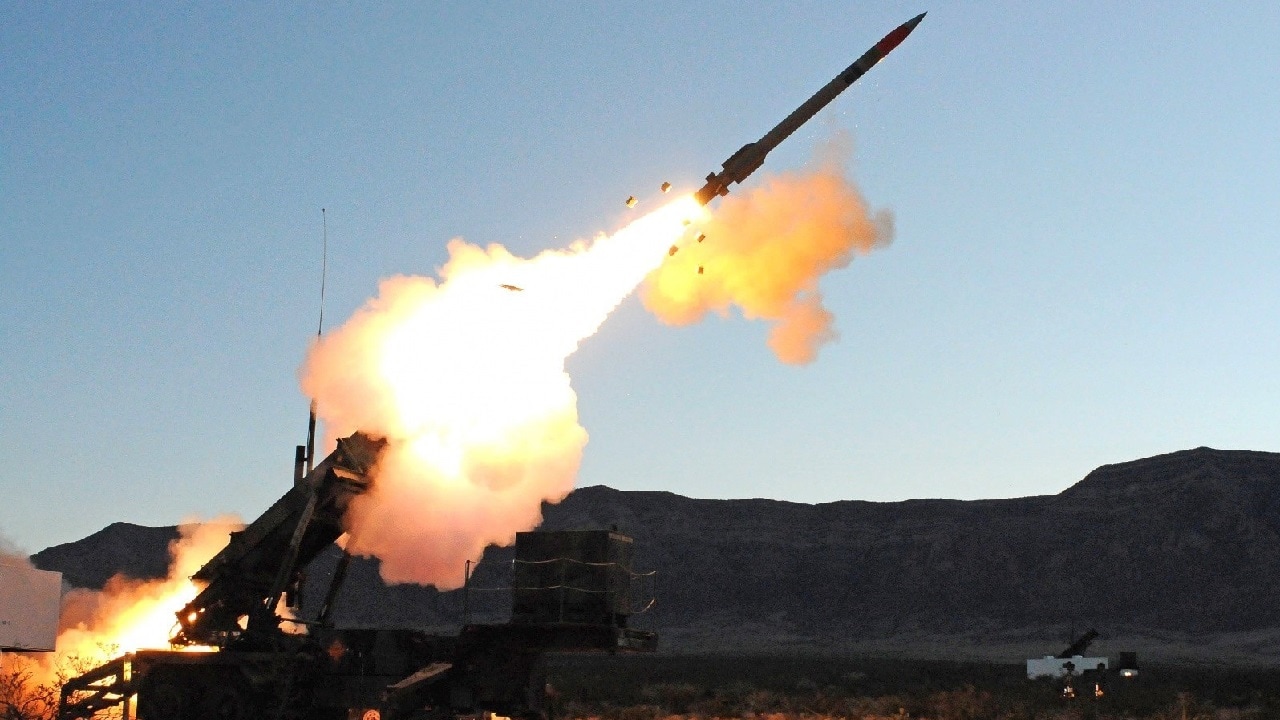
The first misunderstanding is accounting-related. A loan creates purchasing power, but not production capacity. Even if Brussels quickly approves the Ukrainian request, it does not automatically result in a new batch of missiles. Patriot is not a shelf product that Europe just needs to pay for. It is a scarce, politically controlled, and industrially overloaded system, whose availability does not depend solely on the buyer's liquidity.
This is why Kallas' reference to soon-to-expire Patriot stocks in European arsenals was so revealing. It shows that Brussels is not actually talking about a market, but about redistribution under conditions of scarcity. If member states are to "send or sell" missiles, it is because the actual short-term source is not the factory, but the existing stockpile. This is militarily understandable, but politically delicate: each state is supposed to give up something for Ukrainian air defense that it formally still possesses, but may soon need again strategically.
Frontloading Accelerates Budgets, Not Factories
This became even clearer in the debate about so-called frontloading. According to Kallas, it primarily means that member states should pull future contributions forward because Ukraine needs the funds now. This is a reasonable fiscal reflex. But it only changes the timeline of financing, not the timeline of production. Europe can advance a budget; it cannot accelerate a missile engine by council decision.
Here lies the familiar European temptation that has been criticized by Weber for years: addressing a capacity problem with a financing instrument. The Ukraine Support Loan is politically useful because it makes joint action visible and relieves national budgets. However, visibility is not capability. If even after a high-level ministerial round no concrete Patriot commitments are made, it does not indicate a lack of solidarity in the moral sense. It shows the material limit of a system that can pool money but leaves stockpiles and procurement risks at the national level.
The Real Deficit is European, but Not Financial
Kallas openly stated that there had been "no concrete success" regarding Patriot on that day. This sentence is more important than any subsequent summit rhetoric. Because it exposes the comfortable illusion that Europe just needs to appear more resolute to solve the problem. Determination only helps where there is room for maneuver. In the case of Patriot, the room for maneuver is limited: by finite stocks, competing national priorities, American industrial control, and the fact that the most modern air defense systems are not available in politically neutral quantities.
Therefore, the 2-billion question should not be read as a debate about generosity, but as a debate about conversion. How quickly can Europe transform money into protection? At the moment, the uncomfortable answer is: slower than the Russian attack routine demands. That the EU has already disbursed 8.37 billion euros in defense support from the credit framework while still relying on bilateral assistance is not a contradiction. It is the logical consequence of a system in which joint financing does not replace national decisions about real military goods.
Patriot Becomes a Test Case for European Defense Policy
For Berlin, Athens, Madrid, and other capitals, this is an uncomfortable situation. Those who give up missiles bear a short-term risk; those who withhold them confirm the Ukrainian accusation that Europe talks about air defense but shies away from the most expensive and scarce interceptors. The political economy is brutally simple: every additional Patriot missile in Ukraine is simultaneously one missile less in a European stockpile until the industry eventually fills the gap. This is why the demand for simply "more money" is analytically too small.
The real test case is whether Europe finally understands its defense as a supply chain and prioritization problem. If Brussels only organizes loans, it remains a paymaster. But if it forces stockpiles, replacement procurement, advance clauses, maintenance cycles, and industrial recalibration into a real order of priorities, then for the first time something like strategic action capability emerges. So far, Europe is still far from this. It can pre-finance the bill, but it cannot guarantee that the missile will be on the launcher in time.
This is the paradox of this week. The EU is investing more than ever in defense while simultaneously having to publicly admit that it cannot present a concrete commitment on the continent's most urgent air defense issue. More money is therefore necessary. But money is only the entry ticket here. The real European test begins where political priority must translate into real delivery from credit. As long as this transition does not work, Europe's air defense policy remains wealthy but not fast enough.
The European Union is facing challenges in converting financial resources into military capabilities, particularly regarding the procurement of Patriot missiles. Despite allocating 2 billion euros for this purpose, no concrete commitments were made during the informal defense minister meeting in Ireland. Kaja Kallas emphasized the scarcity of interceptors and the limitations of production capacity, highlighting the ongoing struggle to meet Ukraine's defense needs.
- The EU has allocated 2 billion euros for Patriot missiles but has not made concrete commitments.
- 8.37 billion euros have already been disbursed from the Ukraine Support Loan for defense.
- Kaja Kallas highlighted the scarcity of interceptors and the challenges in production capacity.
- The discussion reflects a broader issue of converting financial resources into military capabilities.
- The EU's defense policy is under scrutiny as it struggles to provide timely military support.