
Drones "Lightning" and "Lancet" elevate Russian war logistics to refueling levels of 2026
 Dmitri Volkov
The "Lightning" and "Lancet" Drones Elevate Russian Logistics Warfare to the 2026 Refueling Level
The order to strike at gas stations, buses, and trucks may seem minor only on the General Staff's map. In real warfare, it means something different: the Russian army is trying to turn every segment of civilian logistics at the front line into an extension of the battlefield. On July 17, Ukrainian military intelligence reported that Russian drone units had been instructed to intensify strikes on refueling stations, cargo transport, buses, and passenger cars in frontline and border areas (Kyiv Post citing GUR, July 17, 2026). The list includes not only the "Lancet" but also "Lightning-1," "Lightning-2," "Geranium-Seeker," "Gerbera-Seeker," V2U, and other devices with real-time control or guidance. This is an important detail: it is not about a nighttime campaign of long-range "Shaheds" targeting pre-set coordinates, but rather a tactical hunt for moving infrastructure.
What Has Changed
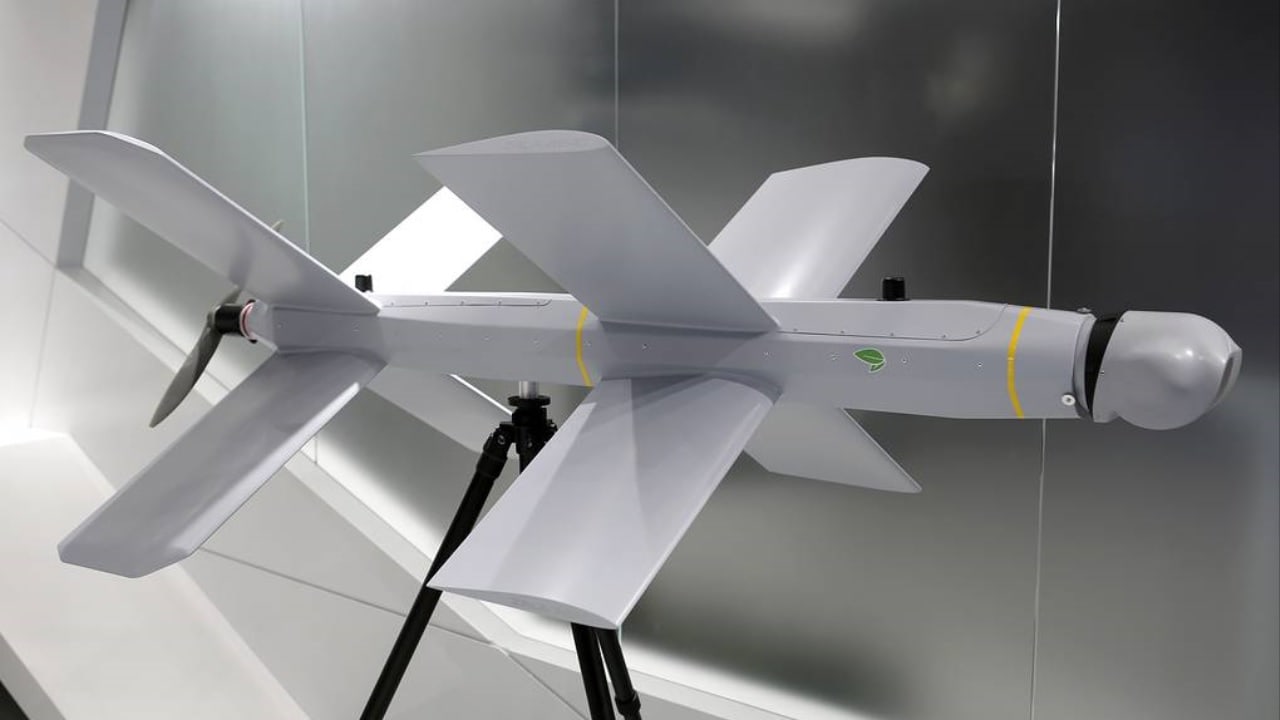
According to GUR, the campaign is being conducted by the Russian elite drone unit "Rubicon" with support from external operators of line units. The wording is not accidental. "Rubicon" in the Russian UAV system performs roughly the same role that separate combat application centers played in the late Soviet army: not the mass infantry routine, but a hub where tactics are tested and then passed on to regular units. If the data from Ukrainian intelligence is accurate, Moscow is trying to standardize strikes on low-level transport as a separate form of pressure. The technical logic is clear: the "Lancet" carries a warhead of about 3-5 kilograms, "Lightning" is cheaper and simpler, while the "Gerbera" and "Geranium" family of devices in versions with search or relay functions allows for target acquisition not only by coordinates but also by visual recognition. This is not a Wunderwaffe, but for a fuel truck, minibus, or repair vehicle, such a payload is sufficient.
In Soviet operational art guidelines, logistics was always considered a legitimate target, but it referred to railway hubs, bridges, fuel depots, and command points. The current shift consists of miniaturizing the target. The Russian army, faced with the Ukrainian campaign of medium-range strikes on oil depots, port logistics, and supply routes to Crimea, is responding not symmetrically but downscale: instead of oil refineries — a gas station, instead of a port — a truck, instead of a large warehouse — a bus with people or a pickup with jerrycans. This is a poor version of an operational strike, but poor does not mean harmless. War often degrades not to simplicity but to greater brutality with fewer technological resources.
Response to the Ukrainian Fuel Campaign
The context here is crucial. ISW in its assessment on July 16 linked Ukrainian strikes on Azov-Black Sea maritime supply lines and oil infrastructure to the growing overstretch of Russian air defense and logistics. It also cited Reuters data indicating that Russian companies, including "Rosneft," "Gazprom Neft," and "Lukoil," are turning to Indian refiners for additional gasoline, as part of Russian oil refining has been knocked out for weeks or months. This does not mean that Russia has run out of fuel. It means that the margin of resilience has become smaller: it has to shuffle air defense, tankers, railroads, aviation fuel, and import schemes simultaneously.
The Russian response to Ukrainian frontline refueling stations, in this sense, is an attempt to transfer the same problem to the enemy. If it is impossible to quickly stop Ukrainian strikes deep in the rear, one can try to increase the daily cost of Ukrainian mobility. A truck with ammunition, a bus with evacuees, a volunteer vehicle, or a civilian gas station along the highway — all these are elements of distributed logistics. Ukraine is not only fighting with army depots; it is fighting a network of small carriers, repair groups, volunteer columns, local administrations, and private cars. A strike on this network creates not so much an operational breakthrough as a constant tax of fear and delay.
The Technical Side and Weakness
Real-time targeting is the main distinction of the declared campaign. Long-range strike UAVs like the classic "Geranium" are well-suited for stationary targets but poorly adapted for locating a single vehicle. FPV, "Lightning," and loitering munitions with video channels solve this task better, although they depend on communication, relaying, operator training, and the electronic warfare environment. Hence the mentioned GUR cases of friendly fire, where Russian crews allegedly lost orientation and attacked their own or erroneous targets. This is not a curiosity. It is a symptom of a system that is trying to mass-use means that require good intelligence, communication discipline, and a proper map of the terrain.
Here, an old Russian problem reappears in a new form. After Serdyukov's reforms, the Russian army talked a lot about network management, but in practice, it often built it from incompatible solutions: commercial terminals, homemade relays, Telegram as a means of combat management, volunteer thermal imagers, factory complexes, and frontline improvisation. Such a system can quickly produce tactical effects but poorly separates military targets from the civilian environment. As a result, a strike on "logistics" becomes a convenient formula into which almost any moving object can be recorded. For a staff report, it is an enemy vehicle; for a family at the front line, it is the car that brought bread yesterday.
Strategic Meaning
It is important not to succumb to a morally pleasing but analytically weak version: Russia strikes at civilian transport only because it wants to terrorize the population. Terror is present here, but it is embedded in a colder military logic. Moscow is trying to narrow the Ukrainian maneuver space at the front, increase the cost of supply, and force Kyiv to spend scarce electronic warfare and air defense resources not only on cities and depots but also on roads. This is especially noticeable after the Ukrainian campaign of long-range strikes began to affect the Russian fuel economy and maritime logistics. Strikes on refueling stations are not a replacement for operational aviation but an acknowledgment that aviation and artillery can no longer reliably control the gray zone on their own.
For Ukraine, the practical conclusion is unpleasant but clear. Frontline logistics must increasingly resemble a military column even when it remains civilian in purpose: dispersal of fuel, concealment of parking areas, false routes, local detection sensors, simple shelters over refueling points, movement discipline during daylight, and separate groups of electronic cover for critical roads. This is expensive, tedious, and organizationally challenging. But in the war of UAVs, boring organization often saves more than an impressive new platform.
The Russian army has not invented a new doctrine. It has simply lowered the old idea of striking at the rear to the level of a gas station and a bus. This is the most unpleasant evolution of the war in 2026.
The coming weeks will show whether this campaign remains an episodic response to Ukrainian strikes on Russian fuel or becomes a sustainable tactic. If "Rubicon" is indeed acting as a center for spreading the method, one should expect an increase in similar attacks in the Sumy, Kharkiv, and Donetsk directions. But the effect will be limited if Russian units do not resolve the basic problem of target identification and operator coordination. The Russian system knows how to create pressure through quantity. It is much worse at maintaining quality when quantity becomes the main argument.
The Russian army is intensifying drone strikes on fuel stations, buses, and trucks in Ukraine as part of a logistics campaign. This operation, led by the elite Rubicon drone unit, aims to disrupt Ukrainian supply lines by targeting civilian logistics. The drones involved include Lightning and Lancet models, which are capable of real-time targeting. This shift in tactics is a response to Ukrainian strikes on Russian fuel infrastructure, increasing the operational costs for Ukrainian forces.
- Russian drones are targeting fuel stations and transport vehicles near the front lines.
- The campaign is led by the elite Rubicon drone unit of the Russian army.
- The drones used include Lightning and Lancet models, which are designed for real-time targeting.
- This strategy aims to increase the cost of mobility for Ukrainian forces.
- The Russian military is adapting its tactics in response to Ukrainian strikes on its fuel infrastructure.