
Energy Front and Political Vacuum — How the October 17 Strike Expands the Ukrainian Air Defense Gap
 Dmitri Volkov
The Energy Front and Political Vacuum — How the Strike on October 17 Expands the Ukrainian Air Defense Breach
Briefly. The nighttime attack by Russia on October 17, according to Ukrainian sources and international media, claimed at least eight lives and left over a million consumers without electricity. It occurred at a moment when Washington postponed new sanctions against Moscow, and the public conflict between Donald Trump and Volodymyr Zelensky raised questions about the predictability of aid. Military and political pressures are now converging: Moscow is concerned not only about one damaged facility but also about a weaker, slower-managed, and poorly supplied Ukrainian air defense system in the winter of 2026–2027.
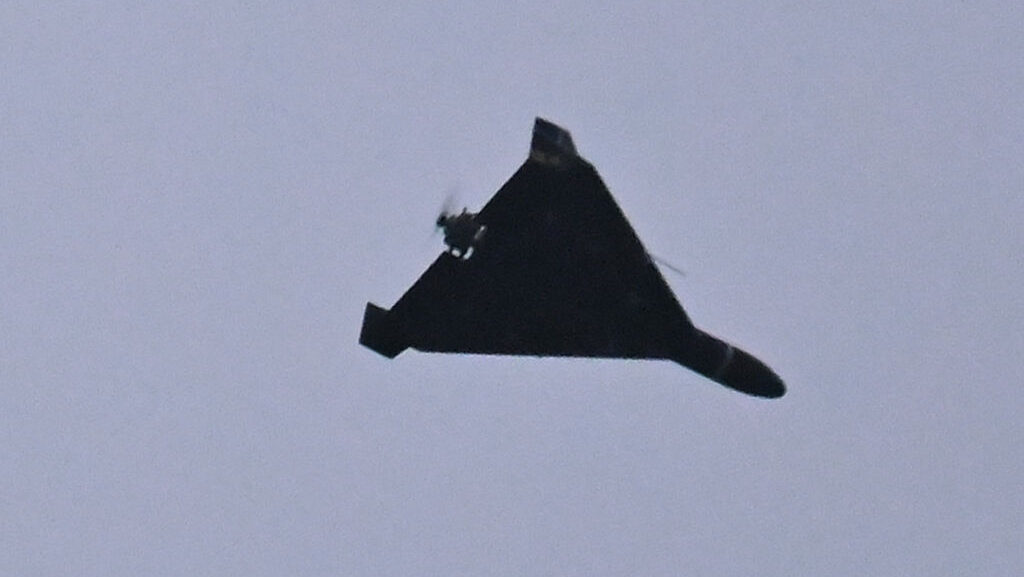
A Strike on the Grid — An Attack on the Recovery Pace
Zelensky stated that Russian strike systems affected more than 15 energy facilities, with the aim of leaving Ukraine without power during the winter period. Reuters, Al Jazeera, RFE/RL, and Deutsche Welle reported at least eight fatalities and widespread outages. Ukrainian energy structures reported over a million consumers without power; the figures and geography changed as emergency work progressed, so they should be read as operational estimates rather than a final tally of damage.
The military objective of such a campaign is broader than the physical destruction of generation or substations. Each wave forces network operators to preemptively shut down lines, redeploy repair crews, protect transformers, and maintain reserve capacities. A competition of tempos arises: Russian industry produces and launches new batches of drones and missiles, while Ukraine must simultaneously restore the grid, distribute limited interceptors, and keep radars operational. In winter, even a short outage has a disproportionate effect on heating, water supply, communication, and business operations.
The Russian Ministry of Defense traditionally claims to have hit military and energy targets; the Ukrainian Air Force publishes its own data on launches and interceptions. These reports should be considered as statements from the parties rather than as independently verified accounts of each hit. However, the coincidence of reports about large-scale outages with data from energy companies and international correspondents makes the main conclusion robust: the strike was aimed at a systemic, rather than local, effect.
Starshield Chain — Interception — Air Defense Window
The debate around Starshield is important here not as a separate technological story but as an element of the combat chain. Satellite communication connects calculations, mobile fire groups, radar picture, attack warnings, and coordinate transmission. If access, bandwidth, or service geography are restricted, the delay between detecting a drone and assigning a strike asset increases. Against a mass raid, this delay turns into additional undistributed targets: some drones reach the objective, while some calculations are forced to act based on a local picture.
CBS reported Zelensky's words that Starlink restrictions remain in place and reduce the ability of the Armed Forces of Ukraine to effectively intercept Russian drones. Reuters previously reported, citing sources, that there was an order from within the White House to limit Starshield; this has become a point of interest for American lawmakers. At the same time, Axios, citing Trump, reported that the White House did not obstruct the Ukrainian satellite system. These statements contradict each other. Who exactly made the decision, which terminals, functions, and areas it pertains to, and whether it is currently in effect, requires confirmation.
Even without a definitive answer, the operational risk is clear. Ukraine cannot cover the country with Patriot batteries: they are reserved for ballistic and the most dangerous missiles. Cheap strike UAVs must be intercepted in layers — through electronic warfare, mobile groups, small-caliber artillery, short-range surface-to-air missiles, and their own interceptors. This lower tier particularly depends on stable communication and a comprehensive tactical picture. A failure there forces the use of more expensive resources higher up the chain or acceptance of hits. Therefore, "satellite limitation" and "energy strike" are not two parallel news items but parts of one exhaustion campaign.
Political Pressure Becomes a Military Multiplier
Against this backdrop, Trump postponed a new package of sanctions against Russia, while Zelensky publicly urged the U.S. to allow his advancement. PBS and NPR described the step as yet another source of uncertainty for Kyiv. Reuters noted that the rift between Trump and Zelensky threatens critically important support. Sanctions will not stop a flying drone on a specific night, but their postponement affects the expected costs for Moscow, access to components, and signals to third countries involved in circumventing restrictions.
By 2027, the key question of aid will not only be the size of the next package but also its rhythm. Predictable contracts for interceptors, spare parts, sensors, secure communication, and cheap counter-UAV measures are vital for air defense. If the political dispute in Washington turns this into a series of one-off exceptions, European supplies will not be able to quickly compensate for American bottlenecks — especially in missile defense and space support. Moscow gains an incentive to continue winter pressure, hoping that political uncertainty will itself reduce Ukraine's response stock.
The Belarusian Direction and New Strike Infrastructure
Zelensky also stated that Russia plans to deploy ballistic missile systems in Belarus, creating an additional threat to Lviv and Lutsk. Ukrinform and "Ukrainian Truth" reported this warning. There is currently no confirmation of deployment from independent sources, the Ukrainian military department with details, or the Russian Ministry of Defense; the assessment requires confirmation. But even the preparation of such an option forces Ukraine to expand its threat assessment sector in the west, where logistics, repairs, and routes of Western aid are located.
Separately, Reuters reported based on satellite images that Russia has created a large base for strike drones in six weeks. If the assessment is confirmed, it shows a transition from episodic launches to infrastructure designed for a repeatable high tempo. This is important for defense: it is necessary to improve not only the number of interceptions after a raid but also the resilience of command, the dispersion of energy nodes, and the ability to quickly change positional areas.
Assessment
On October 17, Moscow is testing one bundle at two levels simultaneously. At the military level — whether Ukraine can withstand the winter under regular strikes on energy and with a potentially weaker anti-drone defense management structure. At the political level — whether the delay of sanctions and the conflict between leaders will turn into unstable supplies until 2027. The most dangerous scenario for Kyiv is not a single loss of communication or one major blackout, but a repetition of the cycle: raid, expenditure of air defense, repair, dispute over aid, new raid. It can only be broken by simultaneously protecting the cheap lower tier from drones, ensuring secure communication, and fixing a multi-month supply schedule. Otherwise, the Russian energy war will become a mechanism that produces not only darkness but also operational freedom for the next wave.
Sources and Verification Status
- Reuters, October 17, 2026: strike on energy; rift between Trump and Zelensky; satellite images of the Russian UAV base; report on Starshield.
- Associated Press, Al Jazeera, RFE/RL, Deutsche Welle: consequences of the attack and outages.
- PBS NewsHour and NPR: postponement of new sanctions and Zelensky's reaction.
- CBS News and Axios: mutually contradictory reports on access to the satellite system.
- Ukrainian Air Force, Ukrainian energy companies, Ukrinform, "Ukrainian Truth"; Russian Ministry of Defense — statements from the parties regarding the composition of the attack, energy targets, and the Belarusian direction.
On October 17, 2023, Russian forces launched a night attack on Ukrainian energy infrastructure, resulting in at least 8 fatalities and leaving over 1 million consumers without electricity. The assault targeted more than 15 energy facilities, aiming to disrupt Ukraine's recovery efforts during the winter. Concurrently, political tensions regarding U.S. sanctions and military aid add to the uncertainty surrounding Ukraine's defense capabilities.
- Russia conducted a night attack on Ukrainian energy infrastructure on October 17, 2023.
- At least 8 people were killed and over 1 million consumers lost electricity.
- The attack targeted over 15 energy facilities in Ukraine.
- Political tensions between Trump and Zelensky may affect military aid to Ukraine.
- Russia is reportedly planning to deploy ballistic missile systems in Belarus.