
Equipment failure? Arson? The "Ford" is withdrawn from the Middle East, and the US military faces another "aircraft carrier shortage."
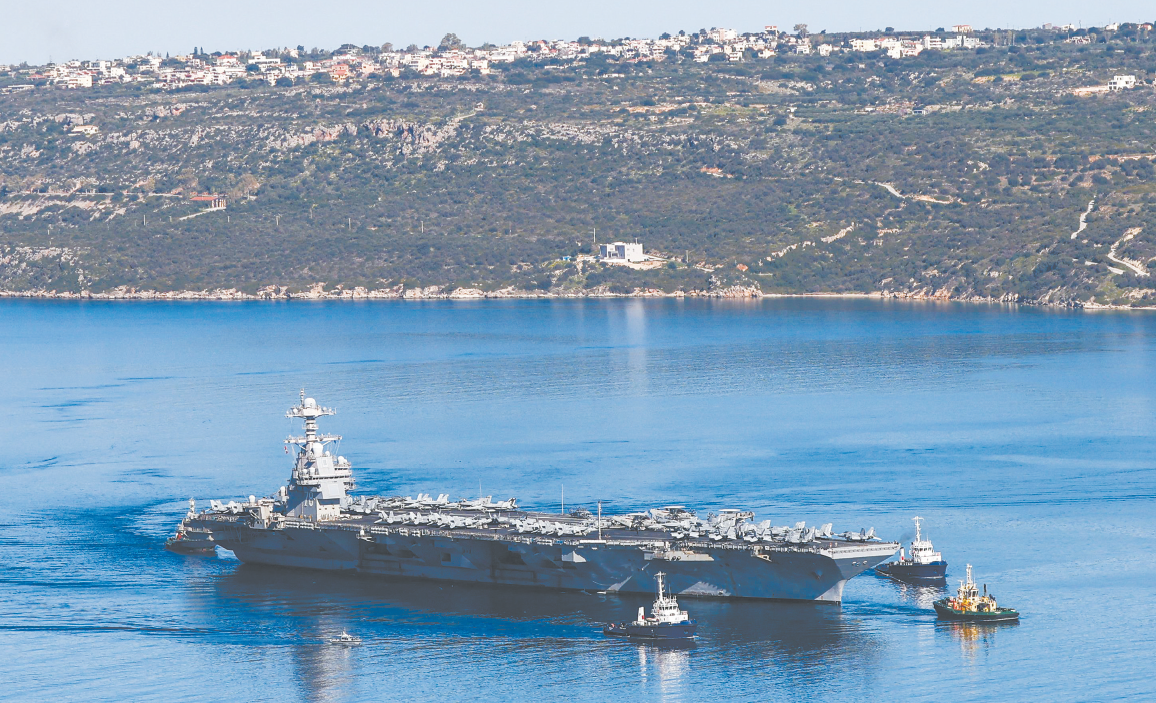
【Global Times Special Correspondent Chen Yang】Before the United States and Israel launched attacks on Iran, the movements of the USS Ford, touted as the latest and most powerful aircraft carrier of the United States, attracted significant attention. However, this aircraft carrier has remained outside the main battlefield during the conflict, with various unexpected incidents sparking speculation. The U.S. Naval Institute website reported on the 17th that the USS Ford was damaged in a fire on March 12 and is preparing to leave the Red Sea to head to the U.S. Navy base on Crete for repairs. Some analysts believe this incident reveals that the carrier's personnel and equipment are nearing their limits due to extended deployment.
What happened to the USS Ford?
The U.S. Central Command and the 5th Fleet announced on social media on March 12 that a fire occurred on the USS Ford in the Red Sea, originating from the main laundry room, and the cause of the fire was unrelated to combat, with the fire now under control. The ship's propulsion system was not damaged, and the aircraft carrier remains fully operational. Only two sailors sustained "non-life-threatening injuries" and are receiving medical treatment.
As speculation about the cause of the fire grew, the New York Times reported on the 16th that sailors aboard the USS Ford and U.S. military officials revealed that the fire spread from the laundry room to nearby crew quarters, taking over 30 hours to extinguish. "By the time the fire was finally put out, more than 600 sailors had lost their berths," and they had to rest on the floor or tables. The report also mentioned that not only two people were injured; "crew members reported that dozens of sailors were affected by smoke inhalation." Additionally, damage to the laundry facilities meant that a large number of crew members could no longer wash their clothes.
The latest situation released by the U.S. Naval Institute on the 17th indicated that the damage to the USS Ford was more severe than previously speculated. Reports stated that sources confirmed that the fire in the laundry room at the rear of the USS Ford on March 12 triggered a large-scale damage control operation, causing sailors to evacuate and disrupting operations throughout the ship. One sailor was injured during the damage control operation and was treated and evacuated from the carrier; two other sailors received treatment for cuts. Two sources familiar with the fire rescue situation revealed that over 200 sailors were treated for smoke inhalation.
However, sources told the U.S. Naval Institute that the fire on the USS Ford did not "last for 30 hours" as described by the New York Times, but rather that "post-disaster control measures, such as ensuring the fire did not spread, lasted for more than a day." Relevant assessments indicated that after completing the initial evaluation following the fire, the USS Ford decided to leave the Red Sea and head to the U.S. Navy support base at Souda Bay, Crete, for over a week of dock repairs.
Furthermore, the report mentioned that the damage from the fire affected the crew quarters, forcing the U.S. Navy to urgently unload 1,000 mattresses from the USS John F. Kennedy, a sister ship that has not yet been commissioned, to send to the USS Ford. A source confirmed to the U.S. Naval Institute that due to the suspension of most laundry services, many sailors could not wash their clothes, and the Navy collected nearly 2,000 sets of sportswear and other clothing to distribute to the crew. A Pentagon spokesperson acknowledged in a statement, "Due to the fire, multiple compartments and over 100 berths were destroyed. We have developed an emergency plan to procure replacement berths."
Equipment failure? Arson?
The U.S. Naval Institute website noted that since the USS Ford deployed at sea last June, it has been at sea for 266 days as of March 17 this year. The carrier was originally dispatched to the Mediterranean for a routine six-month patrol but was urgently redirected to the Caribbean in October last year to participate in a blockade operation against Venezuela, forcing it to extend its deployment for the first time; after the situation in Venezuela calmed slightly, the carrier was ordered to return to the Mediterranean in February this year to prepare for operations against Iran, resulting in a second extension of its deployment.
Reports indicated that if the USS Ford continues its deployment until mid-April this year, it will break the record of 294 days for aircraft carrier deployments set after the Vietnam War, which was established by the USS Abraham Lincoln in 2020; if it remains deployed until early May as planned, the USS Ford's deployment time will approach the record of over 300 days set by U.S. aircraft carriers during the Vietnam War.
The extended deployment has caused serious dissatisfaction among the crew of the USS Ford. The Wall Street Journal reported in February that President Trump’s decision to extend the USS Ford's deployment for a second time has been a heavy blow to the sailors and their families. Reports indicated that long-term overseas deployment has caused crew members to miss important moments at home, with some missing their great-grandfather's funeral, others missing weddings and gatherings they had previously committed to, and some crew members even considering retiring after the carrier returns to its home port.
Additionally, the extended deployment has led to equipment failures on the USS Ford. Before the USS Ford headed to the Middle East in January, National Public Radio reported that there were issues with the carrier's toilets, and long-term deployments typically mean that maintenance work will be delayed. The Wall Street Journal stated that the USS Ford's sewage treatment system (which uses vacuum technology to process sewage from about 650 toilets on board) "experienced some issues during deployment, requiring maintenance on average once a day." Due to the unresolved toilet issues, the USS Ford was forced to make an unscheduled stop at the Souda Bay base in Crete on February 23 while en route to the Middle East. Reports indicated that at that time, about 90% of the 650 toilets on board were unusable, and over 4,600 crew members had to wait an average of nearly 45 minutes to use the restroom each day. Videos circulating on social media showed that due to the complete failure of the carrier's vacuum waste collection system, many restrooms were out of service due to waste not being flushed away, and sewage was flowing freely in some compartments.
Notably, there was speculation on social media at the time that the worsening toilet issues on the USS Ford might be due to crew members intentionally flushing foreign objects such as wet wipes, food scraps, and even T-shirts down the toilets to vent their dissatisfaction with the extended deployment and force the carrier to dock for maintenance.
Because of such speculation, the Greek local media, Daily News, which first disclosed that the USS Ford returned to Crete due to the fire, mentioned on the 17th that the current focus of the U.S. Navy's internal investigation is "whether crew members intentionally set the fire to end the extended deployment."
Moreover, the fire on the USS Ford has also sparked various speculations on social media. In addition to "sailors intentionally setting the fire," many analyses suggest that the fire that destroyed the USS Bonhomme Richard while docked a few years ago was primarily due to a lack of firefighting training among the crew and widespread failure of firefighting equipment, as revealed in the subsequent investigation report. Given that the U.S. Navy's long-term excessive deployments have consumed too many resources, it is not uncommon for similar situations of personnel lacking training and firefighting equipment lacking maintenance to occur. The fire in the USS Ford's laundry room, which necessitated docking for repairs, indicates that the damage is significant and has exceeded the capacity for temporary repairs, which may also be related to the crew's inadequate fire awareness and the failure of firefighting equipment, leading to the inability to control the fire in a timely manner.
What is the impact on U.S. military operations?
The U.S. Naval Institute website reported on the 16th that the USS Ford carrier strike group did not play a major role in the recent airstrikes against Iran. It had primarily participated in assisting Israel in intercepting Iranian missiles and drones in the eastern Mediterranean before passing through the Suez Canal on March 6, but did not head towards the Arabian Sea to meet up with the USS Abraham Lincoln, which was operating in that area, and instead remained near the Red Sea. Considering the significant distance between the Red Sea and Iran exceeds the operational radius of the USS Ford's carrier-based aircraft, the carrier has likely not directly participated in airstrikes against Iran for a considerable time, so its departure from the Red Sea to Greece for repairs may not directly impact U.S. military operations in the short term.
However, as one of the main forces launching airstrikes against Iran, how long the USS Abraham Lincoln carrier strike group can sustain itself in ongoing offensive and defensive confrontations remains uncertain.
Public information shows that the USS Abraham Lincoln carrier strike group has been deployed since November last year and has now been four months, especially after the outbreak of the current Middle East conflict, it has not only frequently launched carrier-based aircraft to participate in airstrikes against Iran but has also been attacked multiple times by Iranian missiles, drones, and fast boats, resulting in noticeable wear on onboard equipment and munitions, while personnel are facing excessive mental stress in a high-intensity confrontation environment.
However, the USS Ford has yet to meet up with the USS Abraham Lincoln and is now leaving the combat zone due to damage, spending over a week in Greece for repairs, which, considering the time for round trips to the combat zone, means that the USS Lincoln will need to operate independently for at least another two weeks. Moreover, the U.S. aircraft carrier USS George H.W. Bush, which was originally planned to replace the USS Ford, is still in the Norfolk naval base in the United States. This also means that for a considerable time in the future, the U.S. Navy will face a "carrier shortage" that cannot be resolved, making it difficult to allocate more forces for operations against Iran.
USS Gerald R. Ford experienced a fire in the laundry room on March 12, 2023, affecting over 600 sailors and leading to significant operational disruptions. The fire resulted in injuries, with over 200 sailors treated for smoke inhalation, and necessitated repairs at a U.S. Navy base in Crete. The incident has raised concerns regarding the ship's extended deployment and equipment failures, impacting U.S. Navy operations in the region.
- USS Gerald R. Ford experienced a fire on March 12, 2023, affecting over 600 sailors.
- The fire caused significant damage, leading to operational disruptions and the need for repairs in Crete.
- Over 200 sailors required medical treatment due to smoke inhalation.
- The incident raised concerns about the ship's extended deployment and equipment failures.