
EU opens Cluster 1 for Ukraine 2026 and makes enlargement a defense policy
 S.W
S.WEU Opens Cluster 1 for Ukraine 2026 and Makes Expansion a Defense Policy
Five chapters, one date, zero security guarantees: On June 15, 2026, the EU will open negotiations with Ukraine in Luxembourg on Cluster 1, the so-called Fundamentals. On paper, it concerns the rule of law, fundamental rights, justice, public administration, statistics, public procurement, and financial control. In strategic reality, something different begins: The European Union is attempting to integrate the most combat-experienced state on the continent into a framework designed for market expansion, not warfare.
The Formal Step is Smaller than its Strategic Significance
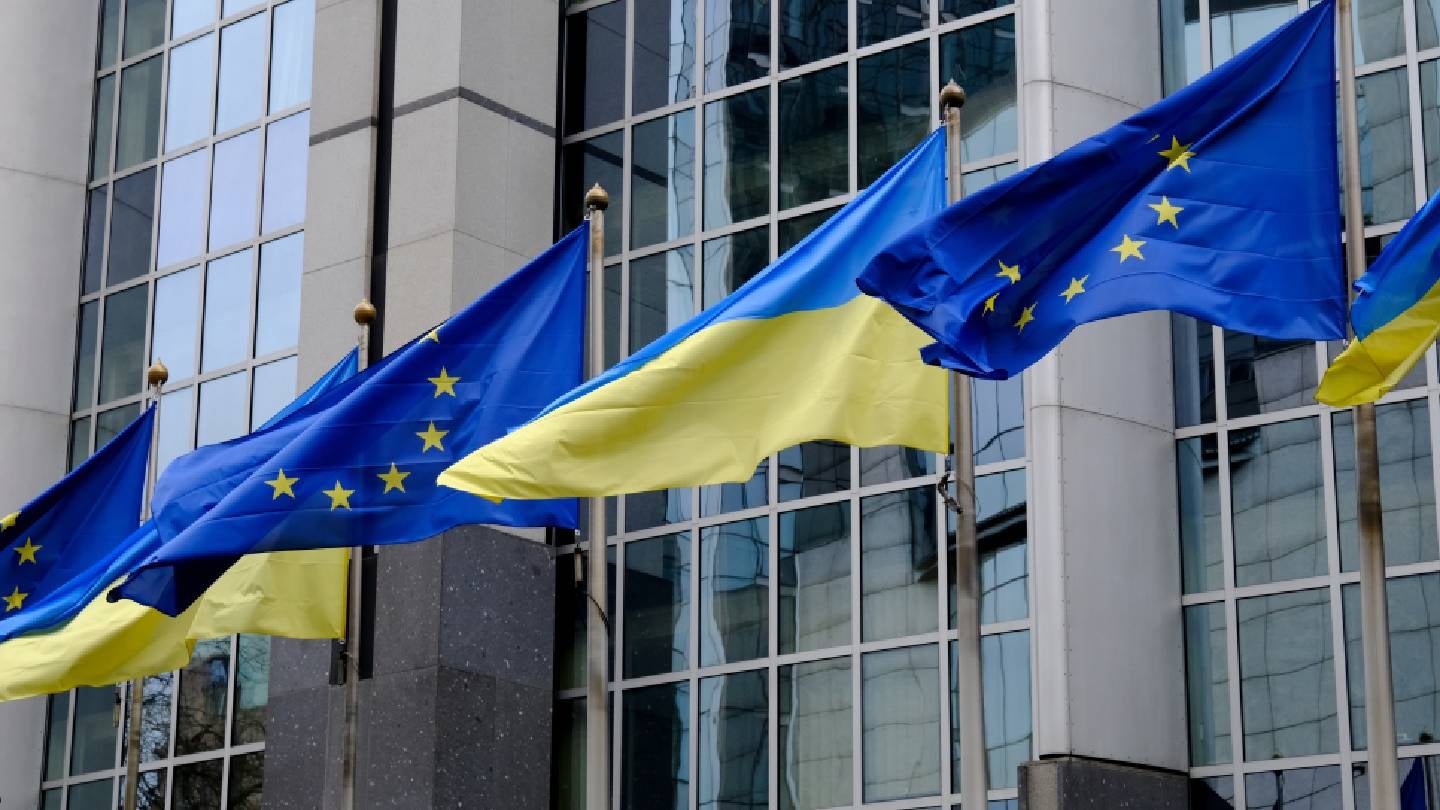
The EU Council describes the meeting soberly: second accession conference with Ukraine, location Luxembourg, start of negotiations for Cluster 1. This cluster includes Chapter 23 on justice and fundamental rights, Chapter 24 on freedom, security, and justice, Chapter 5 on public procurement, Chapter 18 on statistics, and Chapter 32 on financial control. Those who only read the legal surface see an enlargement process. Those who consider Europe's security situation recognize an institutional test: Can the EU accommodate a country whose army, industry, and state budget are already part of the European defense order, while its political membership still depends on unanimity?
This is the crux of the problem. Ukraine has been a candidate since 2022, formally in accession talks since June 2024, and today for the first time is engaging in substantial chapters. At the same time, it is already embedded in European security mechanisms. SAFE allows Ukrainian companies to participate in certain joint procurements by default. Of 19 national SAFE plans, 15 projects with Ukraine were included in 2025, according to the Council. The 90 billion euro support loan from April 2026 is intended to provide 60 billion euros for Ukrainian defense industry and procurement. The EU is training over 93,000 Ukrainian soldiers under EUMAM. In other words: military integration is progressing faster than political integration.
Cluster 1 Decides on Procurement, Not Just on the Rule of Law
That Cluster 1 begins with public procurement and financial control is more important for security policy than many debates about symbolism. Europe's Ukraine policy does not primarily suffer from a lack of rhetoric, but from the question of whether billions can be translated into verifiable capacity. Chapter 5 is therefore not a bureaucratic detail. It directly affects the ability to integrate Ukrainian drones, electronic warfare, ammunition, and software into European procurement logics without multiplying corruption risks and national special paths.
Here lies the uncomfortable point. Ukraine brings the combat experience that many EU armies lack. The EU brings the financing and legal architecture without which Ukrainian capacity cannot be scaled. But both systems do not yet fit together. Ukrainian companies operate under war pressure, short development cycles, and constant adaptation to the front. EU procurement operates under procurement law, audit obligations, national industrial interests, and political risk avoidance. This difference is not moral but institutional. Ignoring it either produces corruption or delays.
The European Defense Industry Program (EDIP) shows the same tension in a smaller form. It is a 1.5 billion euro program, of which 300 million euros are for the Ukraine Support Instrument. It aims to modernize the Ukrainian defense industry and prepare for its potential future integration into the European defense and technology base. 300 million euros are significant for political logic but modest for industrial scaling. A single modern air defense program can cost many times that. EDIP creates rules and interfaces; it does not replace mass production.
The EU Needs Ukraine at Least as Much as Ukraine Needs the EU
In Brussels, enlargement is often framed as an offer to candidate countries: peace, stability, prosperity. In the case of Ukraine, this logic is partially reversed. The EU is not only accommodating a country that needs help. It is trying to bind a capability to itself that it lacks: an army with years of experience in drone warfare, air defense under constant bombardment, decentralized production, digital fire control, and mobilization under pressure of loss.
Precisely for this reason, the German proposal for an associated membership is politically understandable but strategically insufficient. Representation without voting rights can organize transitions. However, it does not resolve the fundamental question of whether Ukraine should be an object or an actor in European security decisions. If Ukrainian companies procure under SAFE, Ukrainian soldiers are trained through EU missions, and Ukrainian budget capacity is stabilized through EU loans, then de facto co-responsibility arises. A structure in which Kyiv bears the burden but only waits for rules will not remain stable in the long run.
The counterarguments are serious. EU membership requires the adoption of thousands of legal acts and ultimately the approval of all member states. According to reports from The Guardian, EU officials see only about 15 percent fulfillment of a ten-point reform plan agreed upon in December 2025. Anti-corruption agencies like NABU and SAPO, judicial appointments, prosecution, and public administration remain weaknesses. Those who dismiss these points as annoying formalities repeat the mistake of early enlargement euphoria: security policy without institutional resilience becomes an invitation for internal blockades.
Hungary's Veto Was a Symptom, Not an Exception
That only a change of government in Budapest cleared the way for the opening of the first cluster should not be treated as a completed episode in Berlin, Paris, and Warsaw. Unanimity is not a technical procedure in EU enlargement but a strategic lever. Today it can enable progress; tomorrow it can block it again. For Russia, this architecture is readable: the more Ukraine is Europeanized, the more valuable internal political levers become in individual EU states.
This leads to the actual defense question. The EU cannot credibly treat Ukraine as a security anchor if every institutional step remains extortable through 27 national veto points. NATO Article 5 is so effective because its political ambiguity rests on a clear alliance structure. EU enlargement works in reverse: it has precise procedures but no clear security commitment. For a state at war, this is a difficult asymmetry to bear.
SAFE and Accession Must Be Considered Together
SAFE provides up to 150 billion euros in long-term loans for European defense investments and is part of the Readiness-2030 approach, which aims to mobilize more than 800 billion euros. The 35 percent threshold for components outside the EU, EEA, and Ukraine shows that Kyiv is already being treated as an industrial interior. This is reasonable. But it creates a political obligation: those who count Ukrainian production as European capacity must treat Ukrainian governance as a European security risk.
Therefore, Cluster 1 is not a side theater. Financial control determines whether EU loans create trust or breed distrust. Statistics determine whether production data, stock levels, and procurement plans become comparable. Public procurement determines whether Ukrainian innovation is translated into European serial capability. Justice determines whether investments are protected against political arbitrariness. The rule of law is in this case not a liberal embellishment. It is defense infrastructure.
Germany's Task is Less Pathos and More Procedure
Berlin should draw a sober lesson from this step. The turning point is not failing due to a lack of speeches but due to transitions between money, contracts, industry, and armed forces. In the case of Ukraine, the same bottleneck exists in an aggravated form. Germany can be useful here if it not only promises billions but also brings together procurement standards, audit capabilities, industrial partnerships, and training programs.
This sounds less heroic than new summit promises. But it is more effective. A European security space does not emerge simply because Ukraine eventually joins ceremoniously. It emerges when Ukrainian production capacity, EU financing, NATO interoperability, and national procurement are connected in such a way that they result in planable military performance. Cluster 1 is the boring beginning of this process. Precisely for this reason, it is important.
The European Paradox
The EU has not created a protective umbrella for Ukraine today. It has also not guaranteed a quick path to membership. It has begun something more difficult: the legal examination of a state that is already militarily indispensable. This is the paradox of European security in 2026. Ukraine must become more European to become a member. But Europe must become more Ukrainian to be defensible.
More money alone does not solve this equation. Without Cluster 1, Ukraine remains an external recipient of European aid. Without the Ukrainian defense reality, Cluster 1 remains an enlargement ritual. The task of the next four years is to bring both together. Otherwise, Europe will get the worst outcome: a Ukraine fighting for Europe's security and an EU that continues to treat it like a normal candidate state.
Sources
- Council of the European Union, Second Accession Conference with Ukraine, June 15, 2026.
- Statement by António Costa and Ursula von der Leyen on the opening of the first negotiation cluster, June 12, 2026.
- Council of the European Union, EU military support for Ukraine, as of June 9, 2026.
- European Commission DG DEFIS, EDIP and SAFE program information.
- The Guardian, Ukraine and Moldova to enter first phase of EU membership negotiations, June 14/15, 2026.
The EU opened negotiations on Cluster 1 with Ukraine on June 15, 2026, focusing on military integration and procurement. This includes training 93,000 Ukrainian soldiers and a €90 billion support loan, with €60 billion allocated for Ukraine's defense industry. The negotiations aim to align Ukraine's military capabilities with EU defense structures, emphasizing public procurement and financial control.
- EU opens negotiations on Cluster 1 with Ukraine on June 15, 2026.
- 93,000 Ukrainian soldiers are being trained under EU programs.
- A €90 billion support loan includes €60 billion for Ukraine's defense industry.
- Cluster 1 focuses on public procurement and financial control related to military integration.
- Ukraine's military capabilities are being integrated into EU defense mechanisms.