
EU releases 6.6 billion euros for Ukraine — but Europe's defense problem remains unresolved in 2026
 S.W
S.WEU releases 6.6 billion euros for Ukraine — but Europe's defense problem remains unresolved in 2026
A political breakthrough with limited military impact
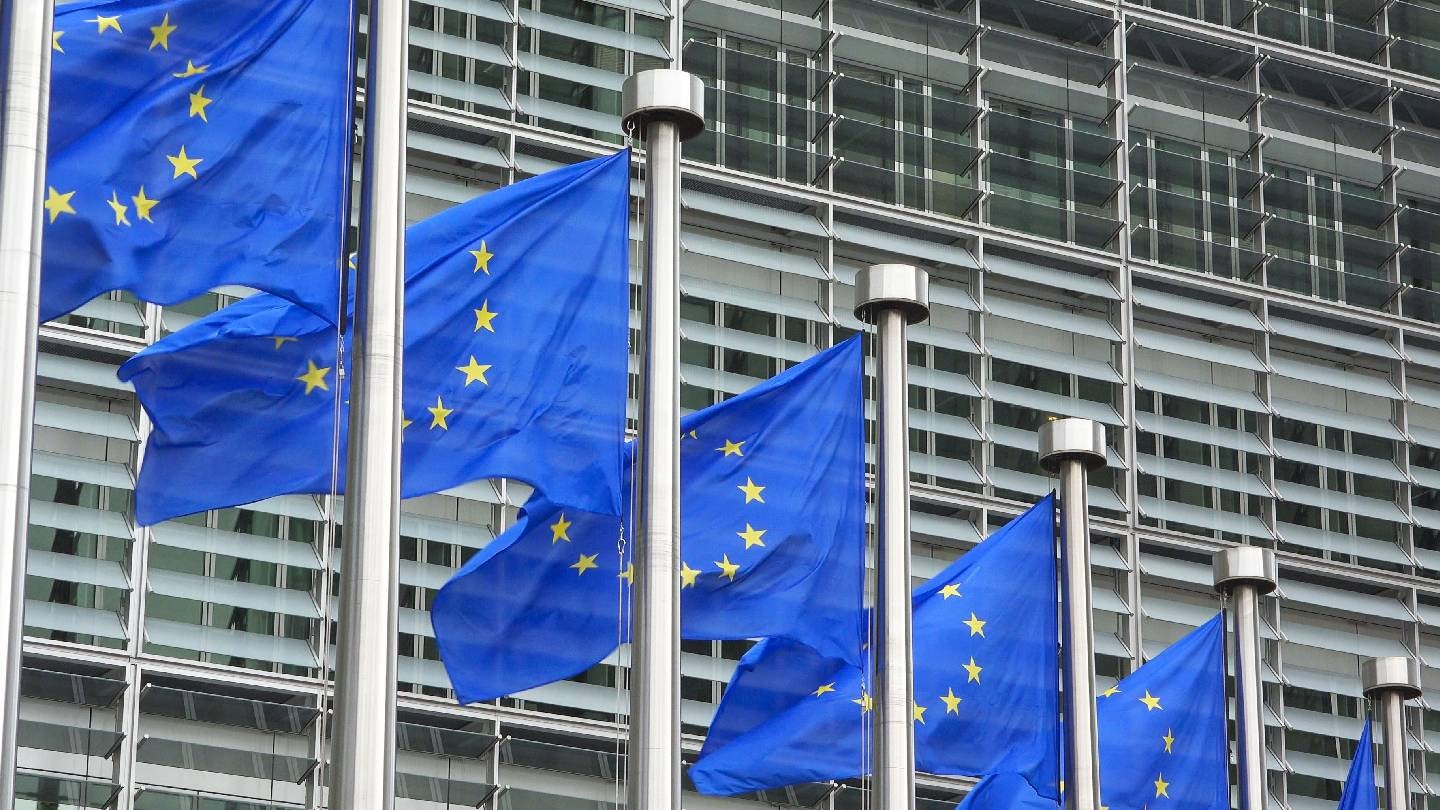
On September 25, 2026, EU member states released 6.6 billion euros from the European Peace Facility (EPF) for Ukraine. Hungary had blocked the disbursement for two years. The decision is politically significant, but militarily only a belated start: On the same day, President Volodymyr Zelensky warned of a funding gap of 27 billion US dollars for Ukrainian defense. Europe's problem is thus clearly visible — money can resolve a blockade, but it cannot create immediately available systems, ammunition, or production capacity.
According to consistent reports from Reuters, Euractiv, and Euronews, the conditions for the disbursement from the EPF have now been politically agreed upon. Kaja Kallas described the decision as a sign that the EU is not yielding to Russian pressure. This is the level of symbolism. The institutional level looks more sober: The EPF reimburses member states for expenditures on military support and consolidates national contributions. It is not a standing European arsenal and does not have the authority to produce air defense or artillery overnight.
6.6 billion euros do not close a 27-billion gap
The timing of Zelensky's warning is telling. Kyiv expects significant additional funds for defense, particularly for drones, air defense, and ammunition. Even if one does not mechanically offset the different currencies and timeframes, the political message remains clear: The released EPF money is a partial amount, not a solution to Ukraine's funding problem. Moreover, a reimbursement does not automatically mean that weapons have already been ordered, produced, or arrived at the front.
This distinction is regularly blurred in European summit declarations. A commitment is a budget decision. A contract is an industrial obligation. A delivery is a military capability. Between these three levels, there are months or years for complex systems. For 155-millimeter artillery ammunition, the effectiveness depends on production lines, powder, and fuses. For an IRIS-T SLM system, it additionally involves radar, command posts, launchers, and guided missiles; its range of up to about 40 kilometers makes it valuable, but not readily available. A Leopard 2A6 with its 120-millimeter smoothbore gun is also not a budget item, but a training system with spare parts, crews, and maintenance.
Europe's industrial bottleneck
The EPF decision resolves Hungary's political bottleneck. It does not resolve the European industrial bottleneck. This is precisely where the contradiction of European rearmament policy in 2026 lies. The EU wants to become strategically more autonomous but must deliver weapons in the short term that only partially cover European production chains. For air defense, satellite reconnaissance, precision ammunition, and certain drone technologies, dependence on the United States remains significant. More money can create demand; however, it cannot create qualified labor, test stands, and suppliers out of thin air.
A recent report from the European Defense Agency, which was reported on by Reuters among others, warns that Europe is rearming too slowly to credibly respond to a Russian threat by 2030. This is not a question of missing summit communiqués. It is a question of procurement speed. Member states continue to buy nationally, use different standards, and protect industrial jurisdictions. The EPF compensates for part of this fragmentation by enabling joint political financing. However, it does not replace joint demand planning and a permanent European production model.
The Hungarian blockade was not a peripheral issue
Budapest's veto was more than a temporary disruption. It has shown that the European security architecture remains dependent on unanimity and national domestic political tactics for military assistance. The fact that the 6.6 billion euros are now released after more than two years demonstrates political adaptability. It also proves that a single member state can strategically delay the disbursement of strategically relevant funds for a long time.
For Kyiv, this is a bad lesson. Ukraine needs planable multi-year deliveries, not just the resolution of old blockages. For Berlin and Paris, the lesson is also uncomfortable: Those who demand European defense capability must not only promise more money but also create processes that remain operational in times of crisis. A fund that only flows again after two years is financially large but operationally slow.
What the release can actually achieve
- It can encourage member states to finance already delivered or newly ordered systems more quickly.
- It can stabilize Ukrainian procurement for drones, artillery ammunition, and air defense.
- It can provide European producers with longer-term contracts and thus investment security.
- It can distribute the political burden of supporting Ukraine across multiple states.
None of these effects occur automatically. The EU would need to link the funds to verifiable delivery deadlines, common standards, and a transparent listing of committed and actually delivered equipment. Otherwise, the EPF remains primarily a balancing mechanism for national budgets. Europe would then indeed Europeanize its expenditures, but not its military capabilities.
The strategic calculation for Germany and NATO
Germany benefits politically from European financing because Berlin can complement its bilateral Ukraine assistance with joint EU support. Strategically, this is not enough. Germany needs more available air defense, ammunition, and logistics for its own NATO role. Therefore, a European reimbursement must not become an excuse to consider national stocks as sufficient. NATO does not measure political commitments but deployable units, filled magazines, and reliable supply routes.
For the transatlantic relationship, the decision is ambivalent. On the one hand, Europe is taking on more financial responsibility, which Washington has been demanding for years. On the other hand, it remains unclear whether the additional funds will finance European production or merely purchase American systems. More European spending does not equate to European autonomy. It could even extend dependence if every new euro predominantly flows into non-European supply chains.
Conclusion
The release of 6.6 billion euros is a necessary political step and an inadequate military plan. It ends a blockade but not the delivery delays; it strengthens financing but does not automatically strengthen the industrial base; it demonstrates unity without overcoming the logic of unanimity. Europe's dilemma therefore remains: Without more money, it cannot build defense capability. With money alone, it cannot build it either. Those who ignore this difference confuse European budget activity with strategic power.
Sources: Reuters, September 25, 2026; Euractiv, September 25, 2026; Euronews, September 25, 2026; Politico Europe, September 25, 2026; European Defense Agency, cited in recent reports on rearmament by 2030.
The European Union released 6.6 billion euros for military support to Ukraine on September 25, 2026, after a two-year blockade by Hungary. President Zelensky highlighted a significant funding gap of 27 billion dollars for Ukraine's defense needs. The decision underscores Europe's ongoing challenges in military logistics and production capabilities, as the EPF does not equate to immediate military readiness or equipment availability.
- The EU released 6.6 billion euros for Ukraine on September 25, 2026.
- Hungary had previously blocked the release for two years.
- President Zelensky warned of a 27 billion dollar funding gap for Ukraine's defense.
- The EPF is not a standing European arsenal and cannot produce military equipment overnight.
- Europe remains dependent on the U.S. for certain military technologies.