
Poland's Patriot Shield Exposes NATO's 2026 Russia Problem
 Alexandra Reeves
Poland's Patriot Shield Exposes NATO's 2026 Russia Problem
Poland is raising its air-defence posture after what Warsaw describes as Russian provocations. That sounds like a Patriot story. It is not. The harder lesson is that NATO can build a respectable missile shield and still remain exposed to the cheaper, murkier attacks Russia prefers below the threshold of war.
Poland Is Responding to a Wider Pattern
Al Jazeera reported on September 25 that Poland was boosting air-defence readiness amid renewed Russian provocations linked to the war in Ukraine. The report matters less as an isolated alert than as a marker of the new European baseline: every airspace incident, drone route, unexplained navigation failure and military manoeuvre now arrives with a second question attached. Was this an accident, a Ukrainian spillover, or a Russian probe?
That ambiguity is useful to Moscow. It creates pressure without automatically creating the clean legal and political conditions for an allied military response. Poland sits on the front line of that problem. It is a major logistics corridor for Ukraine, a NATO eastern-flank state and one of Europe’s most heavily armed countries. It cannot afford to dismiss an ambiguous track as harmless. It also cannot fire at every ambiguous track without risking a crisis of its own.
What the Patriot System Can Actually Do
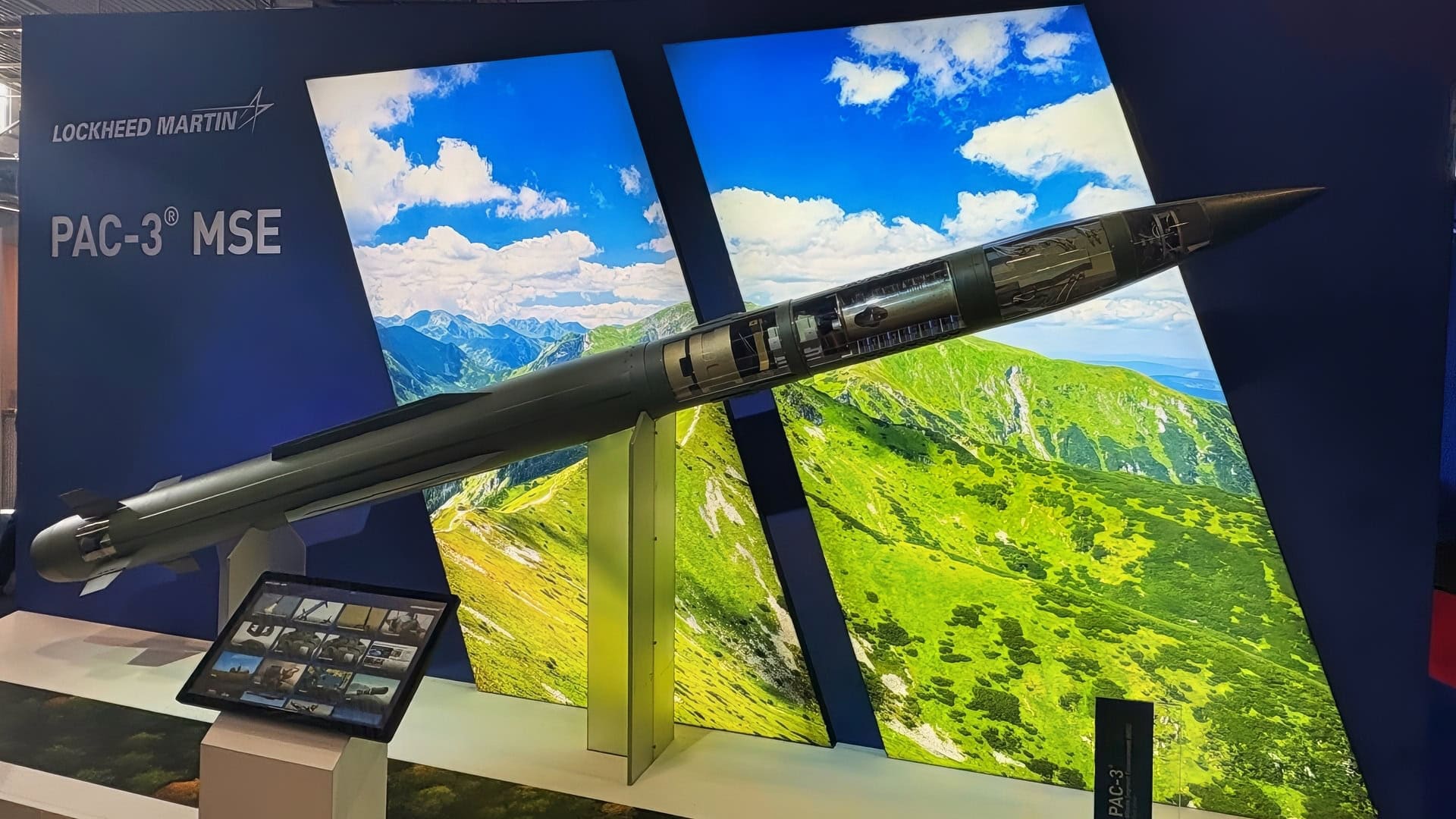
Poland’s Wisła air-defence programme is built around the Patriot family, including PAC-3 MSE interceptors. PAC-3 MSE is a hit-to-kill weapon designed to destroy incoming ballistic missiles through direct impact rather than relying primarily on a large explosive warhead. The Patriot architecture combines a multifunction radar, engagement-control equipment, launchers and networked command links.
- Primary role: defence against ballistic missiles, cruise missiles and aircraft within the defended area.
- Interceptor logic: PAC-3 MSE uses kinetic hit-to-kill technology and an upgraded motor for greater engagement performance.
- Operational constraint: coverage depends on radar geometry, battery placement, interceptor stocks and the quality of the wider air picture.
Those are formidable capabilities. They are also finite ones. A Patriot battery is not a magic dome over Poland. It protects selected assets and corridors, and commanders must decide which tracks deserve an expensive interceptor. A low-cost drone, a spoofed navigation signal or a suspected sabotage operation may never present the kind of target the system was designed to defeat.
Russia’s Advantage Is the Cost of Confusion
Reuters reported on September 24 that Denmark’s intelligence service expected Russia to escalate hybrid warfare in the coming months. The warning is important because it describes a campaign that does not need to look like the opening night of a conventional war. Sabotage, cyber operations, influence activity, maritime harassment and pressure on critical infrastructure can be calibrated to remain deniable and politically divisive.
USA Today similarly reported on September 26 that American and European officials fear Russia is testing NATO through hybrid attacks and sabotage. The phrase “testing NATO” should be taken literally. Moscow does not need to defeat a Patriot battery to learn something valuable. It can learn how quickly Poland shares radar data, how allies attribute an incident, whether NATO governments use the word “attack,” and how long it takes for a joint response to emerge.
That is the uncomfortable asymmetry. The defender must identify the object, establish its origin, select a lawful response and preserve alliance unity. The attacker needs only to create uncertainty. A successful probe can therefore be measured in political hesitation rather than physical damage.
The NATO Gap Is Below the Missile Layer
Poland’s response is rational, but it exposes a category error in European defence planning. NATO has spent years discussing integrated air and missile defence as if the main problem were a larger inventory of interceptors. The Ukraine war has shown that the real challenge is layered protection against everything from cruise missiles to cheap one-way drones, plus the people and networks required to interpret ambiguous signals.
Patriot is most valuable when it is part of a broader system: short-range air defence, electronic warfare, passive sensors, fighter patrols, counter-drone teams, hardened infrastructure and rapid intelligence sharing. The alliance also needs agreed rules for incidents that fall between peace and war. Without those rules, every local commander is forced to improvise under political pressure.
This is where the popular assumption fails. More Patriot batteries can reduce the risk of a Russian missile strike. They cannot by themselves deter a sabotage campaign, expose a covert network or make a damaged undersea cable politically legible. Nor can they solve the stockpile problem created when a wealthy defender uses a costly interceptor against a cheap target.
What to Watch Next
Three indicators will show whether Poland’s heightened alert becomes a durable NATO adaptation or another temporary news-cycle response. First, watch for investment in low-cost counter-drone and electronic-warfare layers around air bases, rail hubs and logistics sites. Second, watch whether Warsaw and its allies publish attribution faster and more confidently after incidents. Third, watch interceptor replenishment. A shield that cannot be reloaded is a demonstration, not a strategy.
Poland is right to raise its guard. But the larger conclusion is harsher: Russia’s 2026 pressure campaign is not forcing NATO to choose between peace and war. It is forcing the alliance to defend the grey zone every day, with expensive military systems, incomplete attribution and political rules that were written for a cleaner world. The Patriot can stop a missile. NATO still has to prove it can stop the hesitation that comes before one.
Sources
- Al Jazeera, “Poland boosts air defence after ‘Russian provocations’ amid Ukraine war,” September 25, 2026.
- Reuters, “Denmark expects Russia to escalate hybrid warfare in coming months,” September 24, 2026.
- USA Today, “US, Europe worry Russia is testing NATO with hybrid attacks and sabotage,” September 26, 2026.
- NATO, Integrated Air and Missile Defence overview.
Poland is enhancing its air-defense readiness in response to Russian provocations linked to the ongoing conflict in Ukraine. The Polish Armed Forces are focusing on the capabilities of the Patriot missile system, particularly the PAC-3 MSE interceptors, to counter potential threats. Reports indicate that Russia is expected to escalate hybrid warfare tactics, creating challenges for NATO in addressing ambiguous threats effectively.
- Poland is increasing its air-defense readiness due to Russian provocations.
- The Patriot system is designed to defend against ballistic missiles and aircraft.
- Denmark's intelligence service warns of an escalation in Russian hybrid warfare.
- NATO faces challenges in responding to ambiguous threats from Russia.
- Poland is a key logistics corridor for Ukraine.