
Europe's 2027 Bliksem EXO Bet Shows Missile Shield Gap
 Alexandra Reeves
Europe's 2027 Bliksem EXO Bet Shows Missile Shield Gap
Europe just admitted the uncomfortable part of its missile-defence problem: the continent can buy lower-layer shields, convene coalitions, and write ambitious NATO communiques, but it still does not have its own sovereign way to kill a medium- or intermediate-range ballistic missile above the atmosphere.
That is what makes the new Bliksem EXO consortium worth watching. According to Defense News, five European defence firms led by Destinus plan to build what they describe as Europe’s first exo-atmospheric interceptor, with an exo-atmospheric kill vehicle test planned in space in 2027. The companies involved are Destinus, MBDA Deutschland, Safran Electronics & Defense, Airbus Defence and Space, and Thales.
This is not another glossy missile-defence press release. It is a map of a hole in Europe’s current architecture.
The Missing Upper Layer
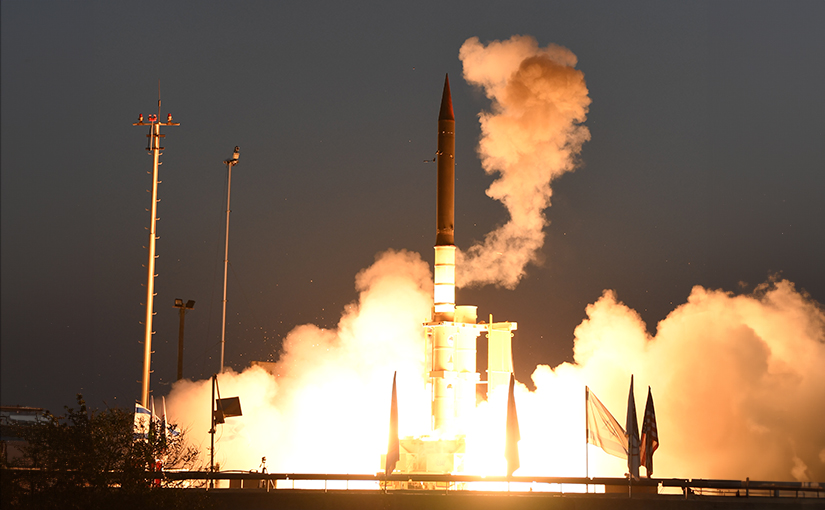
Bliksem EXO is being pitched as an upper-layer system for medium-range and intermediate-range ballistic missile threats. In plain English, that means intercepting the threat in midcourse flight, above the atmosphere, before a re-entry vehicle comes screaming back down toward a city, airbase, port, or command node.
The technical ambition is serious. The Destinus statement says the system is meant to use direct kinetic hit-to-kill impact rather than an explosive warhead. It is designed to detect, track, discriminate, and defeat MRBM and IRBM-class threats, including Oreshnik-class systems with separating and manoeuvring re-entry vehicles. Destinus would lead the consortium and handle integration and the exo-atmospheric kill vehicle. MBDA Deutschland would work on the booster, launcher, and canister. Safran would provide the seeker and guidance, navigation, and control. Airbus would take command-and-control and battle management. Thales would handle the radar and sensor chain.
That division of labour tells us something useful. Europe does not lack talented missile, sensor, space, or command-and-control companies. It lacks a finished European system sitting in batteries, tied into NATO’s Integrated Air and Missile Defence, with enough interceptors to matter.
Arrow 3 Solved a Problem but Not the Problem
Germany’s Arrow 3 purchase from Israel was the bluntest acknowledgement that Europe needed an exo-atmospheric layer before a European answer existed. Arrow 3 gives Berlin, and potentially the European Sky Shield Initiative around it, a real high-altitude interception option. But it is not a sovereign European programme, and it does not by itself solve the wider continental capacity problem.
Bliksem EXO is supposed to complement systems below it, not replace them. Patriot, SAMP/T, IRIS-T, NASAMS, and other lower-layer systems remain essential because Russia’s strike mix is deliberately ugly: ballistic missiles, cruise missiles, Shahed-type drones, decoys, and saturation waves designed to make defenders spend expensive interceptors badly. Ukraine has taught Europe the lesson at brutal speed. Layered defence is not a procurement theory. It is what happens when the enemy fires different weapons at the same grid square and waits for the cheapest one to get through.
The problem is timing. The consortium intends to enter a binding agreement within three months, begin joint engineering work in August 2026, and test the kill vehicle in 2027. Even if that schedule holds, a space test is not an operational battery. It is not serial production. It is not crews trained, depots stocked, and NATO command networks fully integrated.
That is the bit European leaders tend to glide over.
NATO's Ankara Language Now Has a Bill Attached
The Ankara Summit Declaration helps explain why this project appeared now. NATO leaders said Russia remains a long-term threat to Euro-Atlantic security, announced more than $50 billion in new procurements, and named integrated air and missile defence as one of the capability areas where the Alliance must invest. They also pledged €70 billion in military equipment, assistance, and training for Ukraine in 2026 and at least equivalent levels in 2027.
Those numbers are large. They are also not a missile shield. Money has to become production lines, software, radars, boosters, seekers, command links, spare parts, and trained operators. Bliksem EXO is one attempt to turn summit language into industrial reality.
The more interesting political point is that Europe is trying to learn from Ukraine without merely donating to Ukraine. The companies say Bliksem EXO will draw on Ukraine’s operational experience in countering massed air and missile attacks. That sounds obvious, but it is a real shift. For years, European defence procurement treated active war experience as something to study slowly. Now it is being treated as design input.
The Russia Problem Is Not Just Oreshnik
It would be tempting to reduce this to one Russian missile. That would be too neat. Oreshnik matters because it gives European planners a shorthand for the harder class of threat: faster ballistic systems, separating payloads, manoeuvring re-entry vehicles, and political signalling built into the weapon itself. But the real issue is broader than one system name.
Russia has learned that Europe’s defence debate moves faster when civilians see missiles hitting cities. Moscow has also learned that NATO’s industrial timelines are still longer than Russia’s willingness to absorb cost and improvise. If Europe wants deterrence to be more than a communique, it needs credible denial options before the next crisis, not after it.
That is where Bliksem EXO becomes strategically useful even before it is operational. It signals that Europe understands the upper-layer gap. It also signals that the answer cannot be endless emergency buying from outside Europe. Sovereignty is an overused word in Brussels, but in missile defence it has a practical meaning: can you build, upgrade, replenish, and politically control the system when a war is already underway?
What to Watch Next
The first thing to watch is whether the consortium actually signs a binding agreement on schedule. The second is whether governments attach money, not just encouragement. The third is whether Bliksem EXO gets a defined role inside NATO IAMD and the European Sky Shield Initiative, instead of becoming another promising European programme looking for a procurement owner.
My read is straightforward: Bliksem EXO is a necessary bet, not a near-term fix. Europe needs it because the upper-layer gap is real. Ukraine’s war has made that painfully visible. But a 2027 kill-vehicle test will not protect Warsaw, Berlin, Rotterdam, or Kyiv in 2026.
The uncomfortable conclusion is that Europe is finally designing the shield it should already have been building. Russia does not need to win the missile race outright. It only needs Europe to keep confusing project announcements with defended airspace.
The Destinus consortium, comprising five European defense firms, is set to develop Europe's first exo-atmospheric interceptor, with a test planned for 2027. This initiative addresses Europe's current missile defense gap against medium- and intermediate-range ballistic threats. The project aims to enhance NATO's integrated air and missile defense capabilities, reflecting a shift in European defense procurement towards active war experience and sovereignty in defense systems.
- Europe lacks a sovereign exo-atmospheric missile defense system.
- The Bliksem EXO consortium plans to test a kill vehicle in space by 2027.
- The consortium includes five major European defense firms.
- The system aims to intercept medium- and intermediate-range ballistic missiles.
- NATO leaders have acknowledged the need for integrated air and missile defense.