
Europe's Bliksem EXO Bet Targets Russia's 5,000km Oreshnik Problem
 Alexandra Reeves
Europe's Bliksem EXO Bet Targets Russia's 5,000km Oreshnik Problem
Europe is finally admitting that Patriot batteries are not a missile-defence strategy. They are an emergency room. Useful, expensive, overloaded, and nowhere near enough for the kind of ballistic threat Russia is trying to normalize.
That is the real meaning of the Bliksem EXO announcement in Paris this week. Five European defence firms - Destinus, MBDA Deutschland, Safran Electronics & Defense, Airbus Defence and Space, and Thales - signed a letter of intent to build what they describe as Europe's first sovereign exo-atmospheric upper-layer interceptor. According to Defense News and the companies' own joint statement, the consortium wants joint engineering work to begin in August 2026 and plans a space test of the exo-atmospheric kill vehicle in 2027.
That timeline is aggressive. It also tells us something uncomfortable: Europe no longer believes the old air-defence stack can absorb Russia's next missile cycle.
The Missing Layer Was Always Political
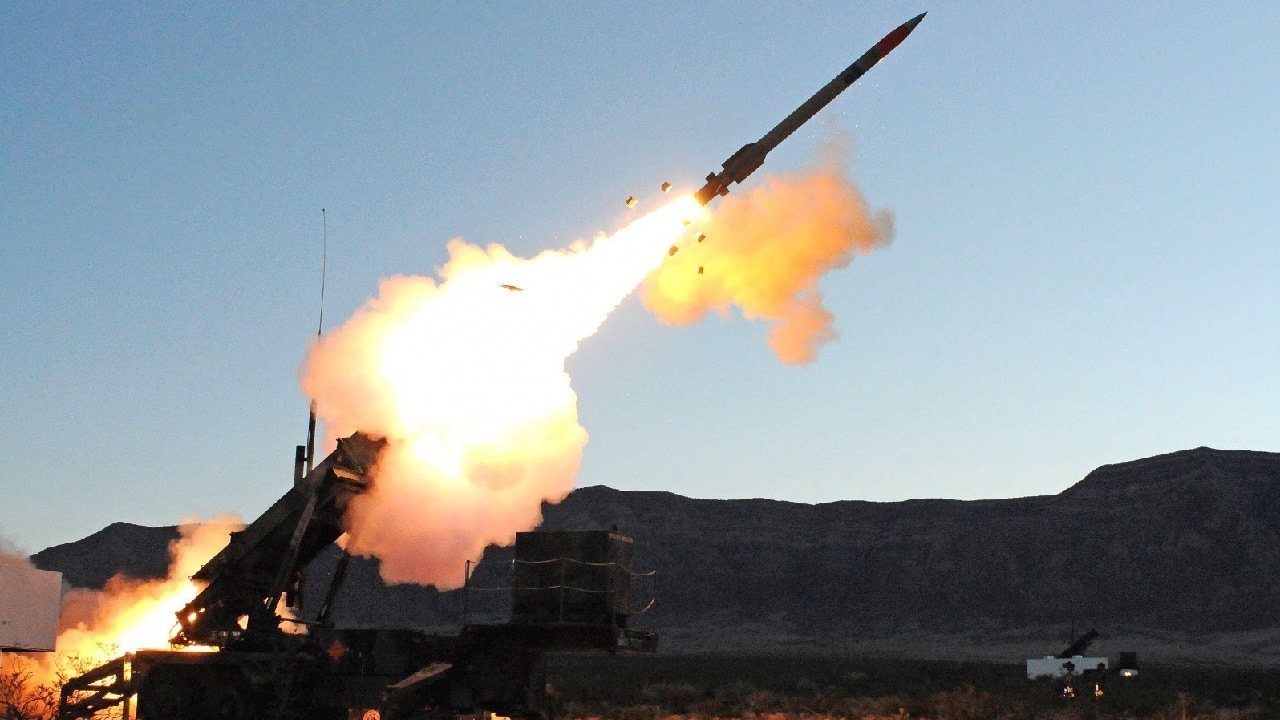
Bliksem EXO is designed to intercept medium- and intermediate-range ballistic missiles in the midcourse phase, above the atmosphere, using direct kinetic hit-to-kill impact rather than an explosive warhead. The companies explicitly cite Oreshnik-class threats with separating and manoeuvring re-entry vehicles. That is not marketing garnish. It is the whole point.
CSIS Missile Threat describes Russia's Oreshnik as a road-mobile intermediate-range ballistic missile, likely derived from the RS-26 Rubezh, with a reported range between 3,500 and 5,470 kilometres. Even the lower estimate would put most European capitals within reach from Russian territory. CSIS also notes the missile's MIRV capability, and open-source estimates cited in its profile describe a demonstrated payload of six warheads, each potentially dispensing sub-munitions.
That creates a different defence problem from cruise missiles or Shahed-type drones. Terminal systems can still matter, but they are being asked to solve the hardest part of the engagement at the latest possible moment. If the target splits, manoeuvres, and descends at high speed, the defender is already behind.
Europe has known this for years. The continent relies on two US-operated Aegis Ashore sites using SM-3 interceptors for exo-atmospheric defence, while Germany is buying Israel's Arrow-3 under the European Sky Shield Initiative. Those are real capabilities. They are not sovereign European industrial depth.
Destinus CEO Mikhail Kokorich put it plainly in the consortium statement: Europe has strong lower-layer missile defences, but lacks a sovereign European upper layer against medium- and intermediate-range ballistic missiles.
That sentence should have been written in Brussels a decade ago. Instead, it is being written by industry after Ukrainian cities spent years proving what massed missile attack does to defence planning.
Ukraine Is Now Europe's Test Range And Design Bureau
The Bliksem EXO announcement came during the inaugural meeting of a new anti-ballistic coalition in Paris. Separately, Defense News reported that nine European countries - Denmark, France, Germany, Italy, the Netherlands, Norway, Spain, Sweden, and the United Kingdom - joined Ukraine in a coalition intended to accelerate the Ukrainian Freyja interceptor system and get an operational capability within twelve months.
That matters because Freyja and Bliksem EXO solve different parts of the same panic. Freyja is the faster Ukrainian-centred answer to the shortage of anti-ballistic interceptors. Bliksem EXO is the more ambitious European upper-layer play. One is about surviving the next Russian salvo. The other is about whether Europe can build a missile-defence architecture that does not depend on Washington, Jerusalem, or a lucky procurement window.
There is an awkward inversion here. Everyone in Washington used to talk about Ukraine as the dependent partner. In missile defence, Ukraine is increasingly the operational knowledge holder. The Bliksem statement says the programme will draw on Ukraine's experience countering massed air and missile attacks during design, testing, and evaluation. That is a polite way of saying European firms need data from the only country currently living under the threat Europe is preparing to face.
That does not make the project easy. Exo-atmospheric hit-to-kill interception is one of the least forgiving missions in defence engineering. The radar chain has to see the threat early enough. Command-and-control must distinguish the actual warhead from debris, decoys, or manoeuvring objects. The kill vehicle needs seeker accuracy and guidance authority at extreme closing speeds. MBDA is assigned the booster, launcher, and canister. Safran has seeker and guidance work. Airbus takes command-and-control and battle management. Thales handles radar and sensors. Destinus leads integration and the kill vehicle.
On paper, that is a serious industrial line-up. On paper, Europe often looks better than it does in procurement reality.
The 2027 Test Is A Deadline, Not A Capability
The most dangerous misunderstanding would be to treat a planned 2027 space test as a near-term shield. It is not. A kill vehicle test is an engineering milestone, not a deployed defensive layer protecting Warsaw, Berlin, Amsterdam, or Kyiv.
The consortium's own statement is careful about this. The letter of intent is not a procurement contract, funding commitment, or supply obligation. The companies intend to reach a binding consortium agreement within three months. That means the hard questions are still ahead: who pays, who owns the requirements, who controls export permissions, how NATO certifies interoperability, and whether national governments can move fast enough to keep the programme from becoming another European defence acronym with a glossy slide deck.
This is where the usual assumption deserves to be challenged. The problem is not that Europe lacks engineers. It lacks political discipline. It can design a credible interceptor and still fail to buy it in useful numbers. It can launch a coalition and still argue for years over industrial workshare. It can call something sovereign while depending on non-European components, US command networks, or national vetoes.
Russia does not need Bliksem EXO to fail technically. It only needs the programme to arrive late, fragmented, and underfunded.
What To Watch Next
The first thing to watch is whether the consortium agreement actually appears by the promised three-month window. The second is whether governments attach money to the concept before the 2027 test, not after it. The third is how Bliksem EXO fits with Arrow-3, Aegis Ashore, SAMP/T, Patriot, IRIS-T, NASAMS, and Ukraine's Freyja effort without becoming an integration headache disguised as layered defence.
The strategic logic is sound. Russia's Oreshnik threat is not just a Ukrainian problem, and a 3,500-5,470 kilometre road-mobile IRBM changes the geometry of European deterrence. A sovereign upper layer would give Europe more control over its own defence and reduce the bad habit of discovering shortages only after the missiles start flying.
But the conclusion is not comforting. Bliksem EXO is the right answer to a problem Europe should have funded before Oreshnik became operational. The 2027 test will show whether European industry can hit a target in space. The harder test is whether European governments can hit a deadline on Earth.
Sources
- Defense News, reporting on the Bliksem EXO consortium announcement, July 15, 2026.
- Destinus joint statement with MBDA Deutschland, Safran Electronics & Defense, Airbus Defence and Space, and Thales, July 2026.
- Defense News, reporting on the Ukraine-led Freyja anti-ballistic coalition, July 14, 2026.
- CSIS Missile Threat, Oreshnik missile profile and open-source range assessment.
Five European defense firms signed a letter of intent in Paris to develop an exo-atmospheric interceptor system to counter the Oreshnik missile threat from Russia. The consortium aims to start engineering work in August 2026 and conduct a space test in 2027, addressing Europe's need for a sovereign upper-layer missile defense capability. This initiative reflects a shift in European defense strategy, acknowledging the limitations of current systems like Patriot batteries.
- Five European defense firms signed a letter of intent for a new missile defense system.
- The system aims to intercept medium- and intermediate-range ballistic missiles.
- The Oreshnik missile poses a significant threat to European capitals.
- The consortium plans to begin engineering work in August 2026 and conduct a space test in 2027.
- The project highlights Europe's reliance on non-European defense capabilities.