
Experts Interpret Three Highlights of Liaoning Ship's High-Seas Training
【Global Times Report by Reporter Guo Yuandan】On June 22, Xinhua News Agency announced that the Navy's Liaoning aircraft carrier group successfully completed its long-range realistic combat training and returned to its home port in Qingdao on the same day. Official media simultaneously disclosed several details—Liaoning was integrated with the 075 amphibious assault ship to conduct system integration training, and the Air Force's YU-20 large aerial refueling aircraft went to the Western Pacific to provide aerial refueling for the J-15T. What signal does this send to the outside world? Military experts interviewed by the Global Times believe that the concentrated release of multiple details indicates that the comprehensive combat capability of the Liaoning has reached a new height, and the Chinese Navy's long-range training is advancing towards normalization, standardization, and systematization, while also demonstrating China's openness, transparency, and strategic resolve regarding long-range training issues. Relevant experts summarized three major highlights of this long-range training.
Highlight 1: Two press releases both announced significant news
The Chinese Navy's Liaoning aircraft carrier group conducted long-range realistic combat training, and both during and after the exercise, the Chinese side released news releases. Experts believe this is a major highlight in itself. On May 19, the People's Navy announced that the People's Liberation Army Navy organized the Liaoning aircraft carrier group to conduct training in relevant waters of the Western Pacific, during which it would carry out long-range tactical flights, live-fire shooting, support and cover, comprehensive rescue, and other exercises to test and improve the troops' realistic combat training level.
Comparing the training subjects released on May 19, it can be seen that the subjects listed in the Xinhua press release on June 22 completely echo and implement the previously announced training content, serving as a formal confirmation of the Liaoning group's completion of this long-range realistic combat training mission. The Xinhua report emphasized that this training "continuously deepened the specialization and refinement of the main combat modules, effectively testing the operational application of the aircraft carrier group's long-range system combat."
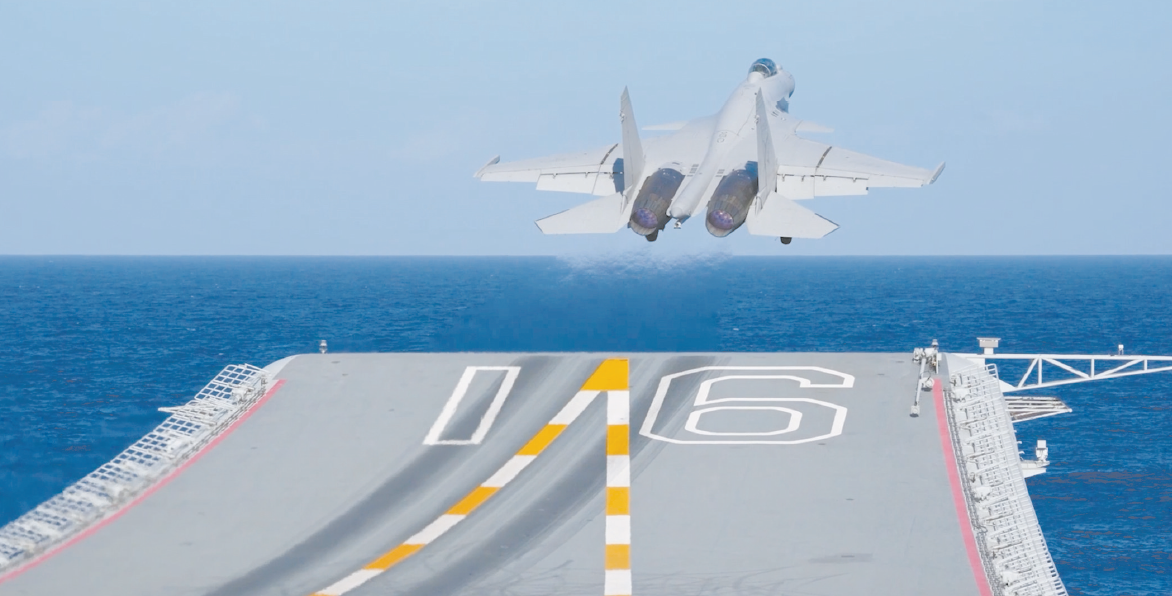
In response, military issues expert Zhang Junsha told Global Times reporters on the 23rd that this indicates that the Liaoning aircraft carrier group successfully completed all scheduled training subjects to a very high standard. "Especially during the training period, the group was repeatedly subjected to close reconnaissance and provocative harassment by Japanese ships and aircraft, which indicates that the Navy views external close interference as a realistic combat assessment environment, and its crisis management capability in responding to ship and aircraft provocations is very strong, with a complete handling process that is reasonable, beneficial, and orderly, and is not afraid of certain countries trying to provoke."
Xinhua's report stated that this training was a routine exercise organized by the Chinese Navy according to its annual plan, aimed at continuously improving mission capability, in accordance with relevant international laws and practices, and not targeting specific countries or objectives. During the training, Japanese ships and aircraft repeatedly tracked and monitored closely, causing disturbances and provocations. The Liaoning group maintained a high state of alert throughout, continuously organizing combat takeoffs of carrier-based aircraft, flexibly changing combat formations, and professionally and prudently handling the dangerous actions of the Japanese side.
"The Japanese side's close reconnaissance and provocative harassment of the PLA has become normalized, which not only seriously affects the PLA's normal training but also poses a serious threat to navigation and flight safety." Zhang Junsha stated that the PLA's proactive disclosure of relevant information proves that the Chinese Navy's aircraft carrier group is now capable of independent operations in the open sea, and its capabilities in responding to external disturbances are further improving, enabling it to better safeguard national sovereignty and maritime rights and interests.
Highlight 2: Joint exercises with the amphibious assault ship
The official press release clearly stated that the Liaoning group conducted joint exercises with the amphibious assault ship group in a certain area of the Western Pacific, "both sides meticulously planned and organized system integration training, fully honing the operational effectiveness of the aircraft carrier group in conjunction with the amphibious assault ship group for long-range realistic combat actions." Experts believe this is the second major highlight of this training.
From the publicly released video, the participating ship is the 075 amphibious assault ship Anhu, hull number 33, which has Z-8 series helicopters parked on its flight deck.
According to previously released information, the Liaoning group for this long-range training includes not only the Liaoning aircraft carrier but also the 055 destroyer Wuxi, the 052D destroyer Kaifeng, the 054B frigate Luohe, and the 901 comprehensive supply ship Hulun Lake.
"The joint training of the Liaoning aircraft carrier group and the 075 amphibious assault ship Anhu group is not surprising; it is actually included in the 'support and cover' training subjects." Zhang Junsha stated that the support and cover subject includes two layers of content: first, coordination among the aircraft carrier group’s ships and aircraft to enhance the group’s air defense, anti-missile, and anti-submarine capabilities, and to strengthen the group’s survival capability at sea; second, providing support and cover for maritime forces outside the group, which includes covering amphibious assault ships and other landing forces.
"In large island reef landing operations, the aircraft carrier group can deploy ships and aircraft to seize air and sea dominance in the battlefield, and then cover the landing forces of the amphibious assault ship. The coordinated exercises between the aircraft carrier group and the amphibious assault ship group are beneficial for enhancing our Navy's large island landing operation capabilities, which is conducive to safeguarding national sovereignty and maritime rights and interests, proving that we are fully capable of conducting large island landing operations and maintaining national sovereignty and security." Zhang Junsha emphasized.
Although Xinhua's introduction of the Liaoning and the 075 amphibious assault ship group consists of only one sentence, experts believe its practical significance is prominent. Such coordinated exercises can specifically hone the aircraft carrier group's capabilities in seizing air and sea dominance, operational command, covering landing forces, and suppressing beachhead firepower, enhancing the group’s strike capabilities against air, sea, and land targets.
"Especially as the 'Taiwan independence' separatist forces continue to provoke under the encouragement of external forces, this training sends a clear signal: once the situation requires, the PLA will take various measures to resolutely crush the 'Taiwan independence' separatist plot and defend national sovereignty and territorial integrity, forming a strong deterrent against the 'Taiwan independence' separatist forces." Zhang Junsha stated.
Highlight 3: Release of YU-20 training images
Images of aerial refueling of fighter jets also appeared in the Chinese official media's report on this long-range training. Unlike the previously released training of the Chinese Navy's carrier-based aircraft for aerial buddy refueling, this time the YU-20 refueling aircraft participated and provided aerial refueling for carrier-based aircraft. Experts believe this is the third major highlight of this training.
According to Zhang Junsha, buddy refueling refers to the aerial refueling technology where carrier-based aircraft provide fuel supply to the same type of fighter aircraft through mounted refueling pods.
Military issues expert Song Zhongping told Global Times reporters that carrier-based aircraft regularly perform long-range flight missions, relying on aerial refueling to expand their operational radius, which can lead to a qualitative leap in the overall combat strength of the aircraft carrier group. The People's Navy has now mastered this support capability: the YU-20, as a large-capacity refueling aircraft, has excellent endurance performance and can take off from land-based airports, hovering in the mission airspace on standby. Carrier-based aircraft like the J-15 can enter the YU-20 standby area for fuel replenishment during their attack or return phases. This can effectively extend the flight range of carrier-based aircraft while simultaneously expanding the aircraft carrier group's strike coverage against air, sea, and land targets.
More importantly, the appearance of the Air Force's YU-20 in the Navy's Liaoning aircraft carrier group indicates that the Chinese air and naval forces are conducting joint operational exercises, enhancing the PLA's long-range joint command and control, and joint air and sea combat capabilities.
"This means that in the future, the aircraft carrier group can closely cooperate with the Air Force, Rocket Force, and other military branches to execute joint maritime combat missions, further enhancing our military's long-range joint combat capabilities." Zhang Junsha stated.
The People's Liberation Army Navy (PLAN) completed long-range combat training exercises in the West Pacific, returning to Qingdao on June 22, 2023. The exercises involved the Liaoning aircraft carrier and the 075 amphibious assault ship, focusing on joint operations and aerial refueling capabilities. This training was conducted amid provocations from Japanese forces, demonstrating China's enhanced military readiness and operational capabilities.
- Liaoning aircraft carrier completed long-range combat training and returned to Qingdao on June 22, 2023.
- Joint exercises were conducted with the 075 amphibious assault ship in the West Pacific.
- Y-20 aerial refueling aircraft participated in the training, enhancing operational capabilities of carrier-based aircraft.
- The exercises included responses to provocations from Japanese naval and air forces.
- The training is part of China's routine military exercises aimed at improving operational readiness.