

Summary and Key Points: Robert McNamara’s 1961 Tactical Fighter Experimental program produced the General Dynamics F-111 Aardvark for the Air Force and the Grumman-built F-111B for the Navy, a 77,000-pound carrier interceptor that Vice Adm. Thomas Connolly said lacked ‘enough thrust in Christendom.’ Canceled in 1968, it left Grumman the AIM-54 Phoenix, the 100-mile AWG-9 radar, the swing wing and the Pratt & Whitney TF30 engines that became the Mach 2.34 F-14 Tomcat of 1974, later re-engined with GE’s F110.
The F-111B Failure:
Though it was a mostly unsung success story for the U.S. Air Force, the F-111 Aardvark supersonic fighter-bomber, more specifically the F-111B variant, was a boondoggle and a disaster for the U.S. Navy. But even in its original, ill-fated naval iteration, the F-111 proved to be—to use a favorite paradoxical phrase of the late U.S. historian Thomas A. Bailey—a “successful failure,” as it eventually planted the seeds for one of the USN’s most wildly successful and culturally iconic warplanes, the Grumman F-14 Tomcat.
As the saying goes, “One man’s trash is another man’s treasure.” Since (1) “Aardvark” is an Afrikaans word that literally means “earth pig,” and (2) the eponymous warbird was affectionately nicknamed “the Pig” by the pilots of the Royal Australian Air Force (RAAF), the saying fits.
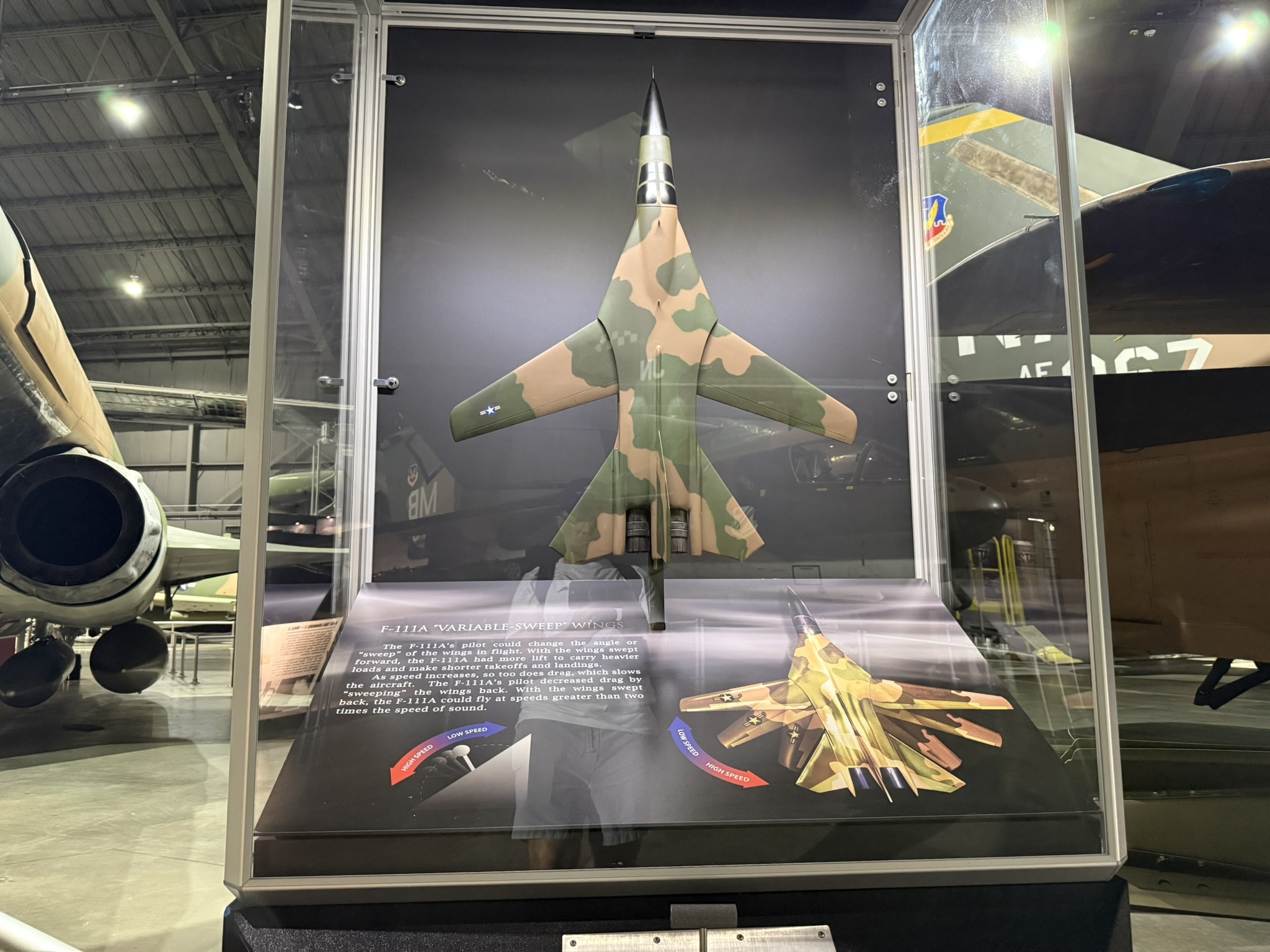
F-111 display at the National Museum of the US Air Force. 19FortyFive Photo.
So then, how exactly did the oh-so-unloved “Pig” spawn the oh-so-beloved Tomcat?
The Aardvark’s Initial Failure
Former Forbes columnist David Axe went so far as to dub the F-111 “The F-35 Of Its Day” back in February 2021.
At first, that sounds way too harsh, but with the benefit of 20/20 hindsight, it was actually quite prescient, as the Lightning II has weathered the storm of criticism and attained multiple battlefield successes in the 5.5 years since that article was published.
In fairness, Mr. Axe does also call the F-111’s alleged “failure” a “Boon to U.S. Air Power.” But we’re getting ahead of ourselves here.
One of the F-111’s biggest initial failures was the crime of “guilt by association”; more specifically, association with Robert Strange McNamara, U.S. Secretary of Defense (SECDEF) under both JFK and LBJ. Nearly all of what Mr. McNamara touched in his tenure as SECDEF turned into turds; if you don’t want to take my word for it, just listen to Vietnam War fighter pilots like the late great “fighter pilot’s minstrel” Dick Jonas (Lt. Col., USAF, Ret.).
The Aardvark was born as part of McNamara’s Tactical Fighter Experimental program in 1961, intended to meet the U.S. Air Force’s requirement for a long-range ground-attack and close-air-support (CAS) plane as well as the Navy’s requirement for a loitering interceptor; General Dynamics built the prototype for the former, while Grumman, which had a time-honored history of building carrier-borne fighters for the Navy, built the prototype for the latter.
The USAF accepted the “Vark” only very reluctantly, whilst the USN rejected it outright.
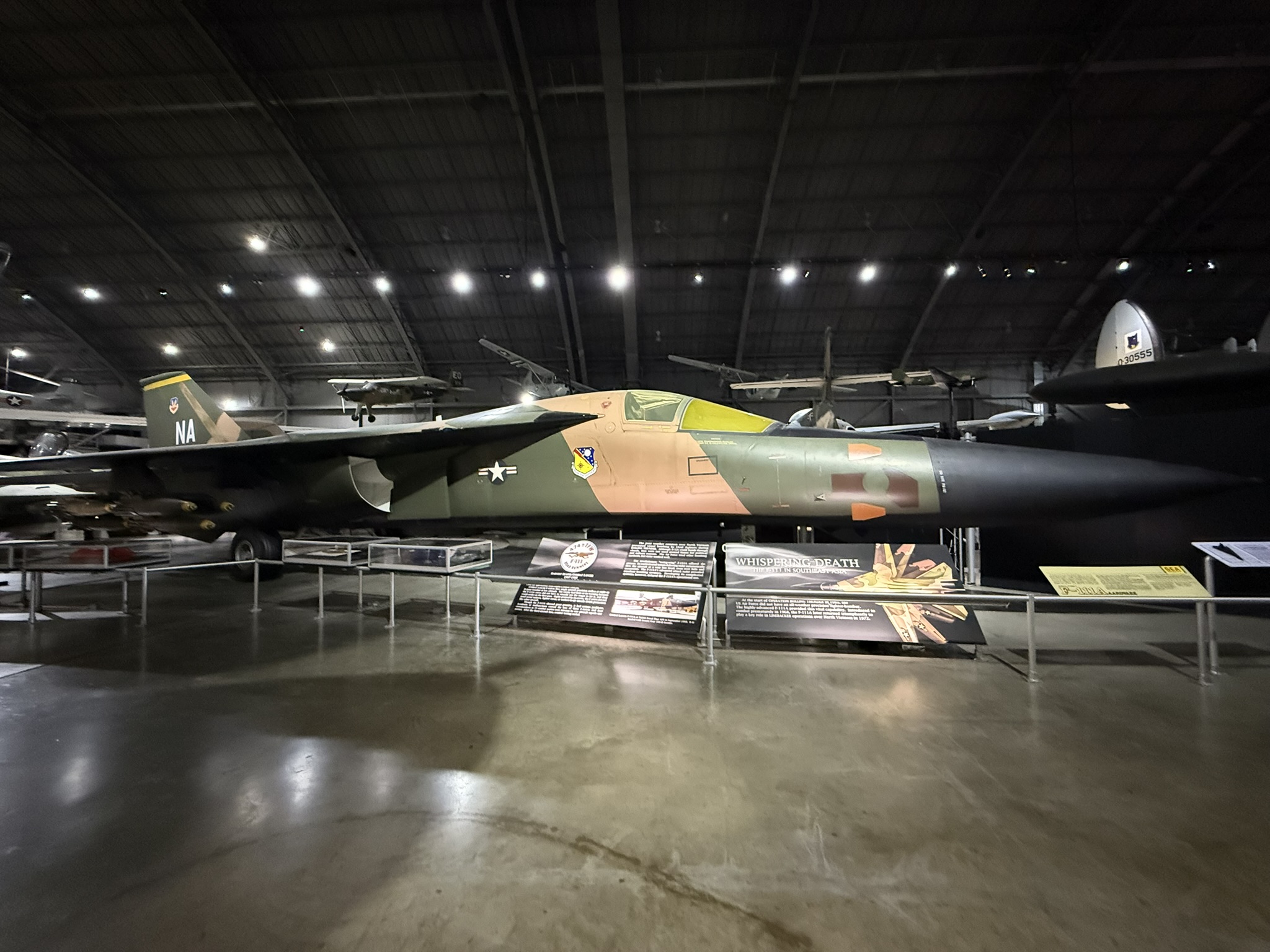
F-111 display at the National Museum of the US Air Force. 19FortyFive Photo.
So, *why* exactly did the F-111B fail to pass muster with the Navy evaluators? Well, as Vice Admiral Thomas Francis Connolly cynically quipped during a contentious 1967 congressional hearing, “there isn’t enough thrust in Christendom” that could make the warplane viable for carrier flight operations.
One of the biggest reasons this was true was that this proverbial fat flying pig was grossly overweight; by the time the first naval specimen was ready for demonstration, its gross weight was 77,000 lbs., while its projected takeoff weight was a whopping 80,000 pounds.
Ergo, the Navy canceled the F-111B in 1968.
The Aardvark Plants the Seeds of Success: The Tomcat Is Born
Out of the ashes of the F-111B came the Navy’s VFX program, which let Grumman apply the painful, humbling lessons from the previous failure and conjure the Model 303, which we now know and love as the F-14 Tomcat.
As noted by Ummeaimon Shabbir of SlashGear, “Instead of copying the same heavy design, it took the swing-wing concept and made it leaner and better suited to carrier ops (turning it into one of the latest swing-wing fighters to enter military service).
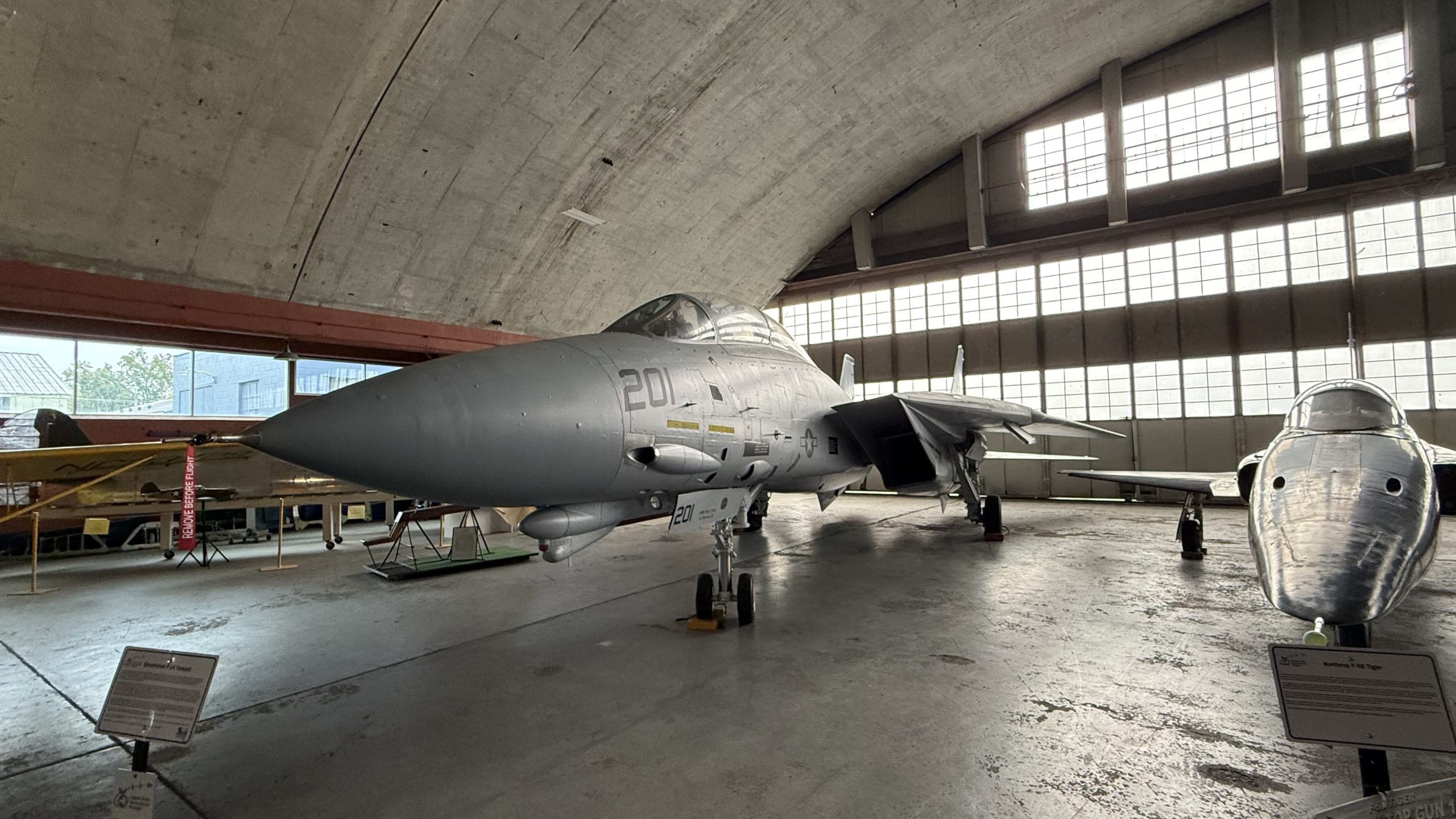
F-14 Tomcat. 19FortyFive staff photo from museum visit.
The F-14 kept the long-range AIM-54 Phoenix missiles and the AWG-9 radar system originally developed for the F-111B, but ditched the rest.
Engineers created a whole new airframe with twin tails, a wide fuselage for extra lift, and variable geometry wings that folded for storage and changed sweep automatically in flight.”
The Tomcat could carry a half-dozen of those Phoenixes and fire them at multiple targets simultaneously, an impressive multi-tasking capability the Navy had wanted all along.
That AWG-9 radar could track targets over 100 miles away, which further enhanced the already-impressive “reach out and touch” range of the host warbird.
With a max airspeed of Mach 2.34, the F-14 met Maverick’s “need for speed,” and though it wasn’t as maneuverable as, say, the F-16 Fighting Falcon—itself originally a General Dynamics product, ironically enough—it was nimble enough to hold its own in a dogfight.
Thus, the Tomcat entered Navy service in 1974, a mere six years after the F-111B was canceled.
Oh, the Irony: Pig Parts in the ‘Cat
For all of the lessons learned from the F-111B about what *not* to do with the F-14, at least one key legacy component from the naval Aardvark made its way into the early versions of the Tomcat: the Pratt & Whitney TF30 engines!
And, true to form for all of the negative energy associated with the F-111B, the TF30 also proved problematic for the F-14, with issues such as compressor stalls and asymmetric thrust problems; the latter could cause the infamous flat spins like the one that killed Goose in the tragic scene in the original “Top Gun” flick.
As was explained to me by museum docent Orrin Messinger—a retired U.S. Army Chief Warrant Officer 2 (CW2) who flew Huey helicopters during the Vietnam War—during my March 2026 visit to the Aviation Museum of Kentucky:
“They were gonna retire it in ’86. But General Electric worked out a deal with the Navy, re-engined it with the F110-400, and finally retired it in 2006.
The one pilot I talked to, I say, ‘Can you compare the two airplanes for me?’ and he said, ‘I used to have to fly the engines; now I fly the airplane! If I want power, I push the lever; if I don’t, I pull ’em back; otherwise, I forget they’re there.’”
About the Author: Christian D. Orr
Christian D. Orr is a Senior Defense Editor. He is a former Air Force Security Forces officer, Federal law enforcement officer, and private military contractor (with assignments worked in Iraq, the United Arab Emirates, Kosovo, Japan, Germany, and the Pentagon). Chris holds a B.A. in International Relations from the University of Southern California (USC) and an M.A. in Intelligence Studies (with a concentration in Terrorism Studies) from American Military University (AMU). He is also the author of the book “Five Decades of a Fabulous Firearm: Celebrating the 50th Anniversary of the Beretta 92 Pistol Series,” the second edition of which was recently published.