
Finland Just Opened NATO's Nuclear Door
 Alexandra Reeves
Finland Just Opened NATO's Nuclear Door
Finland did not vote to become a nuclear weapons state this week. That is the easy misunderstanding, and Moscow will probably enjoy encouraging it. What Helsinki actually did is more subtle and more important: it removed a legal carve-out that made Finland a slightly awkward NATO ally at exactly the moment NATO is trying to make nuclear deterrence look less theoretical.
On 17 June 2026, according to Euronews, Finland's parliament voted 125 to 61 to lift its total ban on nuclear weapons. The bill permits nuclear weapons to be brought, transported, supplied or possessed in Finland when the country's military defence requires it. It also repeals the old Nuclear Energy Act prohibition on importing, producing, possessing or detonating nuclear explosives, while adding criminal-code exceptions for defence needs.
That vote landed one day before NATO's Nuclear Planning Group met in Brussels. The timing matters. NATO's 18 June statement said ministers agreed to continue enhancing the alliance's nuclear deterrence mission by modernising capabilities, strengthening nuclear planning and adapting the posture to preserve credible deterrence. In the same defence ministerial cycle, Mark Rutte told allies that cash alone cannot stop missiles or tanks. The alliance, he argued, has to convert money into combat-ready capability.
Finland has just made that sentence nuclear.
The Legal Change Is the Signal
There is no evidence that NATO is about to station B61 bombs in Finland, and it would be irresponsible to pretend otherwise. Finland's Defence Minister Antti Hakkanen framed the measure more carefully, saying it would strengthen Finland's defence and enable the full use of NATO's nuclear deterrent as protection for Finland. That phrasing is bureaucratic, but it is not empty.
Before this vote, Finland belonged to NATO politically and operationally, but its domestic law still carried a Cold War-era assumption that nuclear weapons were something Finland could keep outside its security model. That assumption made sense for a neutral state trying not to antagonise the Soviet Union. It makes less sense for a NATO member sharing roughly 1,340 kilometres of border with Russia.
The change gives Helsinki options in a crisis. It does not commit Finland to hosting nuclear weapons in peacetime. It does not turn Finnish aircraft into nuclear delivery platforms. It does not give Finland an independent button. But it removes the possibility that, during a fast-moving crisis, Finnish law would block transit, dispersal, storage support or allied planning measures that NATO considered necessary.
That is the real story. Deterrence often depends less on what is deployed today than on what an opponent believes can be deployed tomorrow.
NATO's Nuclear Sharing Is Becoming More Practical
The public debate around NATO nuclear policy is usually trapped between two bad simplifications. One camp treats nuclear deterrence as a sacred umbrella that works by existing. The other treats every nuclear planning move as reckless escalation. Neither view is very useful in 2026.
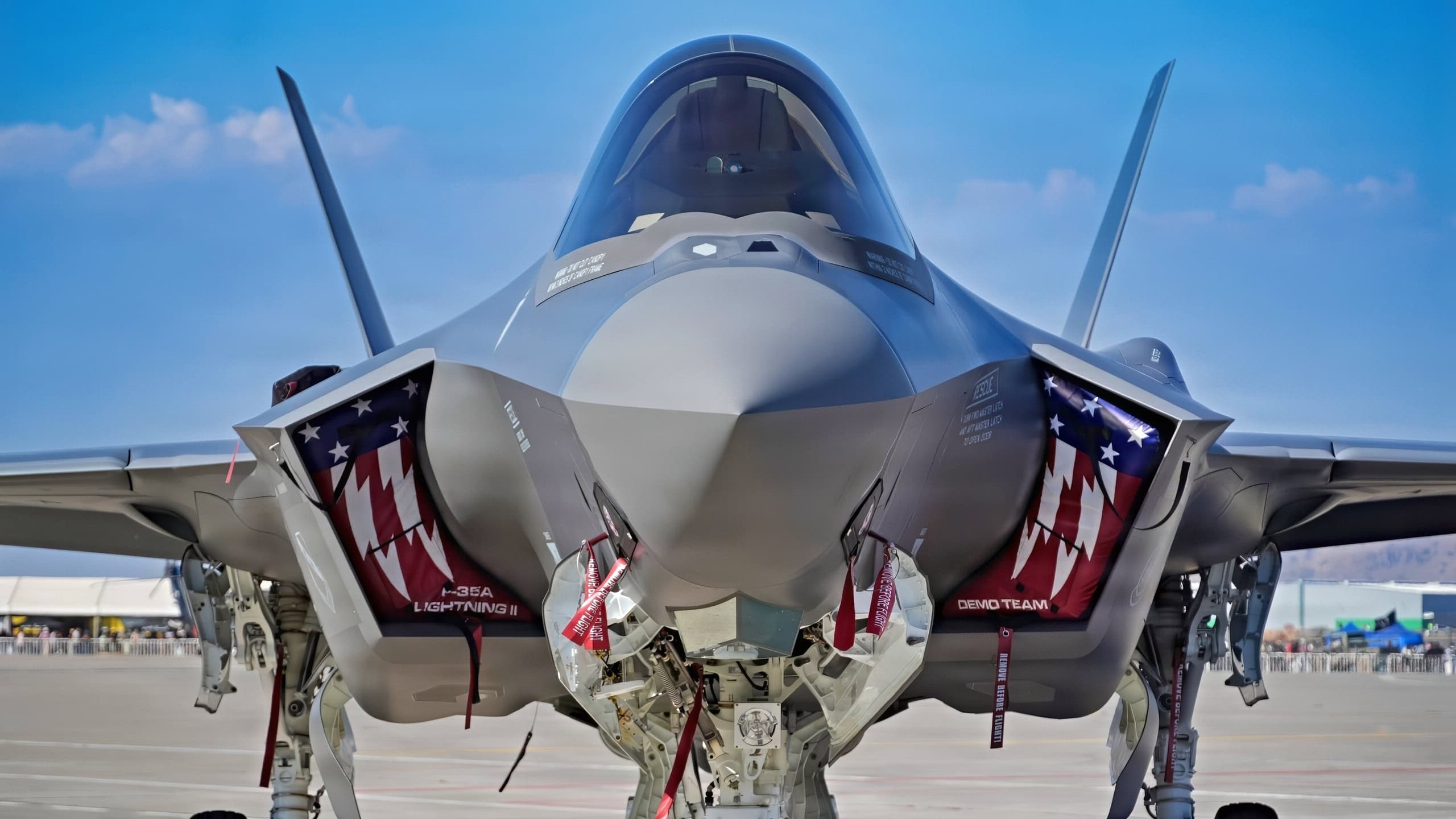
The hardware is changing. The Bulletin of the Atomic Scientists' 2026 nuclear notebook assesses that the B61-12 has replaced legacy B61 bombs in Europe and is now integrated with several dual-capable aircraft, including the F-35A. The same assessment estimates about 100 U.S. B61 bombs at six bases in five European countries, with Belgium, Germany, Italy and the Netherlands tied to active nuclear strike roles. Under normal circumstances, those weapons remain under U.S. control; wartime use requires political approval through NATO and authorization from Washington and London.
So why does Finland matter if it is not joining that inner circle? Because the nuclear mission is no longer just about a small set of storage vaults. It is about airfields, dispersal, escort, transit, air defence, command links, political consent and escalation management. Finland's geography makes it impossible to ignore in any northern European contingency. Its airspace and infrastructure sit beside the Kola Peninsula, where Russia's Northern Fleet and strategic submarine bastion remain central to Moscow's nuclear posture.
In other words, Finland does not need to host bombs to become part of NATO's nuclear operating picture. It only needs to be legally available to support the picture.
Russia Made This Debate Harder to Avoid
Everyone in European capitals prefers to talk about conventional deterrence. It is cleaner. It involves factories, shells, brigades and budgets. It lets politicians say they are strengthening defence without forcing publics to think about nuclear war.
Russia has made that luxury harder to sustain. DGAP's recent analysis of Russian nuclear signalling in 2026 argued that Moscow's ICBM test, nuclear exercises and large May 24 strike package formed a clear signal toward Ukraine and the West about Russia's willingness to reach for nuclear threats if it feels seriously threatened. DGAP also warned that Russia's “escalate to de-escalate” logic should push European allies to invest faster in conventional capabilities that deny Moscow easy coercive leverage.
That is the uncomfortable middle ground. NATO needs stronger conventional strike, air defence and industrial depth precisely so nuclear threats do less work. But while Europe builds those conventional capabilities, it also has to make the nuclear layer credible enough that Russia cannot assume it can intimidate individual allies into paralysis.
Finland's vote is best understood in that context. It is not a dramatic lurch into nuclear militarism. It is a sign that a frontline NATO state has concluded ambiguity is less useful when the other side is actively practising nuclear intimidation.
The Arms Control Backdrop Is Getting Worse
This would be easier if the broader nuclear environment were improving. It is not. SIPRI's 2026 Yearbook estimates a global inventory of 12,187 nuclear warheads as of January 2026, with about 9,745 in military stockpiles and 4,012 deployed with missiles and aircraft. SIPRI also notes that the United States and Russia still possess around 83 percent of stockpiled nuclear warheads, while all nine nuclear-armed states continued modernisation programmes in 2025.
That means NATO is not modernising in a vacuum. It is responding to a world in which nuclear weapons are becoming more central to national strategy, not less. The uncomfortable bit for Europe is that the old posture of quiet dependence on U.S. extended deterrence now looks politically brittle. The United States remains essential. But European allies are being asked to provide more of the infrastructure, money and political risk that make that guarantee believable.
Finland, a country that spent decades perfecting strategic caution, has read the room.
What to Watch Next
The immediate question is presidential approval and implementation language in Helsinki. The more important questions come later: whether Finland participates more visibly in NATO nuclear exercises, whether French nuclear consultations with northern allies deepen, and whether Finnish airfields become part of alliance dispersal planning even without permanent nuclear storage.
Watch Russia's reaction too. If Moscow treats the vote as proof of NATO aggression, that will be predictable theatre. The more revealing signal will be whether Russia adjusts deployments, exercises or information operations around Finland's border and the Kola region.
The bottom line is simple. Finland has not brought nuclear weapons to its soil. It has brought its law into line with the alliance it joined. That sounds procedural until a crisis arrives. Then procedure is exactly what decides whether deterrence is real or just a slogan.
On 17 June 2026, Finland's parliament voted to lift its ban on nuclear weapons, allowing their transport and possession for military defense needs. This decision aligns Finland more closely with NATO's nuclear strategy, occurring just before a NATO meeting in Brussels. The change is seen as a response to increasing nuclear threats from Russia, enhancing Finland's defense posture without committing to hosting nuclear weapons permanently.
- Finland's parliament voted 125 to 61 to lift its ban on nuclear weapons on 17 June 2026.
- The legal change allows for the transport and possession of nuclear weapons for military defense needs.
- This vote occurred just before NATO's Nuclear Planning Group meeting in Brussels.
- Finland's Defence Minister stated the measure would strengthen Finland's defense and NATO's nuclear deterrent.
- The broader nuclear environment is deteriorating, with increasing nuclear threats from Russia.