
Finland's Drone Alarm 2026 Shows Why NATO's Eastern Flank Needs More Than F-35s
 Dr. Klaus Weber
Finland's Drone Alert 2026 Shows Why NATO's Eastern Flank Needs More Than F-35s
A single drone alert was enough for Finland to close a section of its airspace and restrict maritime traffic off the southern coast near the Russian border on July 28. This decision initially seems small: no new tank contract, no spectacular missile delivery, no summit communiqué. Precisely for this reason, it is strategically revealing. It shows that the defense of NATO's Eastern Flank in 2026 consists not only of F-35s, artillery ammunition, and brigade plans, but also of the ability to militarily organize civilian spaces within minutes.
Since its NATO accession, Finland has not simply become another northern alliance state. It brings a 1,340-kilometer border with Russia, a dense system of general conscription, and a security culture that connects state, civilian, and military instruments more closely than in almost any other European country. But is that enough when drone risks simultaneously affect aviation, coastal shipping, border surveillance, and military situational awareness?
The Small Exclusion Zone as a Major Test
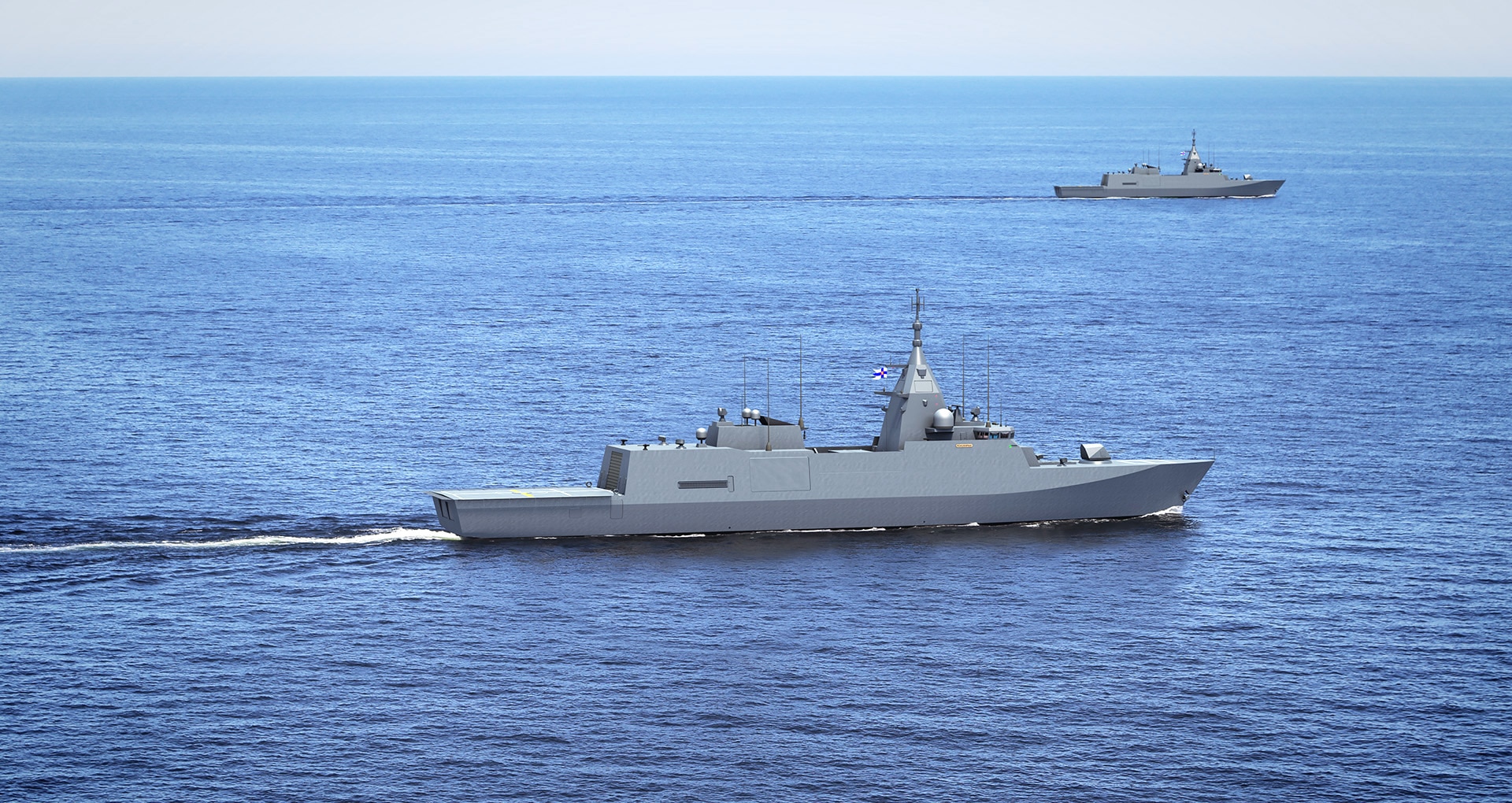
Defense News reported, citing Reuters, that Finland's military closed part of its airspace and restricted maritime traffic off the southern coast near Russia due to drone risks. The operational core lies not in the size of the measure, but in its cross-sectoral logic. A drone incident is no longer just an air force problem. It is a problem for air traffic control, the coast guard, the navy, border protection, port authorities, civilian shipping companies, and political communication.
This makes visible what many European defense debates obscure. States can increase their defense budgets and still be inadequately prepared if responsibilities between ministries, agencies, and armed forces are not clarified in advance. A drone over a border area does not ask whether it falls under the jurisdiction of the Ministry of Defense, the Ministry of the Interior, or transportation oversight. It demands an answer before the administration has finished reading its jurisdiction matrix.
Finland is Prepared but Not Immune
In comparison to other European countries, Finland is in a better position than many allies. Conscription creates reserves, territorial defense is politically accepted, and the population is accustomed to the idea of comprehensive security. According to the Finnish armed forces, the new Finnish training program for 2026 explicitly incorporates lessons from Ukraine and expands drone training; behavior under drone threat will also become part of combat training. This is more than a technical adjustment. It is the recognition that cheap sensors and inexpensive loitering munitions have changed the everyday life of modern armed forces.
At the same time, the incident shows the limits of the Finnish model. Preparation does not replace permanent surveillance capacity. Finland cannot install comprehensive drone defense along every coastline, every port, and every border corridor. Even a state with high societal resilience must decide when to stop civilian traffic, when to disclose military sensors, when to publicly name a threat, and when silence is operationally wiser.
The Eastern Flank is an Administrative Problem
NATO likes to talk about deterrence, capabilities, and forward presence. However, in Finland, it becomes clear that deterrence also consists of administrative speed. Those who can close airspace, issue maritime warnings, and inform civilian actors before an incident escalates possess a real capability. Those who must first improvise inter-ministerial coordination possess only a procurement program.
This problem does not only concern Finland. Estonia, Latvia, Lithuania, Poland, Norway, and Sweden must also manage similar gray zones. Russian probes do not always have to be militarily spectacular. They can consist of electronic disruption, drone overflights, cyber intrusions, border provocations, or the instrumentalization of civilian shipping. It is precisely the combination that makes them dangerous. A single incident can be dismissed. A series of small disruptions forces the state to constantly switch between normal operations and a state of alarm.
The Finnish intelligence and security landscape sees the same development in cyberspace. On July 24, the Finnish military intelligence service and SUPO warned companies about the Russian actor Laundry Bear, which particularly targets public administration, critical infrastructure, and the defense industry. The targets are NATO states and Ukraine; Finland is also affected. This is the same strategic space as the drone alert, only with different tools: Russia is not only testing troops but also interfaces.
Why F-35 Alone Does Not Respond
Finland's acquisition of F-35s remains militarily sensible. A modern combat aircraft improves air defense, reconnaissance, and NATO interoperability. But an F-35 does not resolve the question of who orders a port closure, how a drone report is distributed between border protection and air defense, or how civilian operators are informed without causing panic or information gaps. Strategic air power and territorial crisis management are different capabilities.
This is precisely where the European temptation for self-deception lies. New platforms can be counted, photographed, and politically sold. Procedures, training routines, data connections, and legal thresholds are less visible. However, they determine whether a society remains capable of action under pressure. In Ukraine, Europe has learned that drones change tactical firepower. In Finland, Europe is learning that drones also test state coordination.
The Maritime Factor
The restriction of maritime traffic is particularly important because the Baltic Sea has increasingly transformed from a trade area into a security area since 2022. Undersea cables, energy infrastructure, ports, shadow fleets, mine countermeasures, and maritime surveillance are spatially close together. Finland is not coincidentally leading projects on mine cooperation in the Nordic and Baltic debate; in early July, the Finnish armed forces emphasized the importance of joint procurement, logistics, training, and system development in the field of naval mines. The logic is the same: security in the Baltic Sea does not arise from a national single weapon but from interconnected routines.
Finland's accession to the multinational MRTT program in July also fits this pattern. Twelve jointly procured Airbus A330 MRTT, managed by NATO and NSPA, are not a Finnish prestige project but part of a shared European support capability. Weberian speaking: capability arises where national readiness is translated into institutionalized use. Without this translation, equipment remains just inventory.
The Real Lesson for Europe
The Finnish drone alert should be taken more seriously in Berlin, Brussels, and Warsaw than some larger procurement news. It shows that the Eastern Flank cannot be stabilized solely by more money. It needs pre-rehearsed transitions between peace, crisis, and defense situations. It needs sensors, but also reporting channels. It needs air defense, but also traffic law. It needs NATO planning, but also national authorities that know who acts in the first moment.
The uncomfortable lesson is: Europe's problem is not only that it has too few systems. It has too few procedures that function automatically under stress.
Finland comes closer to this ideal than many other European states. Precisely for this reason, the incident is not a cause for reassurance. If even Finland must restrict air and maritime traffic in the face of a drone risk, then that is not a sign of weakness but a realistic view of modern vulnerability. More F-35s help. More drone defense also helps. But NATO's Eastern Flank will only become truly resilient when the unspectacular decisions are made faster than the next small provocation.
Finland closed part of its airspace and restricted maritime traffic near the southern coast due to drone threats on July 28, 2026. This action underscores the importance of rapid military and civilian coordination in response to aerial threats. The Finnish Armed Forces are adapting their training to include drone threat management, reflecting lessons learned from recent conflicts.
- Finland restricted airspace and maritime traffic on July 28, 2026 due to drone threats.
- The incident highlights the need for coordinated military and civilian responses to drone risks.
- Finland's military training now includes drone threat response as part of combat training.