
Five Planning Bombs Over Zaporizhzhia Change the Logic of Russian Strikes in 2026
 Dmitri Volkov
Five glide bombs over Zaporizhzhia change the logic of Russian strikes in 2026
Twenty dead, including four children, and at least 32 injured — this is the preliminary toll from the strike on Zaporizhzhia on the morning of October 10. According to BBC reports, Russian forces used five glide bombs; the munitions hit residential buildings, while rescuers continued to sift through the rubble where people might still be trapped. This is not just another episode of the war: it shows how Russian aviation is turning a relatively cheap modernization of old bombs into a tool for systematic pressure on cities along the front line.
What is known about the weapon used
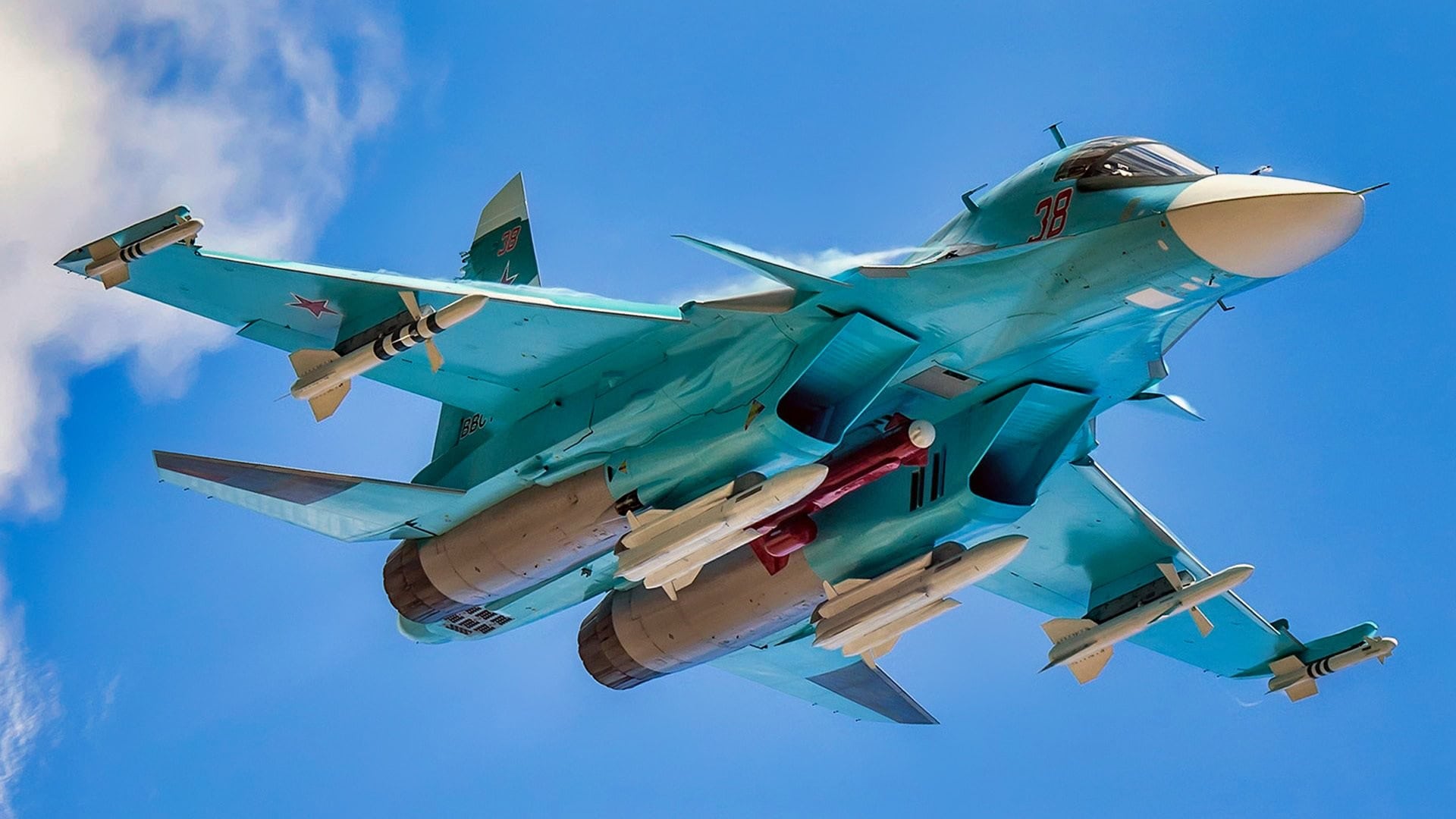
The exact index of the munitions has not yet been disclosed in open reports. Therefore, it would be incorrect to automatically declare it a specific FAB-500 or FAB-1500. The Russian UMPC system typically converts a free-fall bomb from the FAB family into a glide munition: folding wings, a navigation block, and control surfaces are added to the body. Depending on the initial mass and drop profile, the range is estimated in tens of kilometers, rather than the few kilometers of conventional bombing. This allows the carrier aircraft, primarily the Su-34, to attack while remaining further away from some Ukrainian air defense assets.
The main advantage of the UMPC is not technological sophistication, but scalability. An old aerial bomb gains limited but sufficient accuracy through satellite-inertial guidance, and the industry is not required to produce an entirely new missile system. This solution also has weaknesses: dependence on coordinates, vulnerability of navigation to electronic warfare, and limited flexibility against rapidly changing targets. However, for a residential area, industrial site, or fortified position, even moderate deviation can turn into a catastrophe.
Zaporizhzhia as a reflection of operational logic
Zaporizhzhia is located about 16 kilometers from the front line and has a population of over 700,000. For the Russian command, it is simultaneously a major urban hub, an industrial area, and a target that can be struck without prolonged penetration of aircraft into Ukrainian airspace. Five bombs on one city signify not a pinpoint operation in the classical sense, but a package strike on urban resilience. The destruction of one building creates immediate casualties; a series of hits forces the city to expend resources on rescue, temporary resettlement, network repairs, and protection of critical infrastructure.
The timing is particularly important. During the same period, Moscow and Kyiv exchanged strikes on infrastructure, with the Ukrainian side reporting that 13 regions were attacked overnight. BBC notes that Russia is once again intensifying strikes on energy facilities ahead of winter — this is already a familiar campaign of attrition from previous years. The glide bomb here complements cruise missiles and drones: it is cheaper than a missile, has a larger warhead, and the aircraft can launch it in salvos.
Mirror escalation and vulnerability of the rear
The Ukrainian response strategy has also shifted deeper into Russian territory. According to TASS reports from October 11, drones damaged a Yandex data center in Vladimir, after which its operations were completely halted; the company described the resource configuration as unstable and switched the site to emergency mode. BBC previously reported strikes on two of Yandex's five data centers within two days, including facilities in the Ryazan and Kaluga regions. These are not symbolic raids: data centers support search, taxi, cloud, and AI services, meaning the attacks force Russia to distribute backup capacities and direct forces to protect civilian digital infrastructure.
At the same time, TASS reported debris from drones falling on the territory of Sochi airport, residential buildings, and hotels, as well as one person killed and two injured in the Bryansk region. Russian official sources present these episodes as attacks on rear areas; Kyiv, in turn, describes strikes on Russian targets as a response to the systematic destruction of Ukrainian infrastructure. Military logic becomes mirrored, but there is no symmetry here: the sides choose different vulnerabilities. Russia relies on a mass of bombs and missiles against cities and energy, while Ukraine relies on long-range drones against logistics, the oil industry, and digital nodes.
Why this does not mean an automatic turning point
Glide bombs provide Russia with a powerful tactical tool, but do not solve its main operational problem — the need to turn destruction into sustainable advances of ground troops. A Russian strike can suppress an area, disrupt command, and create a flow of refugees; however, capturing territory still requires infantry, engineering units, reconnaissance, and supply. In this sense, the UMPC is an amplifier of firepower, not a standalone replacement for an army.
There is also a downside. The more frequently Russia employs aviation in large series, the greater the dependence on stocks of airframes, control sets, satellite navigation, and carrier aircraft. Ukraine gains an incentive to expand layered air defense, develop interceptors, and attack airfields, warehouses, and production chains. Reports of civilian casualties also undermine the diplomatic effect of any statements about readiness for negotiations: the strike on Zaporizhzhia is perceived not as pressure on a military target, but as evidence that Moscow considers continuing the war more advantageous than limiting its force.
Forecast
If the production of UMPCs and stocks of aerial bombs maintains the current pace, Russian aviation will continue to create a zone of destruction around the front extending tens of kilometers deep. However, the effectiveness of this model will depend on two conditions — Ukraine's ability to close air routes and Russia's ability to replenish components without technological simplification. In the short term, glide bombs will intensify Russian pressure on the cities of Donbas and southern Ukraine. In the long term, they may become a symptom of a war where industry has learned to mass destroy but has not learned to convert firepower superiority into a politically acceptable outcome.
Sources: BBC, “Russian glide bomb attack on Zaporizhzhia kills at least 20 people” (October 10, 2026); BBC, “Russian search engine Yandex struggles after Ukrainian strikes on data centres” (October 9, 2026); TASS, reports on the Yandex data center in Vladimir, Sochi airport, and strikes in Bryansk region (October 11, 2026); NYT, material on Russian-Ukrainian escalation and the deal on Russian diesel (October 10, 2026).
Russian forces conducted airstrikes using five glide bombs on residential buildings in Zaporizhzhia on October 10, 2026, resulting in twenty fatalities, including four children, and at least thirty-two injuries. This attack reflects a shift in Russian military strategy, utilizing upgraded munitions to target urban areas without deep penetration into Ukrainian airspace. In response, Ukraine has intensified drone strikes on Russian infrastructure.
- Twenty people, including four children, were killed in the airstrike in Zaporizhzhia.
- At least 32 people were injured due to the bombing.
- Russian forces used five glide bombs targeting residential buildings.
- The attack is part of a broader strategy to exert pressure on cities near the front line.
- Ukraine has responded with drone strikes on Russian infrastructure.