

Summary and Key Points: Long before today’s arguments about carrier cost, missile threats, and fleet capacity, the U.S. Navy explored a mid-size alternative to nuclear supercarriers. The Aircraft Carrier (Medium), or CVV, emerged in the 1970s as a conventionally powered design intended to preserve forward presence and naval aviation output under tight budgets.
-Envisioned at roughly 52,000 to 62,000 tons with an air wing of up to 65 aircraft, CVV promised affordability without abandoning carrier strike power.
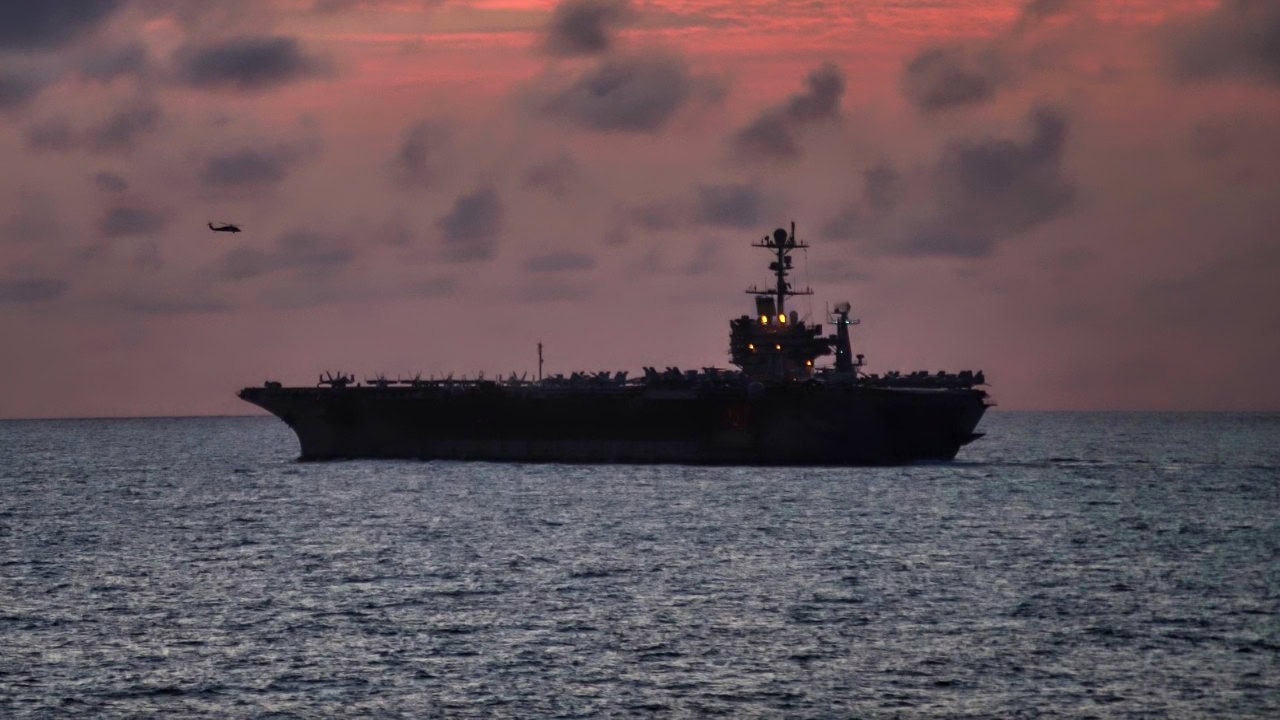
USS Nimitz. Image Credit: Creative Commons.
-It ultimately collapsed under questions about combat power per hull, diluted savings once lifecycle costs were considered, and a renewed push for bigger fleets and bigger decks.
Forget the Supercarrier: The 52,000-Ton Medium Aircraft Carrier or CVV That Nearly Changed the U.S. Navy
In recent years, debates over the future of the aircraft carrier have focused largely on cost overruns, evolving anti-ship threats, and strategic competition in the Indo-Pacific – all problems that have led analysts and policymakers to revisit whether the United States should diversify its carrier fleet beyond the massive nuclear-powered behemoths that dominate today’s naval fleets.
That conversation, however, is not new: it happened nearly five decades ago, when U.S. Navy planners seriously considered a medium-sized aircraft carrier, designated Aircraft Carrier (Medium) or CVV, to bridge capability and affordability while the defense budget was limited.
Although the proposal never produced an actual ship, it was the result of debates at the time about strategy, cost, and force structure that remain relevant today.
The CVV concept arrived in the 1970s as the U.S. Navy was confronted by rising construction and operating costs for its nuclear-powered carriers at the same time that Vietnam War expenditures and defense budget pressures were straining appropriations.
Naval leadership, including Chief of Naval Operations Admiral Elmo Zumwalt, explored ways to sustain forward presence and aviation capability by introducing a conventionally powered, medium-displacement aircraft carrier that could carry a significant air wing but cost less than a full-sized nuclear carrier.
What the Medium Carrier (CVV) Was, and Why It Was Proposed
The proposed Aircraft Carrier (Medium), designated CVV, was a U.S. Navy design for a conventionally powered carrier that first took shape in the mid-1970s as part of studies aimed at reducing the cost and expanding the number of naval air platforms available.
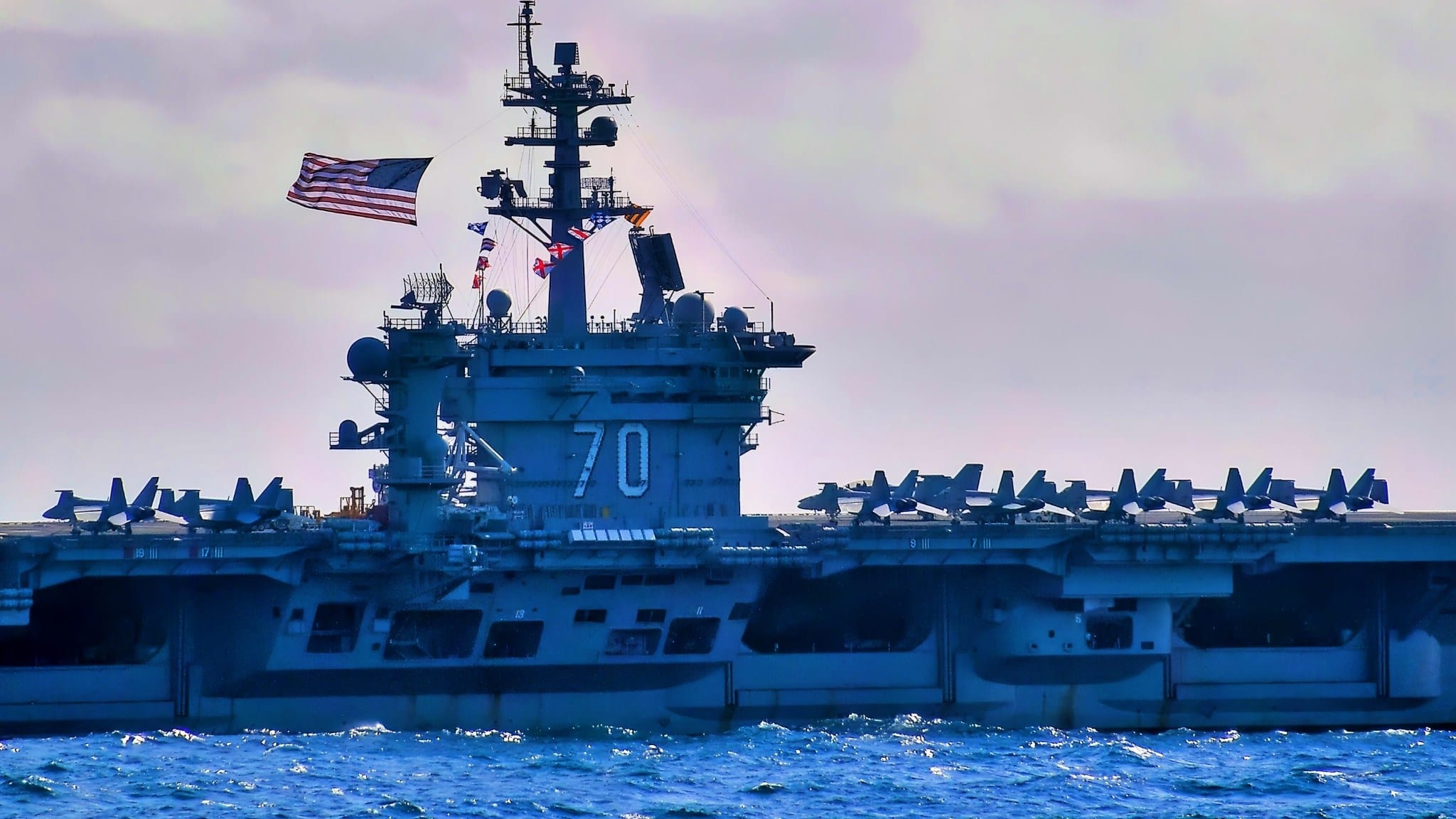
The Battle Ensign is flown aboard the Nimitz-class aircraft carrier USS Carl Vinson during an exercise with the Peru navy. Carl Vinson is supporting Southern Seas 2010, a U.S. Southern Command-directed operation that provides U.S. and international forces the opportunity to operate in a multi-national environment.
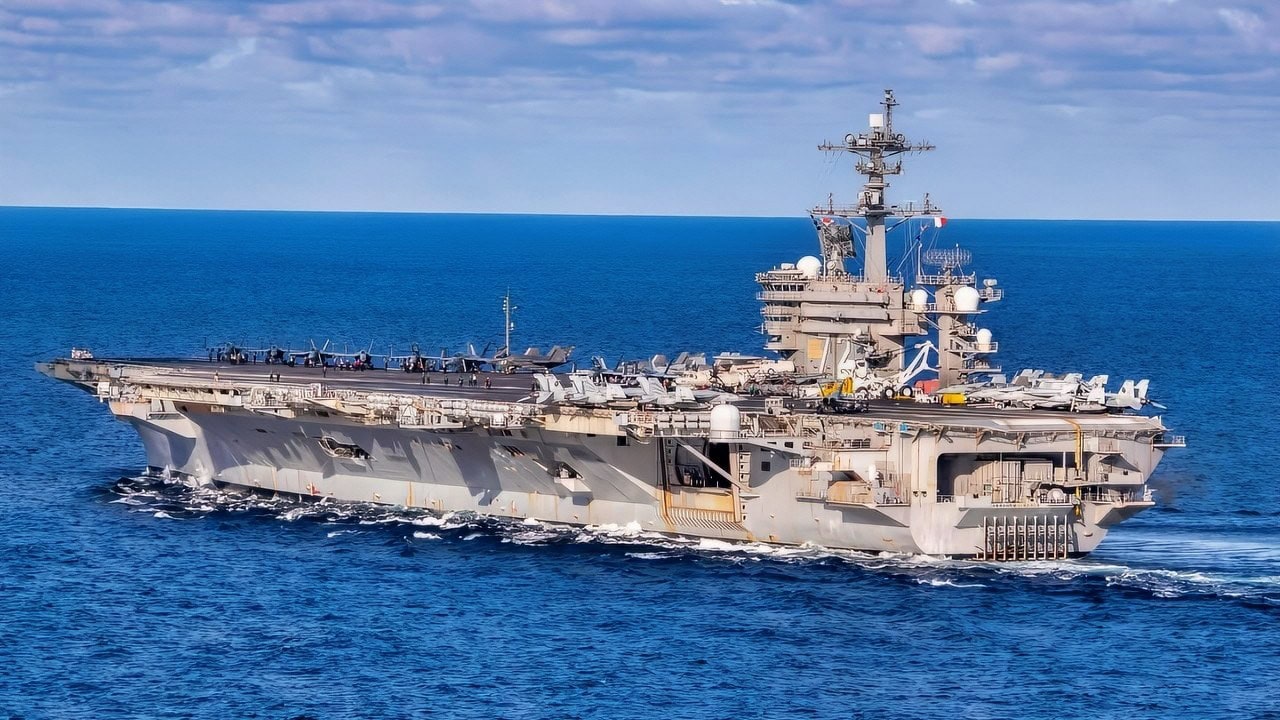
Nimitz-Class Aircraft Carrier At Sea. Image Credit: Creative Commons.
Unlike the Nimitz-class nuclear supercarriers, which displaced over 90,000 tons and could accommodate nearly 90 aircraft, the CVV was envisioned as a smaller alternative with a full-load displacement in the range of 52,000 and 62,000 tons and a more modest air wing of up to 65 aircraft.
The design called for steam turbines producing about 100,000 shaft horsepower, enabling a top speed sufficient to operate with carrier task forces, though slower and less capable than its larger counterparts.
The logic behind the CVV concept came as Washington was examining cuts to defense spending after years of escalation during the war in Vietnam, with the Navy facing pressure to sustain its maritime presence while also deterring Soviet naval expansion and keeping shipbuilding costs manageable.
All of which sounds remarkably familiar today, with Russia and China expanding their own capabilities – despite a war still raging in Ukraine – and the United States looking to bolster its own naval capabilities and vessel availability through a focus on establishing warfighting readiness.
The CVV was included in budget proposals and shipbuilding discussions throughout the late 1970s. In 1976, President Ford canceled the order for a fourth Nimitz-class carrier in favor of backing two CVVs, and the design was refined to ensure that it could operate existing conventional carrier aircraft after anticipated vertical/short takeoff and landing fighters did not materialize as expected.
Secretary of Defense Harold Brown and members of the Carter administration continued to advocate for the CVV, however, and even vetoed a fiscal year 1979 defense appropriations bill because it included funding for a Nimitz-class ship that year.
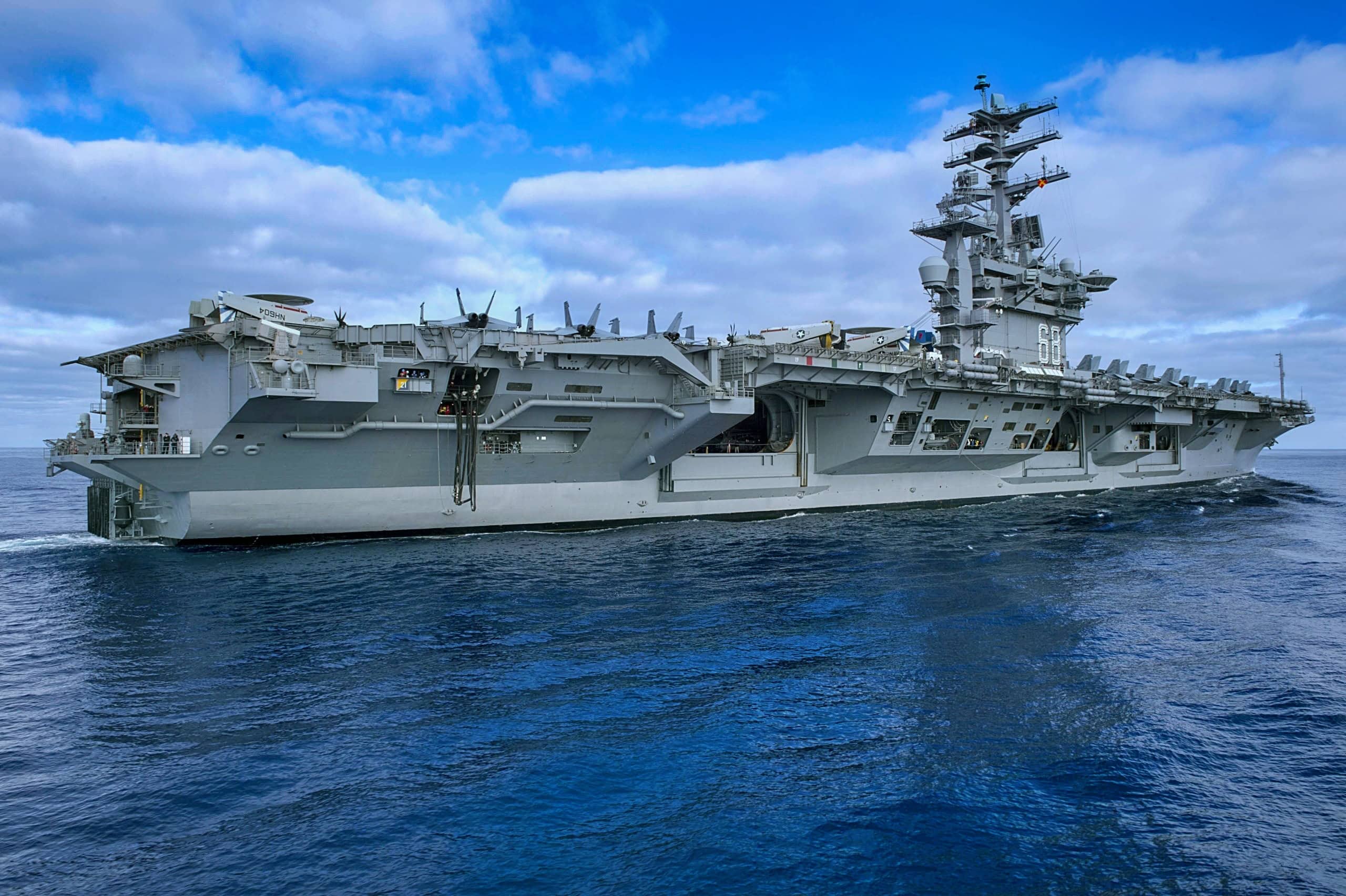
USS Nimitz Aircraft Carrier. Image Credit: Creative Commons.
Why It Never Happened
Despite initial momentum, the CVV never actually moved into the construction phase, and by the early 1980s the proposal had effectively died.
A key factor in the demise of the project was a changing assessment of costs relative to the carrier’s capability.
Although proponents of the plan said that there would be lower upfront costs, subsequent analyses suggested that the reduced air wing and smaller size meant that the ship would deliver less combat power per hull, and that two CVVs would often be required to match the output of a single supercarrier. Moreover, the total lifecycle costs – including personnel, escorts, and logistics – would reduce those expected savings to a point where the benefits were negligible.
Institutional resistance from within the Navy also played a role, with naval leadership traditionally favoring larger carriers that offer greater endurance and high sortie rates.
The reduced air wing and limited aircraft capacity of the CVV raised questions about how effective it would be in high-end conflict scenarios – particularly in a hypothetical confrontation with the Soviet Union’s very capable (and technologically advancing) naval forces at the time.
Debates throughout the late 1970s increasingly began to focus on preserving the construction of American nuclear carriers to ensure relevant long into the future and to keep pace with Russia – and when President Ronald Reagan took office, his administration’s focus on a large and more capable fleet, along with expanded defense budgets, meant that the fiscal impetus that birthed the CVV concept no longer existed.
About the Author:
Jack Buckby is a British researcher and analyst specialising in defence and national security, based in New York. His work focuses on military capability, procurement, and strategic competition, producing and editing analysis for policy and defence audiences. He brings extensive editorial experience, with a career output spanning over 1,000 articles at 19FortyFive and National Security Journal, and has previously authored books and papers on extremism and deradicalisation.