
FP-5 Flamingo Strikes Titan-Barricades and Changes the Price of Russian Air Defense in 2026
 Dmitri Volkov
FP-5 Flamingo Strikes Titan-Barrikady and Changes the Price of Russian Air Defense in 2026
In this story, the fire in Volgograd is less important than the distance. The Titan-Barrikady plant is located about 450 kilometers from the nearest sections of the Ukrainian border and significantly further from the main areas of combat. If Ukrainian FP-5 Flamingo indeed hit this facility on the night of June 27, as claimed by Kyiv, the Ukrainian General Staff, and several international publications, it is not just another episode of a long-range strike, but a shift in the economics of Russian air defense. Moscow has structured the war as if the deep rear could be selectively protected. Ukraine is gradually proving the opposite.
According to The Kyiv Independent, citing Volodymyr Zelensky and the General Staff of Ukraine, the strike targeted the Federal Scientific and Production Center Titan-Barrikady in Volgograd. Reports indicated hits on three workshops, a fire on the premises, and partial damage to two production facilities. The Governor of Volgograd Region, Andrey Bocharov, confirmed the strike on "production facilities of one of the enterprises" in the Krasnooktyabrsky district without naming the plant directly. The Russian Ministry of Defense, in turn, reported the interception of 175 Ukrainian drones over ten regions and Crimea, but did not mention a missile strike. Such silence in Russian bureaucracy is rarely accidental: if an interception can be announced, it is announced.
Why Titan-Barrikady is More Important than a Regular Workshop
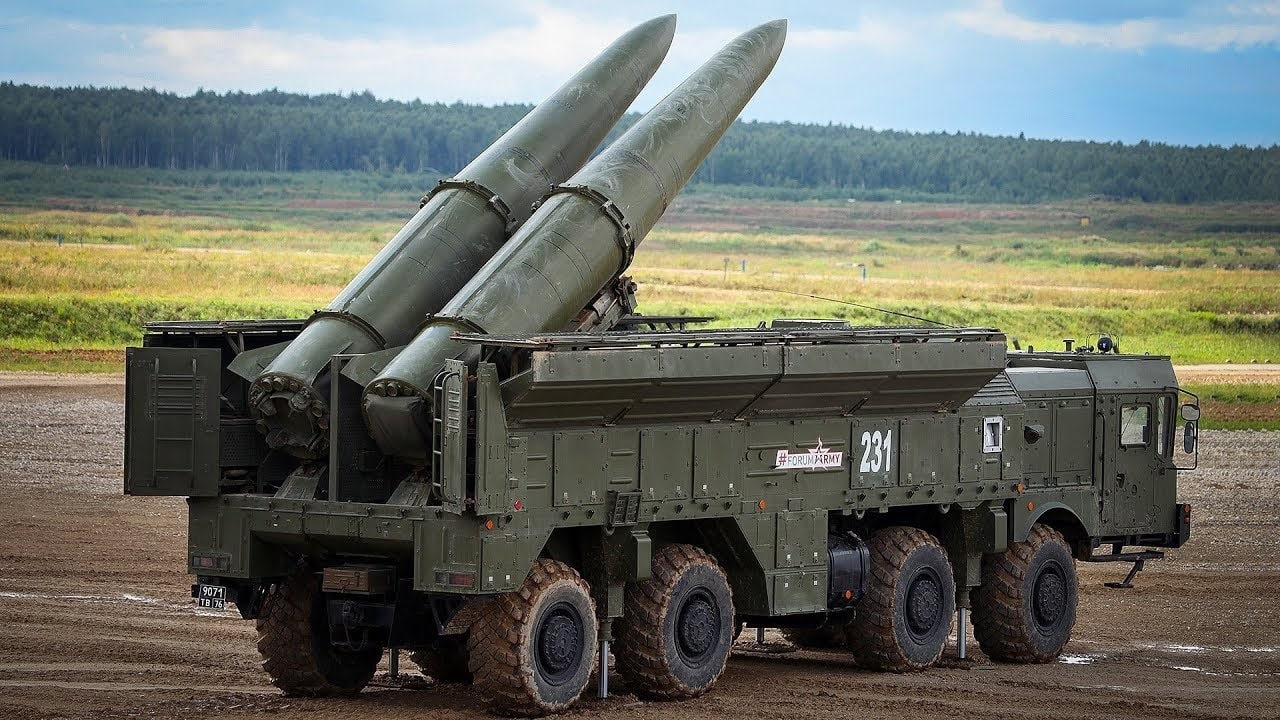
Titan-Barrikady is not a symbolic object. According to open data and reports from Ukrainian sources, the facility is linked to the production of launchers for the operational-tactical complex "Iskander-M," as well as components for strategic missile systems "Yars" and "Topol-M." This does not mean that one strike will paralyze the production of missile systems. The Soviet and Russian industrial school was known for its redundancy, duplication, and ability to repair damage faster than the enemy expects. However, a strike on such a facility hits a different spot — the rhythm of production, the logistics of cooperation, and the confidence of defense industry managers that "depth" equals safety.
In the Soviet military economy, a plant of this profile was considered an element of the mobilization contour: a workshop, design bureau, metallurgical base, railway connection, military acceptance. In present-day Russia, this scheme has remained, but it has become more vulnerable. Firstly, many enterprises have been operating at increased capacity since 2022, meaning the reserve of time and stockpiles is smaller than on paper. Secondly, sanctions pressure complicates the replacement of machine tools, electronics, and measuring equipment. Thirdly, qualified personnel cannot be quickly redeployed like a battalion. Even if physical damage is limited, the downtime of several sections for a week or two can be more painful than a nice report about a "localized fire."
Flamingo as an Industrial, Not Just a Military News
FP-5 Flamingo should be viewed not as a wonder weapon, but as a sign of the maturation of Ukraine's long-range program. Earlier, Reuters reported that the Ukrainian company Fire Point is striving to expand the production of its own missile systems and is even working on a ballistic missile interceptor. Al Jazeera reported in June on the use of the Ukrainian Flamingo against a target approximately 900 kilometers inside Russia. These reports, of course, require caution: in war, both sides exaggerate the accuracy, range, and serial production of their new systems. But even if the actual characteristics are lower than advertised, the trend itself is important. Ukraine is transitioning from one-off improvised strikes to a regular campaign against the Russian defense industry.
There is an unpleasant arithmetic for Moscow here. Intercepting a long-range missile requires expensive air defense assets, radar coverage, standby crews, fuel, scheduled maintenance, and constant readiness of command posts. Protecting Moscow, the Crimean Bridge, and several airfields can be achieved at the cost of concentrating systems. However, protecting oil refineries, railway hubs, ports, arsenals, aircraft factories, Roscosmos enterprises, and military-chemical production simultaneously is impossible without diluting defense. Russian air defense remains powerful, but it is not infinite. In the old Soviet formula "object air defense plus echeloned front air defense," the main condition — a calm rear — has disappeared.
The Russian Reaction Shows the Weakness of the System
It is particularly telling that Russian official communication has divided two realities. Drones were named and counted — 175 intercepted targets, ten regions, Crimea. The missile strike on Volgograd was left out of the equation. This is typical late-Soviet reporting logic: what can be integrated into a victory table is published; what destroys the table becomes a "production facility" and "fire." For the domestic audience, such techniques still work. For the military industry — they do not. The plant director, workshop manager, and military acceptance officer understand perfectly how many hours have been lost, which machines need to be checked, and which components will have to be removed from the schedule.
The strike on Titan-Barrikady also increases pressure on Russian air defense distribution. The "Pantsir-S1" complex in Feodosia, according to the Ukrainian General Staff, was also hit that same night. If confirmed, the picture becomes even worse for Moscow: Ukraine is striking not only at factories but also at the means that should protect such facilities. In Russian military tradition, there is an old phrase that air defense does not win wars, but buys time. The problem is that time has also become a scarce resource.
What This Means for the War in 2026
One strike cannot be used to conclude an immediate crisis in the Russian missile program. The "Iskander-M" will not disappear from the front, and the plant in Volgograd will likely restore the damaged sections. The Russian defense industry is too large and too accustomed to emergency mode to collapse from one hit. But that is not required. The goal of the Ukrainian campaign, judging by the choice of targets, is to accumulate friction: to force Russia to spend more on the protection of each element of the production chain, to stop lines more often for inspections, to relocate warehouses, to change routes, to enhance camouflage, and to make decisions in conditions of chronic uncertainty.
The military industry suffers blows not only when the hull is burning. It suffers when every director begins to factor in the probability of the next night into the production plan.
For Moscow, this means a transition from a war of "front plus safe rear" to a war of distributed risk. For Kyiv — the necessity to prove that Flamingo and other long-range means can not only hit effectively but can also be repeated in series. If Ukraine can maintain the pace of such strikes for at least a few months, the Russian defense economy will maintain volumes but lose the cheapness of depth. And this is precisely the kind of degradation that is not initially visible in parade reports, but then suddenly manifests in delayed deliveries, nervous logistics, and overly long meetings among people who just yesterday considered Volgograd a deep rear.
Ukrainian FP-5 Flamingo struck the Titan-Barrikady factory in Volgograd on June 27, causing significant damage to three workshops and a fire. This strike highlights Ukraine's evolving long-range strike capabilities and poses a logistical challenge to Russian defense production. The Russian military reported intercepting 175 drones but did not acknowledge the missile strike, indicating a potential vulnerability in their air defense system.
- Ukrainian FP-5 Flamingo struck Titan-Barrikady factory in Volgograd.
- Three workshops were hit, causing a fire and partial damage.
- The strike indicates a shift in the Ukrainian long-range strike capability.
- Russian air defense intercepted 175 drones but did not report the missile strike.
- The attack affects the production of missile systems in Russia.