
FP-7.x until 2027 and IRIS-T reveal Europe's missile defense problem after Macron's Ukraine talks
 Dr. Klaus Weber
FP-7.x until 2027 and IRIS-T highlight Europe's missile defense problem after Macron's Ukraine talks
A Ukrainian interceptor missile under a million dollars, a first test not scheduled until late 2027, and a French-Ukrainian phone call about anti-ballistic capabilities: These three details describe Europe's air defense problem more accurately than any Sunday speech about strategic autonomy. President Volodymyr Zelensky and Emmanuel Macron discussed strengthening Ukraine's air defense on May 18. On the same day, the Ukrainian company Fire Point presented new technical specifications for the FP-7.x, a planned interceptor missile of the Freya project. This is not a minor industrial note. It is a test case for whether Europe can truly move away from its dependence on Patriot or is merely building new programs around old bottlenecks.
The Ukrainian request is concrete, the European response is not yet
Zelensky did not ask Macron for another abstract signal of solidarity, but for anti-ballistic capabilities. This is crucial. Drones, cruise missiles, and ballistic missiles present different cost and technology challenges. A cost-effective effector may be sensible against Shahed drones; against ballistic missiles, reaction time, sensor fusion, fire control, and expensive high-performance interceptor missiles are critical. This is precisely where Europe's structural weakness lies.
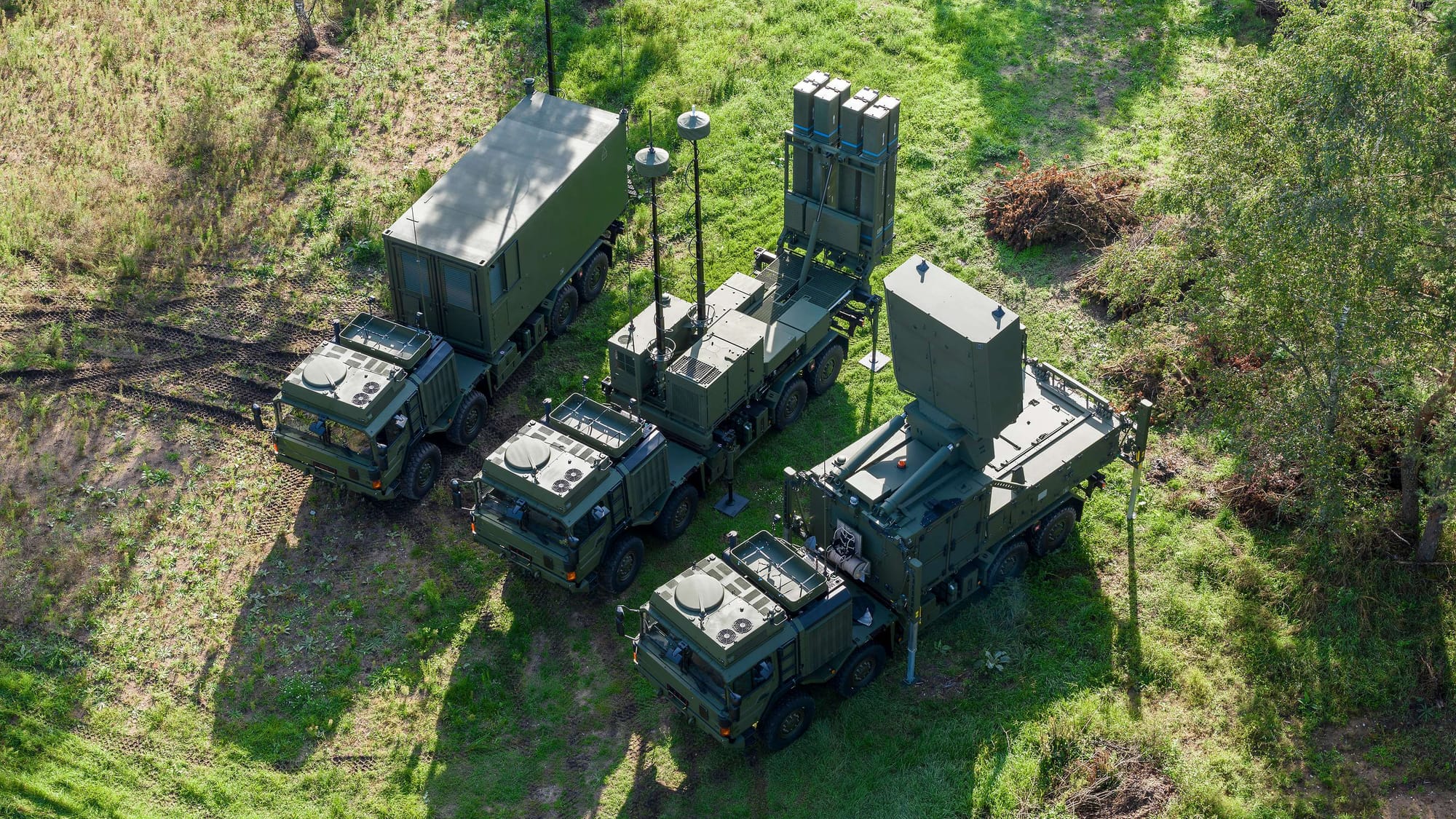
IRIS-T SLM, SAMP/T, Patriot, NASAMS, and national sensors form a remarkably effective but improvised architecture in Ukraine. It is not the result of a European air defense plan, but of a wartime emergency. Germany supplies IRIS-T and TRML-4D radars, France and Italy provide SAMP/T, the USA supplies Patriot, Norway and other countries contribute additional components. Militarily, this is helpful. Institutionally, it is a patchwork.
FP-7.x is interesting, but not a substitute for an architecture
Fire Point plans the FP-7.x as a more affordable anti-ballistic effector with a target price of under one million dollars. The planned speed of 1,500 to 2,000 meters per second would, according to the company, be in the range of modern high-performance interceptors like PAC-3 MSE. The missile is expected to be 7.25 meters long, have a fuselage diameter of 0.53 meters, and with fins reach 1.15 meters. An infrared sensor is mentioned as the seeker; a semi-active radar seeker from Diehl Defence apparently remains an option.
These specifications are ambitious, but not yet a capability. The first interception attempt is not scheduled until late 2027. In between are test campaigns, series production, integration, certification, training, and ammunition stockpiling. Anyone deriving a European missile defense from a project paper confuses development logic with operational readiness.
More interesting than the missile itself is the proposed architecture. Fire Point mentions European sensors and command systems: Sweden's Giraffe 8A/4A, France's Ground Master 400, Germany's TRML-4D, Denmark's GFTR-2100/48, Italy's Kronos Land, along with Kongsberg's Fire Distribution Center and Link 16. This reads like a catalog of the European defense industry. But a catalog is not an integrated command chain.
The Patriot question remains the uncomfortable benchmark
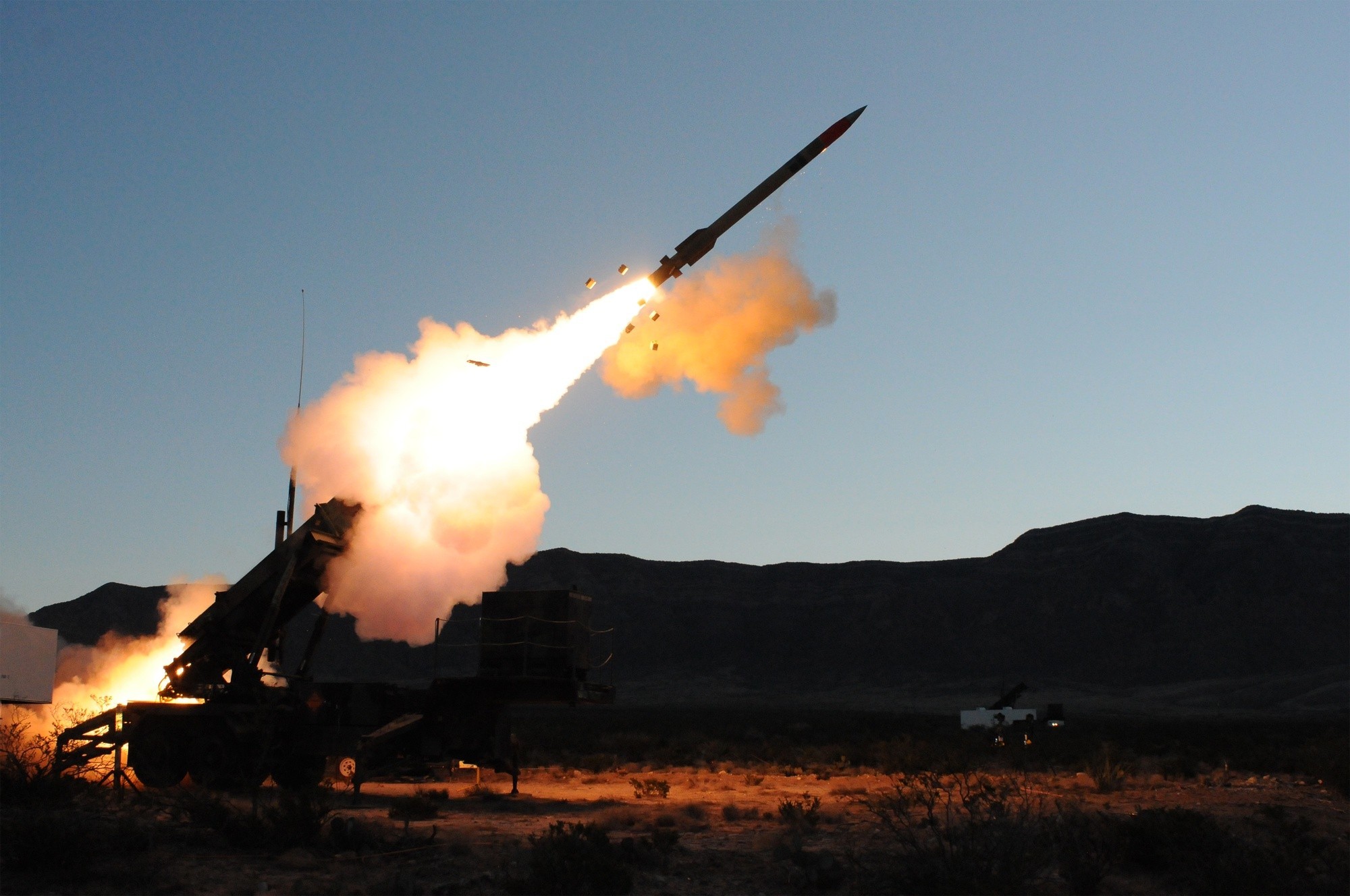
The benchmark remains Patriot, precisely because Europe wants to move away from it. Switzerland shows how brutal the market has become. The originally ordered Patriot purchase for 2.3 billion Swiss francs is reportedly set to become significantly more expensive; Bern speaks of additional costs of over 50 percent and delivery delays of five to seven years. The government has suspended payments to the USA and is considering a European alternative. This is not a Swiss special problem. It is the European procurement market in miniature.
At the same time, Lockheed Martin is developing a containerized PAC-3 MSE launcher with 360-degree capability for 61 million dollars, with prototypes expected by May 2027. This is also instructive: The USA is not only modernizing the effector but also the launch and dispersion logic of the system. Europe often discusses the missile while the Americans continue to develop the system. However, in air defense, a single device rarely makes the difference. What matters is the interplay of radar, fire control, data link, ammunition, reloading, camouflage, and spare parts chain.
Cheap drone defense does not solve the ballistic problem
The British APKWS deployment on RAF Typhoon shows the other side of the problem. The Royal Air Force has integrated 70mm laser-guided rockets onto Typhoon in less than two months to combat drones more affordably. This is operationally smart. An expensive air-to-air guided missile against a cheap drone is economically unsustainable in the long run. But this lesson should not be misapplied. Ballistic missiles cannot be neutralized by the same cost trick.
Europe therefore needs two different responses: affordable effector masses against drones and cruise missiles, as well as a few highly networked anti-ballistic systems against fast missiles. The political problem is that both responses must be financed simultaneously. The industrial problem is that Europe lacks a unified command structure for sensors, effectors, and fire control.
Macron's commitment must be measured against integration
Macron can promise Ukraine support for anti-ballistic capabilities. France has real industrial substance with Thales, MBDA, and the SAMP/T environment. Germany also possesses important components with Diehl, Hensoldt, and IRIS-T/TRGL-4D. Italy, Sweden, Norway, and Denmark have additional key components. The question is not whether Europe has technical components. The question is who will integrate them into a war-capable system and who will set priorities in case of deployment.
This is precisely where European defense projects regularly fail. Every state wants industrial participation, national control, and political visibility. Air defense tolerates this logic only to a limited extent. A radar must deliver data, a command center must prioritize, a launcher must fire, and an ammunition depot must resupply. If these functions are distributed across national reservations, no autonomy is created, but rather coordinated vulnerability.
Source situation and assessment
- Defence Industry Europe reported on May 18 about the Macron-Zelensky conversation regarding anti-ballistic capabilities and air defense.
- Fire Point published specifications for the FP-7.x under the Freya project, including target price, sensor concept, planned speed, and first interception attempt by late 2027.
- Swiss reports on Patriot mention additional costs of over 50 percent and delivery delays of five to seven years.
- Lockheed Martin received a 61 million dollar contract for a containerized PAC-3 MSE launcher by May 2027.
- The British APKWS deployment on Typhoon highlights the importance of affordable effectors against drones, but not against ballistic missiles.
Europe's paradox is: Ukraine forces the continent towards integration, but Europe's procurement institutions continue to reward national partial solutions.
The FP-7.x could become important. IRIS-T remains important. SAMP/T remains important. Patriot remains indispensable for now. But none of these responses alone solves the actual problem. Europe is still buying and developing air defense like a bundle of national programs. However, Russia does not attack national programs, but a coherent target system. More money will help. Without a common architecture, it will only lead to more expensive fragmentation.
Ukrainian President Zelenskyy and French President Macron discussed enhancing Ukraine's air defense capabilities on May 18, 2023. The Ukrainian company Fire Point announced plans for the FP-7.x missile system, targeting a price under one million dollars with a first test set for late 2027. The report emphasizes Europe's fragmented air defense strategy, relying on various national systems rather than a unified approach.
- Ukrainian President Zelenskyy and French President Macron discussed enhancing Ukraine's air defense on May 18, 2023.
- The FP-7.x missile is planned to be developed with a target price under one million dollars and a first test scheduled for late 2027.
- Europe faces challenges in integrating air defense systems, relying on a patchwork of national solutions rather than a cohesive strategy.
- The report highlights the need for both affordable drone defense and advanced anti-ballistic systems in Europe.
- The Swiss government is reconsidering its Patriot missile purchase due to significant cost increases and delays.