
Freyja 2027 Shows Europe's SAMP/T Dilemma and the Limits of German Air Defense
 Dr. Klaus Weber
Freyja 2027 Shows Europe's SAMP/T Dilemma and the Limits of German Air Defense
A prototype by mid-2027. This deadline, which Kyiv is reportedly aiming for a new European missile defense system, initially sounds remarkably ambitious. In truth, it is more of an admission: Ukraine does not need a European air defense system at some point in the future, but now; Europe, on the other hand, can only replace American systems in the short term if it had made European production decisions politically avoided for years.
The planned system is described in several reports as a European, modular shield, partly under the name Freyja. The name is less important than the institutional question behind it. Who builds the sensors, who integrates the fire control, who supplies the interceptor missiles, who bears the export and supply risks? In air defense, it is not the nice program name that determines sovereignty, but the chain of radar, command architecture, interceptors, software access, and ammunition production.
The Patriot Shock as a Political Trigger
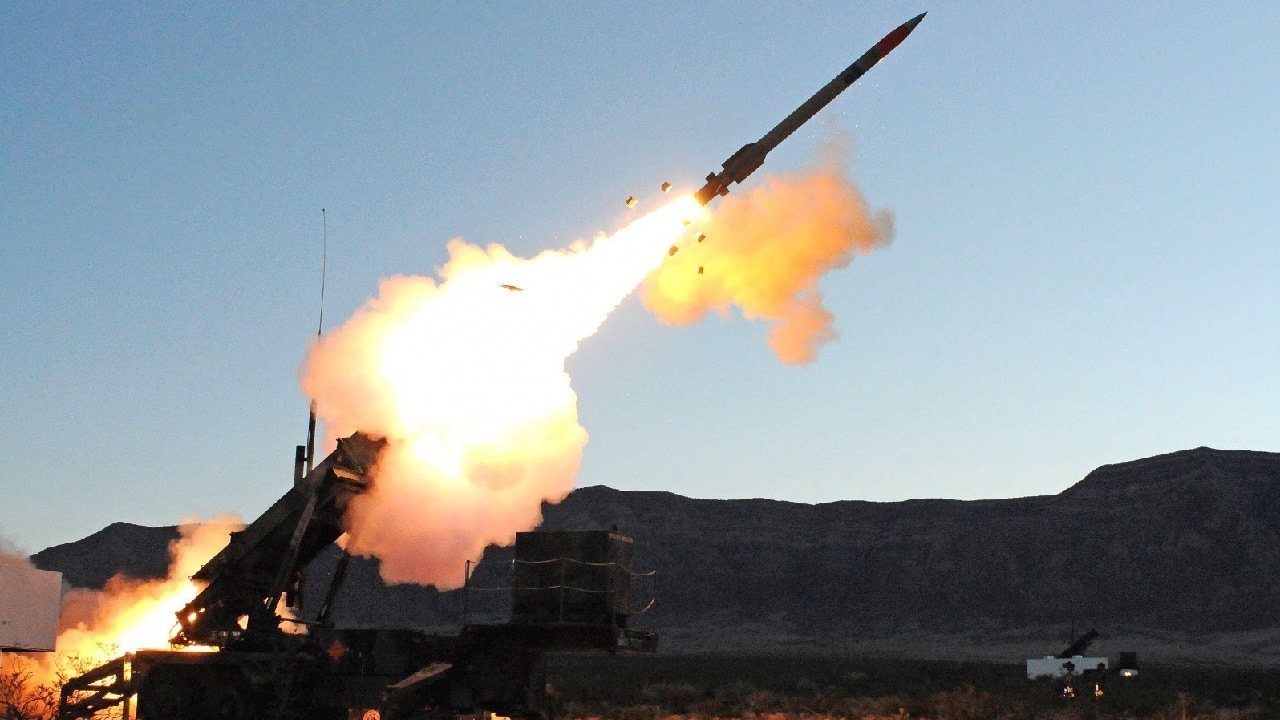
The immediate background is the shortage of Patriot interceptor missiles. Defense News reported on July 21 that European Patriot users are increasingly nervous due to a shortage of interceptors and American prioritization of its own forces. This is not a logistical operational accident, but the expected consequence of a system in which Europe finances orders, but the crucial production and allocation rights lie in Washington.
For Ukraine, Patriot remains indispensable, especially against ballistic threats. However, for Europe, Patriot has become a strategic test. Those who do not have control over spare parts, software approvals, and production slots in a crisis do not possess a capability in the full security policy sense. They have a usage right as long as the supplier does not change its own priority order.
This is where the new European initiative comes in. It is not just a Ukrainian procurement project, but a test of whether Europe draws an industrial consequence from its dependence on Patriot or merely opens another political showcase. The clock is almost brutally tight until mid-2027.
SAMP/T NG is Not a Magic Wand
The obvious European reference point is SAMP/T NG, the French-Italian air defense system with Aster-30 interceptors. Technically, it is serious. According to Defense News, Italy received its first SAMP/T NG system with Leonardo radar and at least 300 kilometers of air surveillance range in January; France received an upgraded variant with Thales Ground Fire 300 in February, whose range is stated to be up to 400 kilometers. MBDA has already tested the Aster 30 Block 1 New Technology in 2024, designed for medium-range ballistic missiles and more sophisticated threats.
But serious technology does not automatically lead to available capacity. This is exactly where the European thinking error lies. SAMP/T NG can be a core of a European shield, but a core is not yet a shield. Ukraine needs batteries, radars, interceptors, trained operators, maintenance cycles, and an ammunition reserve. Europe has too little of everything, and the little it has is divided among national planning, industrial shares, and export decisions.
According to Ukrainian reports, France has already pledged to gradually provide components starting in 2027; a Thales GF300 radar is expected to arrive in Ukraine by the end of 2026. Additionally, France and Italy are to accelerate the delivery of Aster-30 missiles by October and enable licensed production in Ukraine before the end of 2026. This is operationally sensible. However, it does not automatically solve the European series problem.
Germany Faces an Uncomfortable Choice
Particularly interesting is Germany's role. Emmanuel Macron offered on July 17 to involve Germany in the co-production of SAMP/T. Defense Minister Boris Pistorius responded cautiously open and spoke of seriously considering the offer. This sounds reasonable, but also shows Germany's fundamental difficulty: Berlin is deeply embedded in the Patriot ecosystem, politically bound to the European Sky Shield Initiative, and at the same time rhetorically committed to European sovereignty.
Germany cannot credibly demand more European air defense while simultaneously postponing any structural decision in favor of European systems to a later date. However, a sudden shift would also be naive. Patriot batteries are available, personnel are trained, NATO interoperability is real. The question is therefore not Patriot or SAMP/T. It is whether Germany is willing to consciously contribute part of its future industrial power to a European system instead of merely responding to American supply bottlenecks with new American orders.
This is politically more difficult than it sounds. Genuine participation in SAMP/T would not only mean procurement but also development shares, production lines, intellectual property rights, long-term maintenance, and perhaps the renunciation of some national special solutions. German defense policy rarely fails due to a lack of strategy papers. It often fails due to the inability to derive industrial obligations from strategy papers.
The Industrial Calculation Behind Freyja
A European prototype by mid-2027 can be useful if it is thought of as modular and pragmatic: existing radars, Ukrainian combat experience, European interceptors, open interfaces, and rapid iteration. It becomes dangerous when it is labeled as a political tag over unresolved integration issues. Especially in air defense, integration is not a minor matter. Those who control the system architecture control later modernization, ammunition variety, and export capability.
Ukraine brings an advantage here that European capitals often underestimate: operational urgency. Kyiv cannot afford a ten-year program management. It will prefer the system that works, not the one that best reflects European governance. This Ukrainian impatience could be healing for Europe. It forces Paris, Berlin, Rome, and Brussels to reveal the old distinction between industrial policy and defense capability.
At the same time, the financial scale remains sober. Higher European defense spending, SAFE loans, and national special funds create payment capacity. However, they do not create interceptor missiles as long as there are no factories, supply chains, and acceptance guarantees. Air defense is particularly unforgiving: a missing missile in the factory will not be replaced in operation by a budget item.
European Autonomy Begins with Spare Parts
The most important lesson from the Reuters report is therefore not the name Freyja and not the year 2027. The lesson is that Europe defines a new security order not through summit declarations but through control over critical components. Sensors, seekers, rocket engines, solid propellant, software approvals, and maintenance depots are the actual grammar of strategic autonomy.
If the European system delivers only a prototype by mid-2027 but no viable series perspective, it will be an experiment for Ukraine and another symbol for Europe. If, on the other hand, it is linked with Aster production, German-French division of labor, and Ukrainian front validation, it could be the rare case where European integration accelerates due to the necessity of war.
The contradiction remains stark: Europe must continue to use American systems to protect Ukraine today while simultaneously building European systems to be less vulnerable to coercion tomorrow. More sovereignty does not begin with less Patriot rhetoric. It begins with the uncomfortable willingness to finance the boring things that decide in war: spare parts, production lines, and full magazines.
Sources
- Reuters, July 27, 2026: Ukraine wants prototype of European missile defense system by mid-2027, official says.
- Defense News, July 21, 2026: Germany to study French cooperation offer on SAMP/T air-defense system.
- DW, July 27, 2026: EU defense remains heavily reliant on the United States.
Ukraine requires a European missile defense system by mid-2027 to address immediate threats. European nations are exploring cooperation on the SAMP/T air defense system, with Germany evaluating its involvement. The shortage of Patriot missiles has raised concerns among European users, prompting discussions on enhancing European defense capabilities. France and Italy plan to expedite the delivery of Aster-30 missiles and components to Ukraine.
- Ukraine requires a European missile defense system by mid-2027.
- European nations are considering cooperation on the SAMP/T air defense system.
- Germany is evaluating its role in European air defense amidst reliance on American systems.
- Patriot missile shortages are causing concern among European users.
- France and Italy are expected to provide components and accelerate missile deliveries to Ukraine.