
Freyja is set to fly in 12 months — Europe's 9-nation coalition tests its industrial policy
 Dr. Klaus Weber
Freyja is set to fly in 12 months — Europe's 9-nation coalition tests its industrial policy
Nine European countries reached an agreement on Monday in Paris with Ukraine to form an integrated anti-ballistic missile coalition. This is initially a number, not a capability. Denmark, France, Germany, Italy, the Netherlands, Norway, Spain, Sweden, and the United Kingdom aim to accelerate the Ukrainian Freyja system together with Kyiv and achieve initial operational capabilities within twelve months, in line with Zelensky's goal. This is where the political significance lies: Europe is no longer just trying to fill Patriot or SAMP/T gaps, but is building its own production and system architecture under the pressure of war.
But is that enough? An anti-ballistic system is not a single missile that can be pulled out of a factory faster with a bit more money. It is a combination of interceptor, sensor technology, fire control, data processing, communication security, training, logistics, and operational doctrine. Those who do not master this chain do not possess a capability, but a procurement promise.
The political logic behind Freyja
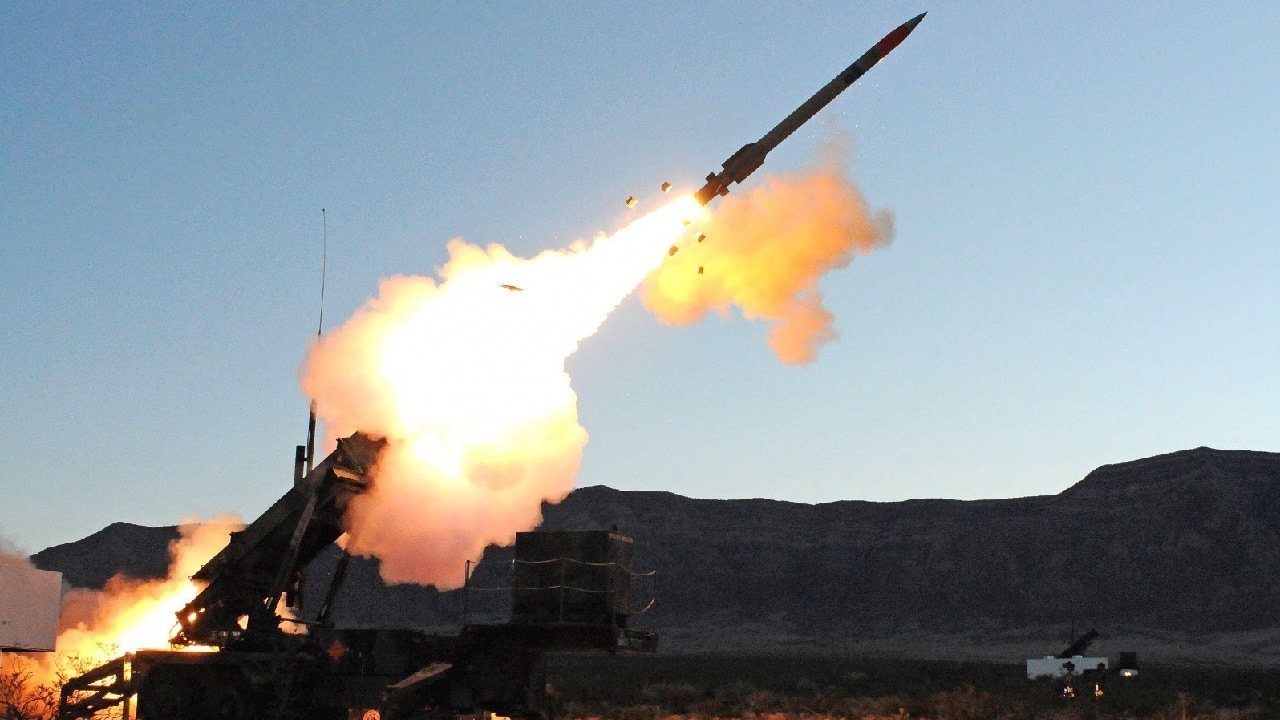
The immediate trigger is the shortage of anti-ballistic interceptors. Defense News reported on July 14 that the coalition is emerging from a global shortage, exacerbated by the war in Iran and the simultaneous demand from many allies for air defense. The U.S. has increased Patriot production; Europe is expanding SAMP/T, IRIS-T, and NASAMS. Nevertheless, the gap between demand and available quantities remains large.
Ukraine feels this gap existentially. Russian ballistic missiles cannot be reliably intercepted by Ukrainian indigenous developments so far. According to OHCHR, long-range missile and drone attacks caused about 45 percent of civilian casualties in Ukraine in May 2026. Kyiv, Zaporizhzhia, Kherson, and Dnipro suffered particularly high casualty numbers. This explains why Freyja is not just an industrial policy plaything for Zelensky, but a prerequisite for making Ukrainian cities less dependent on rationed supplies from Washington or European capitals.
The system is conceived in Ukraine, but dependent on Europe
Freyja is to be built around the FP-7.X interceptor from the Ukrainian company Fire Point. According to Defense News, this missile is designed to hit ballistic targets at an altitude of about 15 miles. Fire Point aims for a unit price of about $700,000 per shot. For comparison: a Patriot PAC-3 costs around $3.8 to $3.9 million, and individual components remain limited by a few manufacturing sites. The economic attractiveness of Freyja is therefore obvious.
However, the cheaper interceptor only solves part of the problem. Zelensky has admitted that Ukraine has the missiles but not all parts of the system. Partners are expected to contribute radars, tracking, command and control systems, as well as industrial scaling. Hensoldt, Thales, Leonardo, Kongsberg, Diehl Defence, Eurosam, MBDA, Saab, Safran, Weibel Scientific, and other companies have been mentioned in the context of the Paris initiative. This is an impressive list. However, it is also a warning signal: the more national champions are involved, the higher the coordination effort will be.
The joint statement speaks of common operational requirements, technical working groups, governance mechanisms, and a roadmap to initial capabilities. In Brussels language, this sounds reasonable. In wartime, it sounds slow. European defense policy rarely fails because no one wants to form a working group. It fails because working groups clarify responsibilities while the industrial reality is already deciding over supply chains, export rights, and national budget cycles.
Twelve months are politically necessary and industrially brutal
The twelve-month timeline is the toughest part of the announcement. Patriot interceptors require about 24 months according to publicly cited production data; certain solid rocket motor components can take even longer. Even with accelerated U.S. contracts, additional PAC-3 deliveries will not be immediately available. Freyja is supposed to bypass this bottleneck, but a new interceptor must be tested, qualified, integrated, and brought into an operational chain. A flight test in June is a start, not operational readiness.
This is where the difference between innovation and capability shows. Ukraine has proven in drones, software, and decentralized production that it can radically shorten development cycles. However, European air defense architecture works differently. It requires certification, interoperability, protection against electronic interference, and a political decision on who shares data and grants fire authorizations in case of emergency. These questions are not academic. An anti-ballistic system that connects radars from one country, software from a second, effectors from a third, and political control from a fourth country needs a clear authority structure.
That is precisely why Freyja is a European test case. If the nine countries manage to truly define operational requirements together, quickly fix industrial division of labor, and resolve export and IP issues before series production, it would be more than just aid for Ukraine. It would be a model for European defense production under time pressure. If not, Freyja will repeat the known European disease: many signatures, many companies, many good intentions, but too few delivered systems.
Germany is at the center, without wanting to lead
For Germany, the initiative is particularly uncomfortable. Berlin is a founding member of the coalition, possesses relevant radar industry with Hensoldt, has politically leveraged IRIS-T deliveries to Ukraine well, and is simultaneously seeking further Patriot and ATACMS solutions with the U.S. This corresponds to Germany's turning point in its typical form: Germany is indispensable but reluctant to be the strategic owner of the problem.
Freyja forces Berlin to make a decision that goes beyond money. Either Germany treats the project as another contribution in a long list of Ukraine support packages. Then it will be helpful but not structurally shaping. Or Berlin uses Freyja to organize European sensor technology, fire control, and industrial scaling as its own capability area. This would be politically riskier because it creates accountability. But this is precisely what has been lacking in European defense policy for years.
The strategic significance does not lie in the name
Freyja will not replace Patriot in a year. This expectation would be unrealistic. Patriot remains a system with combat experience, industrial depth, and American technological authority for high, fast, and complex threats. SAMP/T NG will also remain important for Ukraine and Europe, especially since France has confirmed a roadmap with Kyiv for Rafale, SAMP/T NG, Aster 30, AASM, and SCALP/Storm Shadow licenses in parallel.
The point is different. Europe is beginning to understand that strategic autonomy does not mean rhetorically rejecting American systems while continuing to buy them. Autonomy begins where a continent identifies its own bottlenecks and takes industrial responsibility for them. Therefore, Freyja is not proof of European strength. It is a test of whether Europe's new defense rhetoric can become faster than its procedures for the first time.
The paradox remains: without the war in Ukraine, Europe would not have developed this urgency; without European industry, Ukraine cannot translate this urgency into permanent air defense. More money helps, but it does not replace governance. And without governance, even a cheaper interceptor will just be another European hope with too many signatures and too few batteries.
Nine European nations formed an integrated anti-ballistic missile coalition with Ukraine in Paris to expedite the Freyja system's operational capabilities within twelve months. The coalition includes Denmark, France, Germany, Italy, the Netherlands, Norway, Spain, Sweden, and the United Kingdom, aiming to address the critical shortage of anti-ballistic interceptors. The Freyja system will be based on the Ukrainian FP-7.X interceptor, highlighting Europe's push for strategic autonomy in defense production.
- Nine European nations agreed to form an anti-ballistic missile coalition with Ukraine.
- The coalition aims to accelerate the development of the Freyja system within twelve months.
- The Freyja system will utilize the FP-7.X interceptor designed by a Ukrainian company.
- There is a significant gap between the demand for anti-ballistic systems and their availability.
- Germany is a key player in the coalition but is hesitant to take on a leading role.