
Freyja vs. Iskanders in 2026 Turns Kyiv into a Testing Ground for European Missile Defense
 Dmitri Volkov
Freyja against Iskanders in 2026 Turns Kyiv into a Testing Ground for European Missile Defense
The most unpleasant fact for Moscow this week is not that Ukraine is once again asking for air defense systems. It is asking not just for batteries, but for a place in the design of the European anti-missile architecture. This is a different political math. After more than four years of war, Kyiv is no longer just a consumer of Western protection but is starting to sell Europe what it itself has very little of: practical experience in the daily struggle against Russian ballistic missiles.
On July 13 in Paris, Ukraine and nine European countries announced the creation of the Integrated Anti-Ballistic Missile Coalition. According to reports from Al Jazeera and ABC/AP, Denmark, France, Germany, Italy, the Netherlands, Norway, Spain, Sweden, Ukraine, and the United Kingdom joined the statement. The formula sounds bureaucratic, but the meaning is simple: Europeans want to create a cheaper and more mass-market supplement to the Patriot, and the Ukrainian project Freyja should become one of the practical options. Just a few hours after the Paris announcement, Kyiv was again subjected to a ballistic attack. In military history, such demonstrative footnotes to diplomatic communiqués are rare.
Why Russia's Bet on Ballistics Became a Political Tool
The Russian army uses ballistic missiles not only as a means of destruction. Iskander-M, air-launched Kinzhal missiles, and North Korean KN-23s, if they are indeed used in a specific episode, act as a tool for compressing time for the Ukrainian command system. A drone can be tracked for hours, a cruise missile for tens of minutes, while a ballistic target leaves air defense calculations with an extremely narrow window. This is why Moscow so often combines cheap UAVs with more expensive missiles: the former overload attention and guidance channels, while the latter strike politically significant targets and cities.
This reflects an old Soviet principle of massed fire impact, only repackaged for the economy of 2026. In Soviet instructions, the emphasis was on salvo density and suppressing the enemy's defense system. In current Russian practice, density is created not only by missiles but by a mix of Shaheds, decoys, cruise, and ballistic means. The economics of this scheme are cynical but rational: if several dozen cheap drones force Ukraine to keep expensive detection and launch channels on high alert, then even a limited number of ballistic missiles have a better chance of breaking through.
According to ABC/AP, on the night after the Paris negotiations, Russia launched 134 long-range strike drones and three guided air-to-surface missiles, while the Ukrainian side also reported a fire on a Togolese-flagged vessel in the Odesa region after a strike on port infrastructure. Some Ukrainian sources reported a series of ballistic attacks on Kyiv in July and the interception of some Iskanders. These figures should be read cautiously: military statistics during wartime are always both reporting and an information operation. But the frequency of strikes itself shows that Moscow is trying to maintain the status of ballistics as the last convincing argument.
Freyja as a Response Not to the Missile, but to the Cost of War
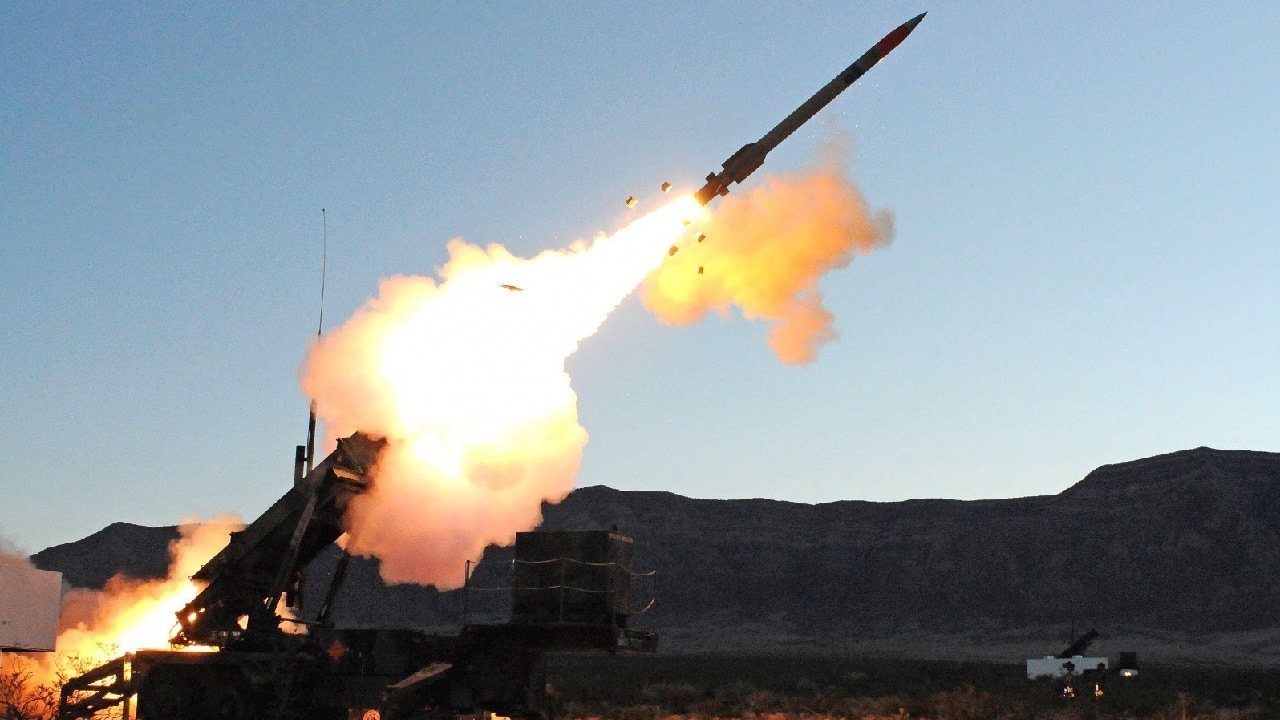
The Patriot remains the most well-known Western response to Russian ballistic missiles, but its problem is obvious even without access to closed estimates. The system is expensive, interceptor missiles are costly, production is limited, and the queue for them is politically longer than the front line. If Ukraine and Europeans talk about Freyja as a cheaper and more mass-market solution, they are effectively acknowledging: the current model of missile defense does not scale well for a prolonged war.
This is where the main analytical nerve of the story lies. Russia does not need to destroy all of Ukraine's air defense to achieve an effect. It is enough to regularly create a shortage of interceptors, forcing Kyiv to choose between protecting the capital, ports, energy facilities, military factories, and the front line. In economic terms, this is a struggle not of range and speed, but of the cost of one protected square kilometer. If a Russian missile forces the launch of an interceptor that costs several times more than the target or is produced several times slower, Moscow gains not only a military but also an industrial advantage.
Therefore, the promise from Zelensky and European leaders to develop a mass anti-ballistic solution within the next year should be seen not as another press conference about helping Ukraine, but as an attempt to change the balance of production. The success of Freyja will be measured not by beautiful presentations, but by three rough parameters: how many interceptors can be produced per month, how much one launch costs, and how quickly the system integrates with existing radars, command points, and batteries of Patriot, SAMP/T, or IRIS-T. At this level, diplomacy ends and the boring engineering truth begins.
Ukrainian Experience Becomes Exported Military Capital
For Europe, it is unpleasant to acknowledge that its future missile defense is currently being designed under the dictate of Ukrainian experience. But that is exactly what is happening. The Paris statement directly speaks of the need to utilize the unique Ukrainian practice of defense against Russian aggression. In diplomatic terms, this means: European armies have trained for too long on scenarios of limited crisis rather than on the daily war of missiles, drones, electronic warfare, and industrial exhaustion.
In this sense, Ukraine offers Europe not only a testing ground but also a filter against illusions. A paper air defense system may look magnificent in exercises until the enemy simultaneously launches decoys, drones, cruise missiles, ballistic missiles, and tries to penetrate exactly those areas where your ammunition is temporarily running low. The Ukrainian war has revived an old truth that Moscow remembered better than Brussels: air defense is not a set of batteries, but an industrial ecosystem.
It is also important that this coalition is being formed against the backdrop of Ukrainian strikes on Russian logistics. ABC/AP, citing the commander of the Drone Forces, Robert Brovdi, reported Kyiv's statement that from July 6 to 13, Ukrainian forces struck 105 Russian vessels in the Sea of Azov, including tankers, bulk carriers, ferries, and tugboats. It is impossible to independently verify these figures, and the Russian side has not confirmed them. However, the logic of the Ukrainian campaign is clear: pressure on Crimea, fuel, and maritime transport should force Russia to spend more resources on rear defense, not just on the front.
What This Changes for Russia
The Kremlin predictably labeled the European initiative a coalition of war supporters. Such a reaction does not require great hermeneutic talent. Moscow understands that if Ukraine and Europe find a scalable way to reduce the effectiveness of Iskanders and other ballistic means, then one of the few tools of Russian escalation asymmetry will lose its political sharpness. A missile that can be regularly shot down at an acceptable cost ceases to be a strategic argument and becomes an expensive expendable.
But one should not fall into the opposite illusion either. Freyja will not appear tomorrow. Even with political will, Europe will have to resolve issues of sensors, command protocols, engine production, solid fuel, guidance systems, and the distribution of intellectual property among companies and states. The Russian defense industry, with all its corrupt sores and technological limitations, will take advantage of this temporary window. This is why the July strikes on Kyiv make sense: Moscow is trying to prove that its missile pressure works faster than European industry learns to respond.
My forecast is cautious. In the next 12 months, Freyja is more likely to become a political-industrial framework than a fully mature system. But if the project indeed provides Ukraine and Europe with a cheap interceptor against some ballistic threats, the consequences will be noticeable not only over Kyiv. The Russian strategy of long-range strikes will remain, but its margin will decrease. For a war of attrition, this is not a trivial matter. Sometimes the outcome of a campaign is determined not by the most advanced projectile, but by the one that can be produced faster than the opponent produces its fear.
Sources: Al Jazeera, July 13, 2026; ABC/AP, July 14, 2026; Reuters, July 13, 2026; statements from Ukrainian and European officials at the Paris meeting of the Coalition of the Willing.
In July 2026, Ukraine and nine European nations announced the formation of the Integrated Anti-Ballistic Missile Coalition in Paris, aiming to enhance missile defense capabilities against Russian threats. Following this announcement, Russia launched 134 long-range drones and three guided missiles targeting Ukraine. The coalition seeks to leverage Ukraine's combat experience to develop a more cost-effective missile defense system, addressing the challenges posed by Russian ballistic missile attacks.
- Ukraine and nine European countries announced the Integrated Anti-Ballistic Missile Coalition in July 2026.
- Russia launched 134 long-range drones and three guided missiles after the coalition announcement.
- The coalition aims to create a more affordable missile defense solution based on Ukrainian experience.
- Ukraine has targeted 105 Russian vessels in the Azov Sea from July 6 to 13, 2026.
- The report highlights the economic implications of missile defense strategies in the ongoing conflict.