
Geranium-4 Changes the Rules of Strikes on Ukraine in Autumn 2026
 Dmitri Volkov
Geran-4 Changes the Rules of Strikes on Ukraine in Autumn 2026
The most important detail in the latest reports about the Russian drone campaign is not the number of devices in the latest raid, but the attempt to turn a disposable drone into a more autonomous strike system. According to the Main Intelligence Directorate of Ukraine, the new modification of the "Geran-4" has received improved optical navigation tools, a compass, and a Russian engine produced in the special economic zone "Alabuga." This is no longer just a simple replacement of an imported unit. Moscow is consistently transforming the drone from a cheap munition into an element of an autonomous reconnaissance-strike architecture.
From "Shahed" to the Russian Serial System
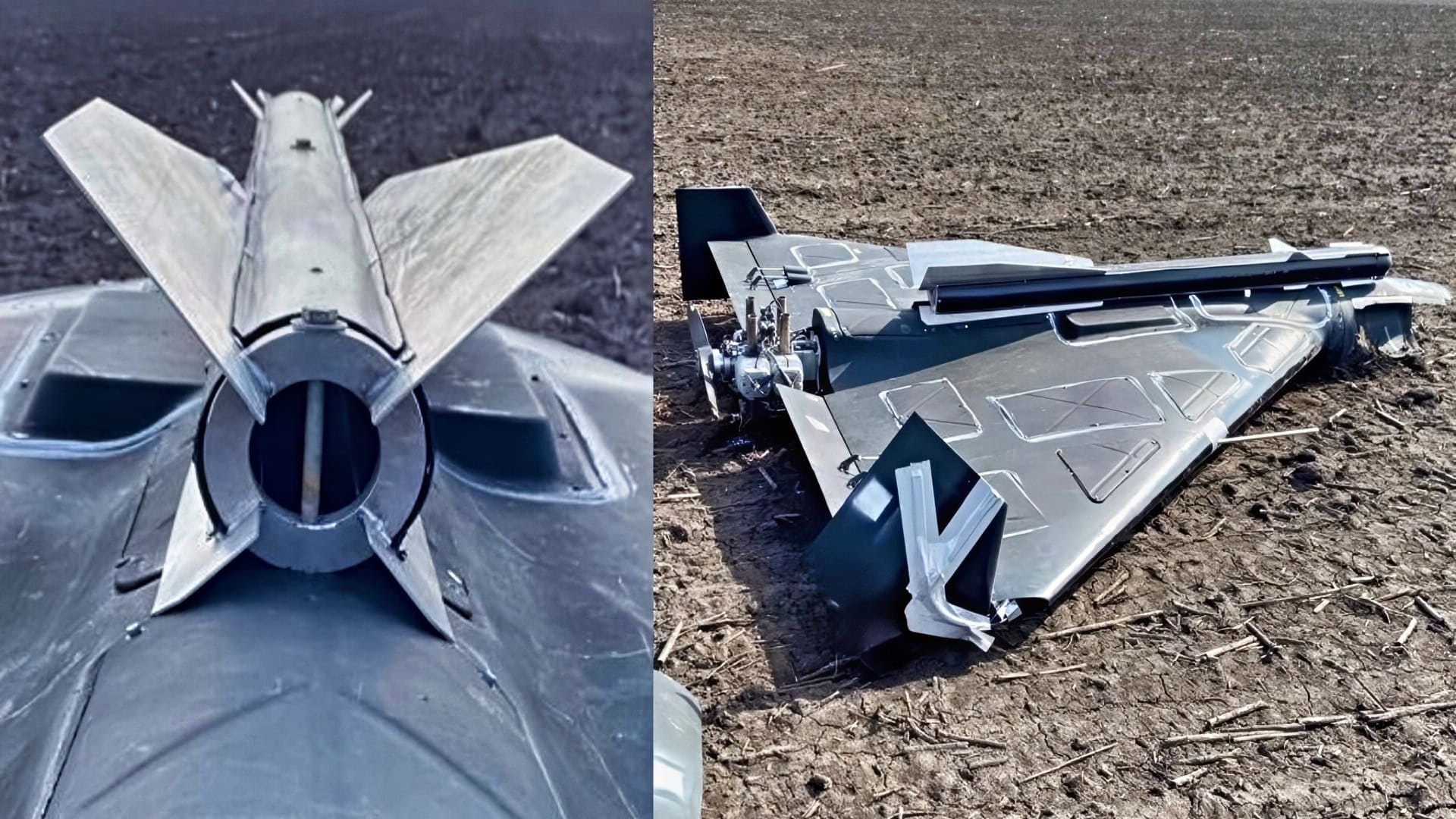
In the early years of the war, the Russian side relied on the Iranian design "Shahed-136," localizing it under the name "Geran-2." This dependence was politically convenient but industrially vulnerable: sanctions, supply disruptions, and the need to adapt foreign engines limited the pace of modernization. Now, signs of a reverse transition are evident. As noted by ISW in an assessment on October 5, Russian enterprises are expanding production while simultaneously changing navigation, speed, maneuverability, and payload of the devices. "Alabuga" is becoming not only an assembly site but also a center for the gradual Russification of the entire chain.
Particularly indicative is the use of an American precision magnetic induction sensor in the new navigation system. This does not mean that Russia has freed itself from imports. On the contrary, the very fact of using such a component indicates a continuing technological dependence that Russian propaganda prefers to ignore. However, for military results, another aspect is important: the combination of the sensor with optical navigation allows the device to operate better in conditions of electronic warfare. Jamming satellite signals is no longer a sufficient response if the drone can correlate visual landmarks and autonomous data.
The Main Targets Become Nodes, Not Just Objects
The change in the warhead is even more important than the engine. Ukrainian intelligence reports a special cumulative-cutting warhead designed to defeat concrete, steel, and cable-stayed structures. In other words, this is an attempt to attack bridges and other elements of transportation infrastructure, rather than just creating fires at industrial sites. Russian strikes on bridges across the Dnieper near Kyiv show that the choice of targets is related to logistics and management, rather than symbolic terror against the rear.
This brings us back to the classic Soviet logic of operational art: to destroy not the front itself, but its connecting elements. Railway nodes, bridges, locomotives, and energy facilities form a unified system. ISW points out that from February 2022 to mid-September 2026, Russian strikes damaged or destroyed more than 500 Ukrainian locomotives. Even if Ukrainian statistics and assessments of individual episodes require verification, the direction is clear. A faster jet drone and a specialized warhead expand the area in which Russian command can continuously test Ukrainian air defense.
Why This Relates to Strikes on Russian Oil
During the same period, Kyiv stated that long-range strikes had incapacitated more than 51 percent of Russian oil refining capacities. Reuters reported a major attack by Ukrainian drones on the Moscow region, where, according to Russian military bloggers, a fuel node was hit and two people were killed. These reports cannot automatically be considered an independent audit: the figure of 51 percent comes from the Ukrainian Ministry of Defense, and the consequences of the strikes require satellite and industry verification. But the political significance of the campaign is already measurable. Ukraine is forcing Russia to defend not only the front line but also hundreds of facilities deep within the country, while simultaneously testing its ability to maintain fuel supplies.
This creates an unpleasant symmetry for Moscow. Russia is improving the autonomy of the "Gerans" to methodically destroy Ukrainian logistics, while Ukraine is expanding the range and scale of its own drone strikes to reduce the resource base of the Russian war. The advantage here is determined not by the nominal range of the device, but by the speed of the cycle "detection - production - launch - result assessment." In this race, Russia's bet on mass production yields results but makes "Alabuga" and its associated chains priority targets.
Military Conclusion and Limits of Modernization
The modernized "Geran-4" is not a wonder weapon. It remains relatively slow, vulnerable to fighters, anti-aircraft missiles, automatic guns, and intercepting drones. But evaluating it solely by the unit price would be a mistake. A cheap device with improved autonomy can force the enemy to expend expensive missiles, disperse radar assets, and temporarily change supply routes. This is where its operational value lies.
At the same time, the new system reveals the limits of Russian import substitution. The engine can be localized, the body can be produced in series, and the warhead can be adapted to specific infrastructure. But precision sensors and microelectronics still remind us that technological independence remains a statement rather than an achieved state. Russia has learned to quickly assemble a military system from available components. It has not yet proven that it can maintain its quality over a long war without external channels.
My forecast is cautious. In autumn 2026, Russian drones will likely attack transportation nodes and energy facilities more frequently, rather than just residential and industrial areas. But the sustainability of this campaign will depend on whether Ukraine can scale up cheap interception means faster than Moscow can develop new variants of the "Geran." The drone war is entering a phase where it is not the ingenuity of an individual engineer that matters, but the ability of the state to turn an engineering breakthrough into a reproducible series.
Sources
- Institute for the Study of War, "Russian Offensive Campaign Assessment," October 5, 2026.
- Main Intelligence Directorate of the Ministry of Defense of Ukraine, report on the modernization of "Geran-4," October 5, 2026.
- Reuters, report on the Ukrainian attack on the Moscow region and fuel node, October 6, 2026.
- Kyiv Independent, materials on the new warhead of Russian drones and damage to infrastructure, October 2026.
Russia is modifying the Geran-4 drone to improve its autonomous capabilities, focusing on targeting logistics and infrastructure in Ukraine. This includes enhanced navigation systems and a new warhead designed for concrete and steel. Ukrainian intelligence reports that Russian strikes have damaged over 500 locomotives since February 2022, indicating a strategic shift in targeting. Concurrently, Ukraine has successfully attacked Russian fuel depots, significantly impacting their refining capacity.
- Russia is enhancing the Geran-4 drone's navigation and targeting capabilities.
- The new drone is designed to target logistics and infrastructure rather than just causing destruction.
- Over 500 Ukrainian locomotives have been damaged or destroyed since February 2022 due to Russian strikes.
- Ukraine has conducted drone strikes on Russian fuel depots, impacting over 51% of Russian refining capacity.
- The Geran-4 is not a wonder weapon but poses operational challenges for Ukrainian air defenses.