
German air force fires IRIS-T SLM for first time in Crete
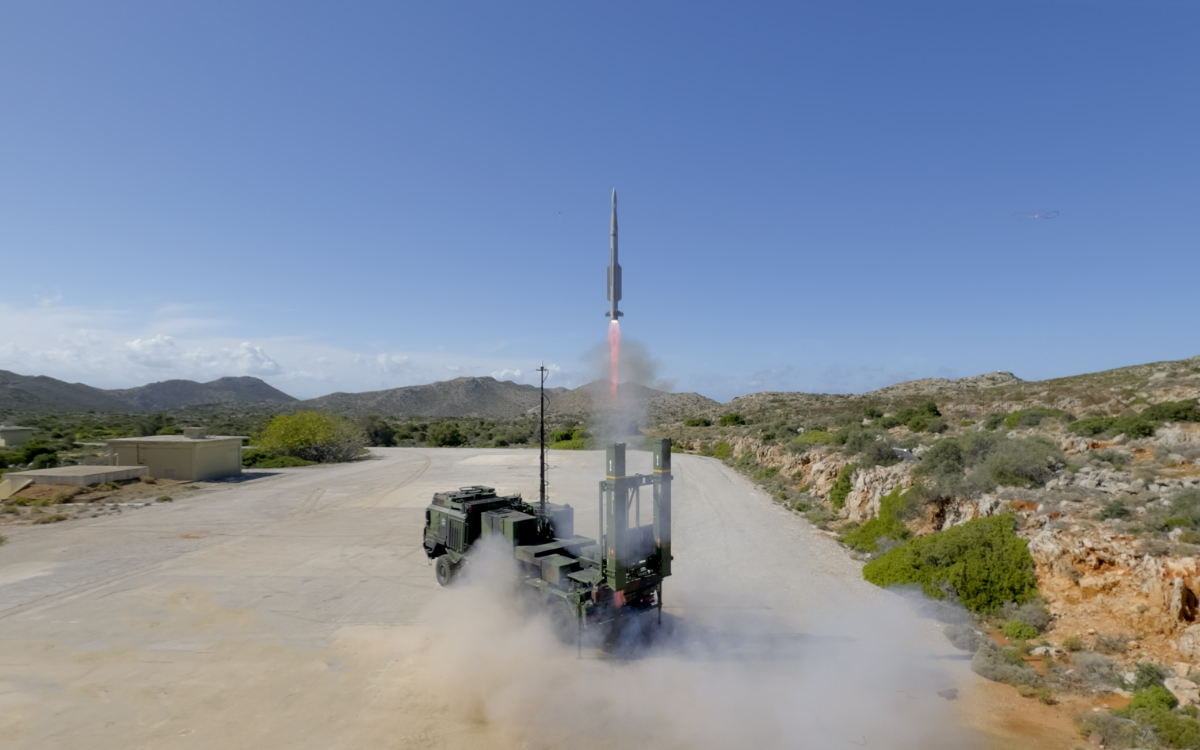
The German Air Force has fired its new IRIS-T SLM air defense system for the first time at the NATO Missile Firing Installation on Crete, completing the operational certification the system needed before it can be relied on in German service, manufacturer Diehl Defence said this week.
Air Defence Missile Group 61, the unit based at Todendorf on Germany’s Baltic coast that operates the system, trained at the NATO range in October on linking the full fire unit together: the TRML-4D radar, the Common Tactical Operations Center command post and the launcher with its IRIS-T SLM interceptors. After the certification shot, the IRIS-T SLM was folded into a wider tactical exercise alongside German and Swedish Patriot batteries and German Stinger short-range missiles on the LeFlaSys light air defense vehicle.
“Without the soldiers of Air Defence Missile Group 61, this first firing of the IRIS-T SLM in Crete would not have been possible,” said Lt. Col. Björn Klarl, the group’s commander.
Diehl did not disclose what targets were engaged, how many missiles were fired or the results of individual intercepts.
“The successful system certification firing confirms that IRIS-T SLM delivers reliable performance and a very high hit rate in operation,” said Helmut Rauch, CEO of Diehl Defence.
The system can engage targets out to 60 km (37 miles) and up to 20 km (12 miles) in altitude, according to Diehl, and is designed to protect cities and critical infrastructure against cruise missiles and drones as well as aircraft and helicopters. It sits below Patriot in Germany’s layered air defense, covering medium-range threats while Patriot handles ballistic missiles and longer-range targets.
Ukraine has used IRIS-T SLM in combat since October 2022, when Germany delivered the first fire unit to Kyiv, and the system has since become one of the main tools Ukrainian forces use against Russian cruise missiles and Shahed-type attack drones. Rauch said ten nations now rely on the system, and Sweden, whose Patriot crews took part in the Crete exercise, decided to buy IRIS-T SLM in 2025.
Germany was slower to field the system at home. Berlin ordered six fire units in 2023, and the first was delivered in August 2024, but its entry into service was held up because an ammunition loading crane had not been certified to German standards, Defence Industry Europe reported. The Bundeswehr says Air Defence Missile Group 61 formally put the system into service only in February 2026.
The NAMFI range near Chania was set up under a 1964 agreement among several NATO members and has hosted live missile firings by allied air defense units since 1968, with crews from Nike Hercules and HAWK through to Patriot training there over the decades.
Content preview only. Full article available at source. View Full Article
The German Air Force fired the IRIS-T SLM air defense system for the first time at the NATO Missile Firing Installation in Crete in October 2023, completing its operational certification. Air Defence Missile Group 61 conducted the firing as part of a tactical exercise involving other air defense systems. The IRIS-T SLM is designed to protect against various aerial threats and has been used by Ukraine since October 2022.
- The German Air Force fired the IRIS-T SLM for the first time in Crete.
- The system completed its operational certification.
- Air Defence Missile Group 61 conducted training at the NATO range in October.
- The IRIS-T SLM can engage targets up to 60 km away and 20 km in altitude.
- Ten nations currently rely on the IRIS-T SLM system.