
Germany equips four F125 with IRIS-T SLM — a test for Europe's maritime air defense 2026
 Dr. Klaus Weber
Germany equips four F125 with IRIS-T SLM — a test for Europe's maritime air defense 2026
Four German F125 frigates will eventually gain a capability that was inadequately available in their original design: a modern ground-based medium-range air defense in maritime form. The contract announced on October 2, 2026, between Diehl Defence and the Federal Office for Equipment, Information Technology and Use of the Bundeswehr (BAAINBw) initially provides for adaptation development, prototype construction, and comprehensive firing trials for IRIS-T SLM. This is an important step. However, it is still not an operational fleet capability.
From Demonstrator to Capability
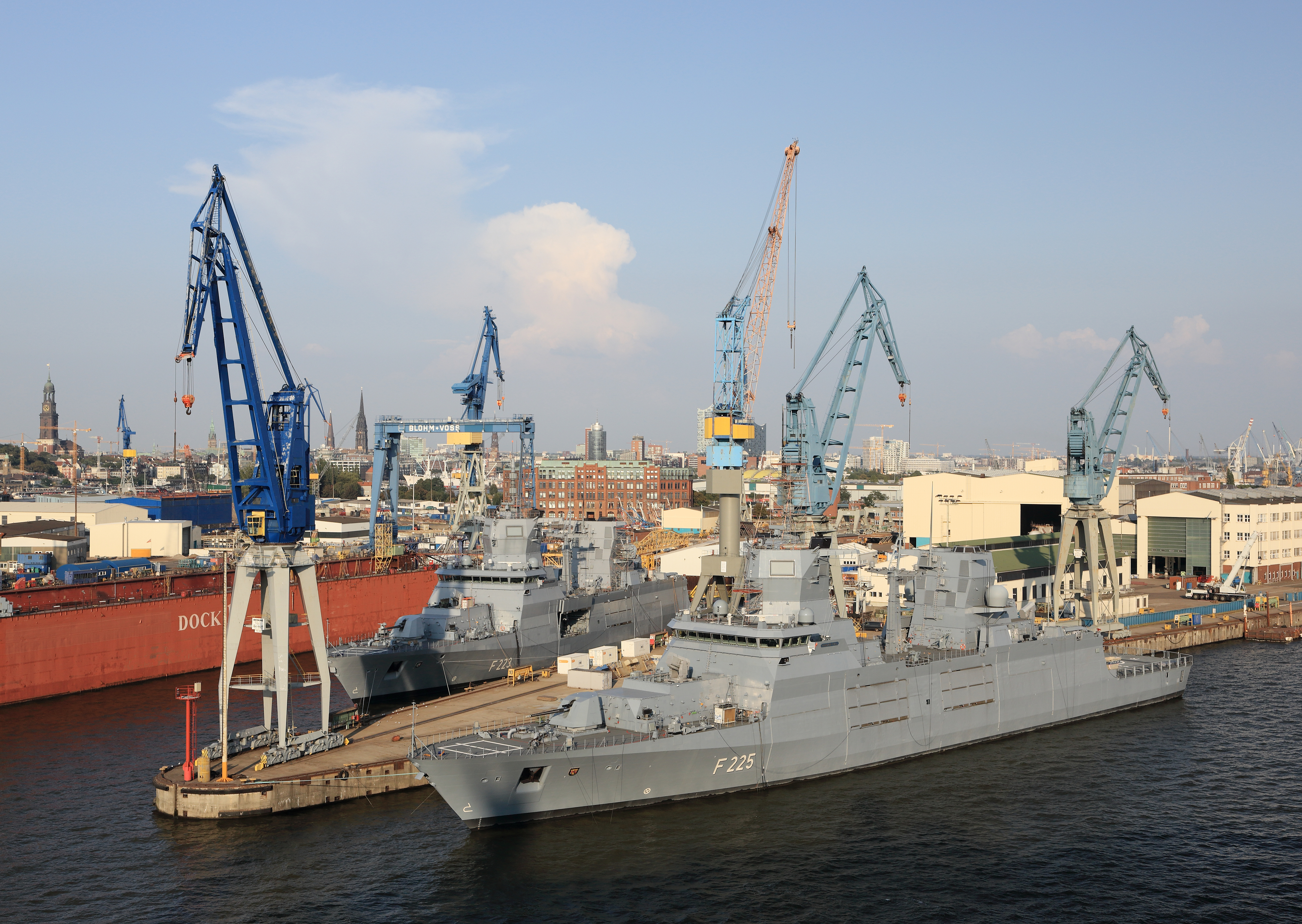
Diehl Defence had already tested a navalized demonstrator on the Baden-Württemberg in October 2025. According to EDR Magazine, the anti-air warfare module was integrated on the C-deck and brought from concept to firing in less than ten months. However, the successful demonstration primarily proves technical feasibility. Between a demonstrator and a certified, permanently available weapon system lie integration proofs, operational testing, training, spare parts supply, and integration into the command and effects network architecture.
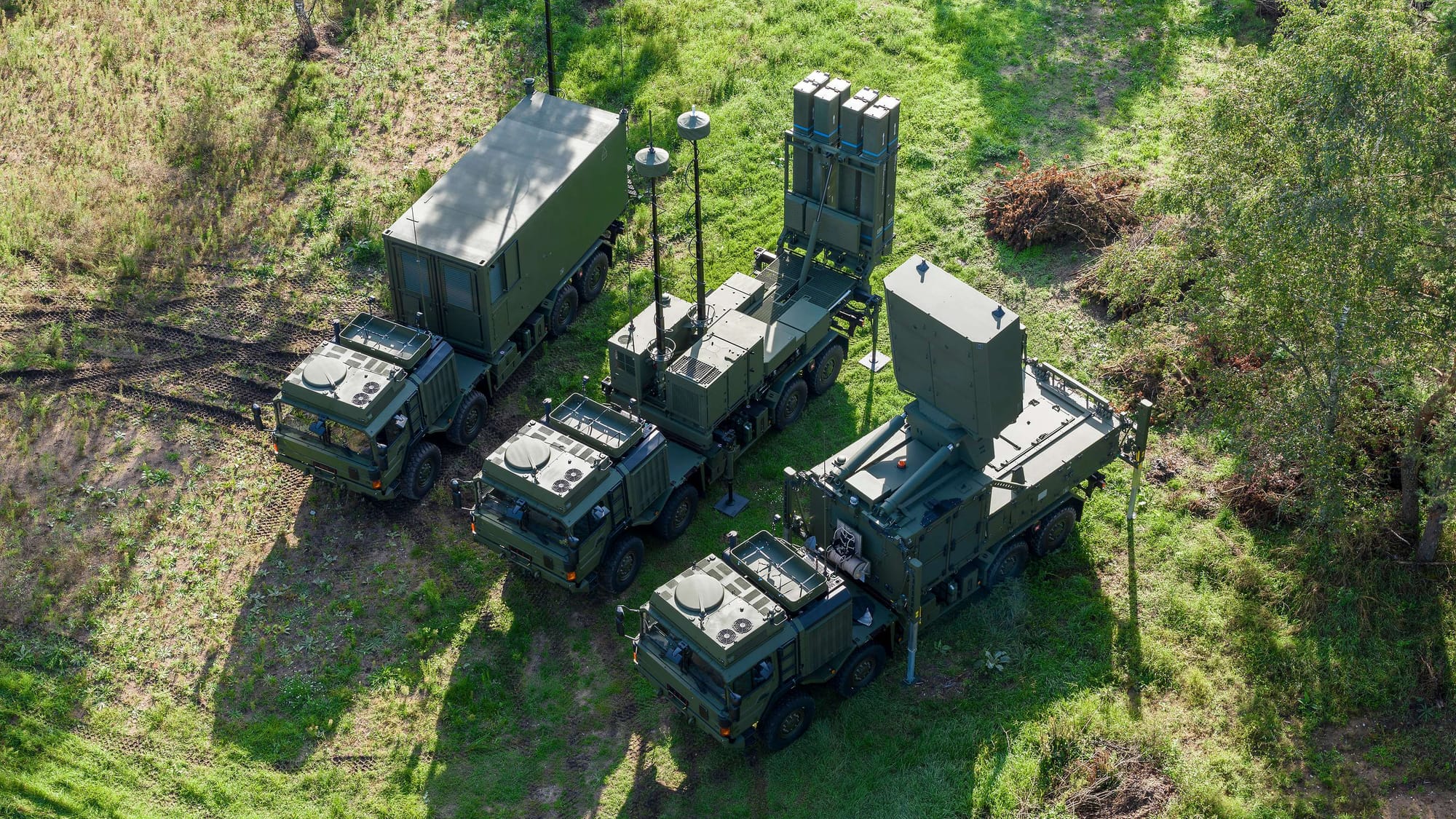
IRIS-T SLM has been developed as a land-based system for combating aircraft, cruise missiles, and drones in the medium range. A land battery cannot simply be set up on a ship. Sensors, launchers, command posts, power supply, and safety zones must harmonize with the limited space and specific movements of a frigate. Therefore, it is not only the missile that is crucial, but also whether the maritime variant reliably receives data from the NATO air defense network and can generate effects in a timely manner.
Why the F125 is now taking on an air defense role
The F125 class was primarily designed for long-duration stabilization missions and high availability. Its four ships can thus undertake long presence missions, but they are not automatically full-fledged air defense frigates. This gap is politically harder to bear in the North Atlantic and the Baltic Sea. Russia is using a mix of cruise missiles, drones, and increasingly complex air attacks in the war against Ukraine. For German ships tasked with protecting critical sea routes, port facilities, or allied formations, limited self-defense is no longer an adequate response.
The integration of IRIS-T SLM could change the role distribution of the German Navy. A F125 with its own medium-range capability would not just be a patrol ship, but a robust building block in a connected air defense. This strengthens the resilience of a formation, but does not replace long-range sensors or Aegis-like command capabilities, let alone NATO-wide situational awareness. The strategic value only arises when multiple platforms, land-based systems, and allied aircraft act together.
European industrial policy with a narrow time window
The contract is also a test for Germany's armaments procurement. The Bundeswehr has a European supplier in Diehl, whose IRIS-T family has gained importance in Ukraine and in European air defense projects. A maritime adaptation can create synergies in training, maintenance, and ammunition. It can also demonstrate that European systems can not only be exported but also quickly integrated into national armed forces.
However, the term "quick" deserves caution. The demonstration in 2025 was possible in less than ten months; this does not imply that four frigates will be equipped and ready for deployment in the short term. Prototypes must be tested under real sea conditions. After that come approval, series decision, retrofitting, crew training, and the question of how many missiles are actually available. This is precisely where European programs regularly fail: the political announcement is counted as capability, even though the armed force initially only has a development contract.
The financial dimension also remains open. Without published quantities and a complete timeline, the military benefit cannot be reliably weighed against the costs. The four F125 could gain a valuable niche capability, while other ships continue to rely on older short-range systems or protection from escort vessels. That would be progress, but still not a coherent German naval air defense.
The NATO test begins after the contract is signed
For Berlin, the real test lies not in the contract but in the connectivity. Germany must determine which threats the F125 is to combat, which sensors will provide target information, and how the ships will be integrated into NATO Integrated Air and Missile Defence. Without a clear operational doctrine, IRIS-T SLM risks becoming another valuable standalone system that is technically modern but organizationally isolated.
The decision is nonetheless correct. Europe's security problem is not that there are no usable systems. It is that development, procurement, and readiness are temporally disconnected. The F125 integration offers the chance to practically reduce this gap. However, it will only become a strategic capability when the Navy not only fires prototypes but also permanently arms, trains, and integrates four ships into formations.
European defense capability begins with a contract, but it only materializes through available crews, stockpiles, and trained formations.
Sources
- EDR Magazine, October 2, 2026, report on the IRIS-T SLM adaptation development for the F125 class
- Diehl Defence, product information on the IRIS-T family and ground-based air defense
- Bundeswehr, information on the F125 class and the tasks of the German Navy
Germany is equipping four F125 frigates with IRIS-T SLM air defense systems to enhance their maritime capabilities. The contract, announced on October 2, 2026, marks a significant step in integrating modern air defense into the German Navy. This development aims to address the growing threats in the North Atlantic and Baltic Sea, particularly from Russian missile and drone attacks.
- Germany is equipping four F125 frigates with IRIS-T SLM air defense systems.
- The contract was announced on October 2, 2026.
- The integration aims to enhance maritime air defense capabilities.
- The F125 class was originally designed for stabilization missions, not air defense.
- The successful demonstration of the system took place in October 2025.