
Germany's 140 Billion Euro Defense Budget 2027 Poses an Old European Question for the Leopard 2A8
 Dr. Klaus Weber
Germany's 140 Billion Euro Defense Budget 2027 Poses an Old European Question for the Leopard 2A8
Almost 140 billion euros for German defense in 2027 sound like a material response to the turning point. However, they only are if Berlin actually transforms money into available capabilities. The budget draft by Boris Pistorius combines a core budget of 109.7 billion euros with around 30 billion euros from the expiring special fund for the Bundeswehr. The core budget thus increases by 32.7 percent compared to 2026. The crucial question is no longer whether Germany is rearming, but whether this money will produce a coherent armed force.
Leopard 2A8 and Research as a Political Compromise
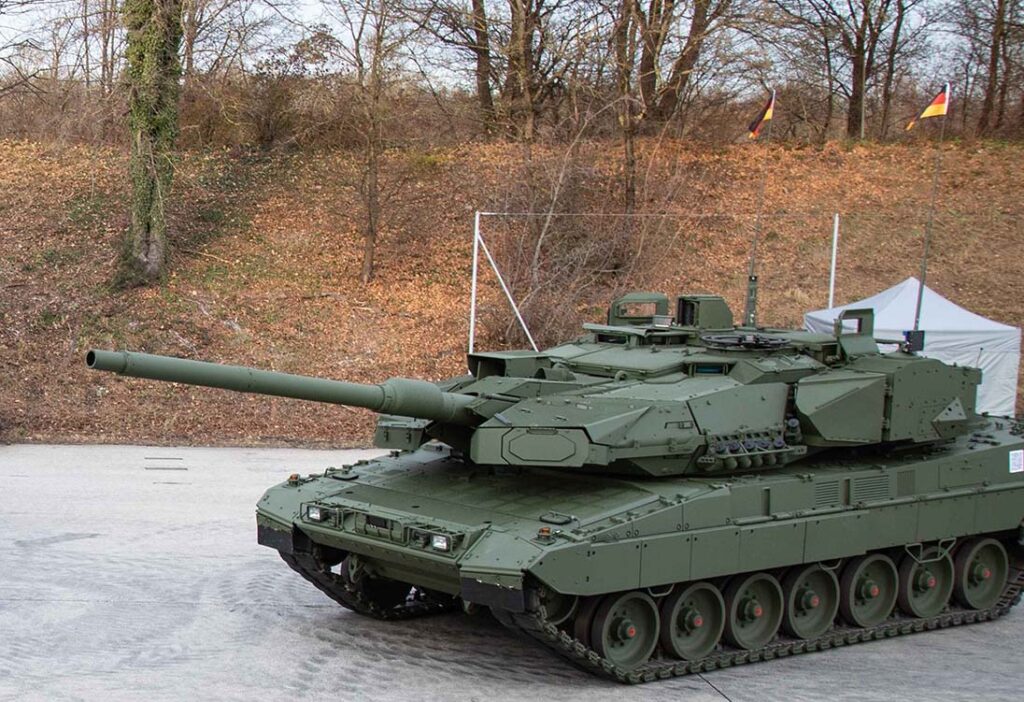
Pistorius rejects the accusation that the procurement plan favors old systems. His reference to the Leopard 2A8 is technically plausible. The main battle tank is not an unchanged relic, but a modernized platform with improved protection, sensor, and networking capabilities. Strategically, however, the objection remains. A modern tank is not yet a modern land force. It requires spare parts, ammunition, maintenance, secure communication, drone defense, and trained crews. It is precisely these chains that determine availability, not the type designation on the contract.
The new research title for civilian universities and institutes is intended to promote projects on artificial intelligence and unmanned systems. This is long overdue. Germany has long maintained an institutional gap between industrial top competence and military procurement anxiety. However, research funding initially produces demonstrators, not operational units. Years of testing, approval, and doctrine development lie between a KI algorithm in the lab and a robust reconnaissance and effects capability under combat conditions.
The Real Signal Comes from the MGCS
The most revealing part of the budget dispute is therefore not the Leopard 2A8, but the German-French Main Ground Combat System. Berlin and Paris apparently want to shift the original concept from a joint main battle tank platform to "platform-independent technology." Pistorius speaks of a restructured project. This sounds like pragmatic adjustment, but is institutionally a warning signal.
The MGCS dates back to 2012 and was supposed to define the next generation of European land combat capabilities. Fourteen years later, it is still unclear who will lead the system architecture, which platform will be developed first, and what the industrial division of labor will look like. The problem is not a lack of money. It is the lack of agreement on which national industrial decision must be subordinated to a European capability.
"Platform-independent" can make sense if it refers to an open system network of manned vehicles, unmanned ground systems, sensors, and long-range effects. However, it can also be a polite term for the end of the joint vehicle. France would then gain more freedom for its own solutions, Germany more space for the Leopard successor, and both sides would retain their national veto points. This would not be European integration, but a coexistence of national programs with a joint press release.
More Money Increases Political Pressure on Europe
The budget draft is likely to pass the parliamentary hurdle. The governing coalition has the necessary votes; the final third reading is scheduled for November 27. This shifts the debate. The opposition can no longer simply claim that Germany is doing too little. It must explain which capabilities it wants to finance with which priorities. This is healthy, as percentage targets and sums do not replace military planning.
For the European Union, Germany's course is both an opportunity and a risk. A core budget of 109.7 billion euros makes Germany the decisive buyer of European armaments. If Berlin uses this market power for common standards, larger series, and interoperable logistics, the increase in resources can strengthen the European industrial base. Conversely, if it accelerates national individual decisions, Germany will pay more but finance Europe's fragmentation.
For NATO, the distinction between input and output is also central. The alliance needs not only additional German budget resources but also deployable brigades, air defense, ammunition, command capability, and resilient reserve capacities. American pressure on Europe to take more responsibility does not answer the question of whether European states can coordinate their procurement. Washington can shift political burdens; it cannot cure Europe's institutional dysfunction.
The German Decision is Not Yet Strategic
The 2027 budget thus marks an important financial break, but not yet a strategic breakthrough. Germany is spending more, buying more modern systems, and cautiously opening up to civilian technology. At the same time, the central European country threatens once again to confuse the order: first secure national industrial interests, then talk about common capabilities.
The Leopard 2A8 is a powerful instrument. However, it will only become a strategic gain when training, maintenance, drone defense, ammunition, and command are financed as reliably. The MGCS shows how difficult it is to implement this logic politically. Europe's paradoxical situation thus remains: without more money, it cannot renew its defense; with more money, it can only repeat its old institutional mistakes more quickly and expensively.
Sources
Germany's defense budget for 2027 is set at 140 billion euros, focusing on enhancing military capabilities, particularly with the Leopard 2A8 tank. The budget includes a core allocation of 109.7 billion euros and aims to address the need for coherent military forces. The report highlights the importance of not just acquiring new equipment but also ensuring adequate support systems and training for effective military readiness.
- Germany's defense budget for 2027 is set at 140 billion euros.
- The budget includes 109.7 billion euros as a core budget and 30 billion euros from a special fund.
- The Leopard 2A8 is highlighted as a modernized tank with improved capabilities.
- The report emphasizes the need for coherent military capabilities beyond just purchasing new equipment.
- Germany's role as a significant buyer in the European defense market is underscored.