
Germany's FCAS Exit 2026 Dismantles Europe's 100 Billion Euro Fighter Jet Plan
 Dr. Klaus Weber
Germany's FCAS Exit 2026 Dismantles Europe's 100 Billion Euro Fighter Jet Plan
100 billion euros were supposed to be enough to make Europe's strategic autonomy visible. Instead, they were not even enough to commit Airbus and Dassault to a common industrial grammar. According to consistent reports from June 8 to 10, Berlin and Paris have effectively accepted that the manned core of the Future Combat Air System can no longer be continued as a joint German-French-Spanish fighter jet project. This is not a technical failure. It is an institutional judgment.
The timing is almost embarrassingly precise. Europe is increasing its defense spending, Germany is surpassing the 2 percent of GDP mark for the first time since 1990 according to SIPRI, and the European Defence Agency is set to establish its own structures for innovation, experimentation, and joint procurement starting in mid-2026. Just at this moment, the prestige project that was supposed to prove that European high technology does not necessarily have to be organized in an American way is falling apart.
What Has Actually Failed
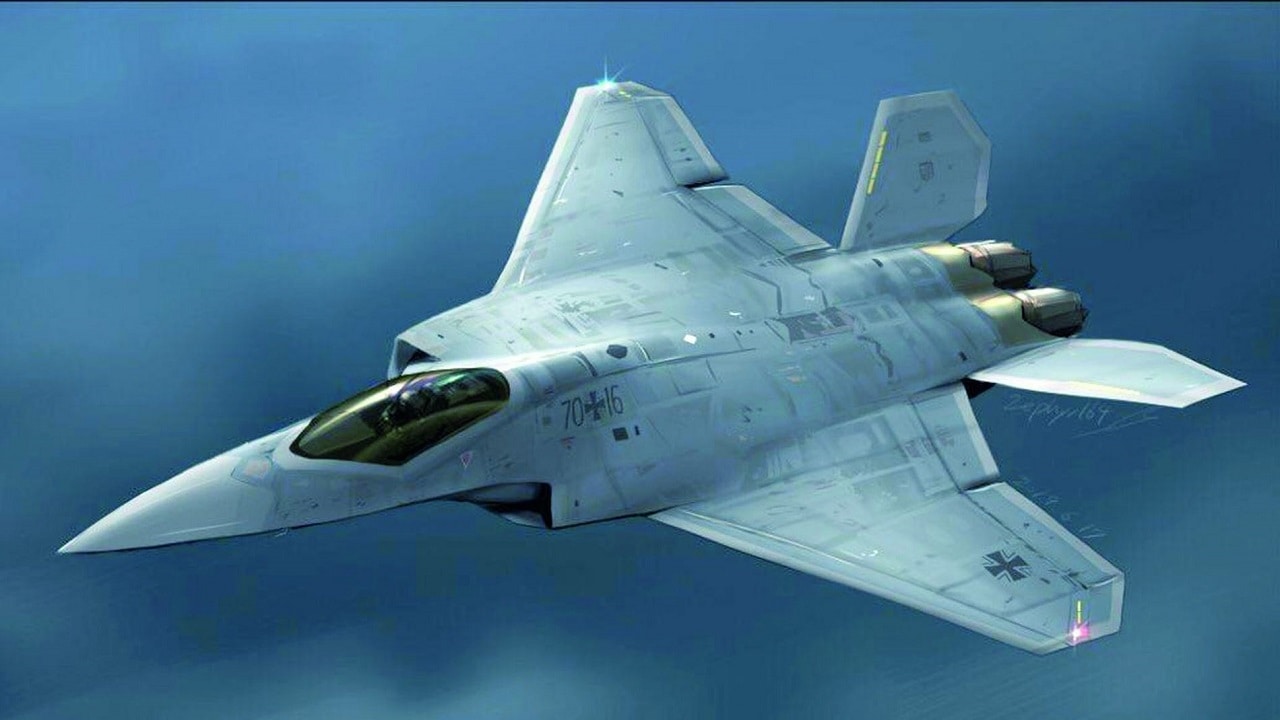
FCAS was never just an aircraft. Airbus describes the program as a system of systems: a manned New Generation Fighter, unmanned Remote Carriers, a Combat Cloud, sensors, effectors, and command software, connected with existing platforms like Rafale and Eurofighter. The gradual introduction was supposed to begin at the end of the 2020s, enable manned-unmanned teaming in the early 2030s, and produce the complete vision of a connected air combat system by around 2040.
That is precisely why the often-heard formula that one could scrap the jet and save the digital shell is only half convincing. Of course, a Combat Cloud can be further developed. Of course, drones, satellite communication, and cryptographically secured data connections can progress in smaller packages. But without agreement on who integrates the combat aircraft, who masters the mission systems, and who controls the intellectual property, the Cloud remains a network without a political focus.
The dispute between Dassault and Airbus was therefore not an ordinary dispute over work packages. Dassault wanted to take the lead on the jet because France understands the ability to design a combat aircraft sovereignly as a core national capability. Airbus, backed by German and Spanish industry, wanted a more balanced partnership and technology sharing. Both positions are rational. That is precisely the problem. A program cannot work if the rational interests of its main actors are institutionally incompatible.
Why Germany and France Wanted Different Aircraft
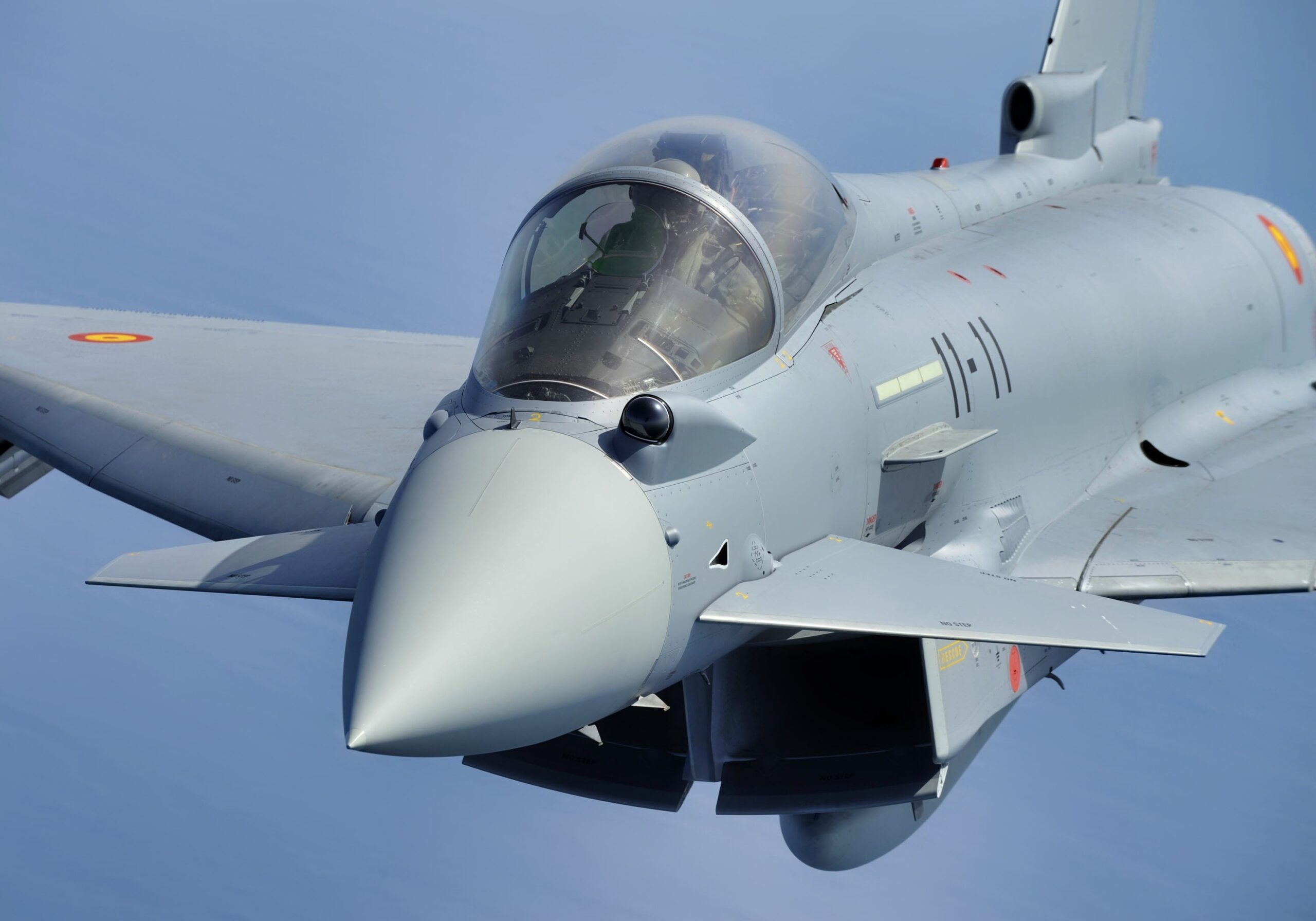
France's Rafale is not an ordinary multirole fighter. It is a carrier aircraft, an export product, a nuclear carrier, and an industrial symbol. Germany and Spain, on the other hand, are long-term replacements for Eurofighter fleets, while Berlin is also procuring F-35s for nuclear participation. Paris needs an aircraft that can operate from an aircraft carrier and meet national nuclear requirements. Berlin primarily needs an air force-capable system within NATO, embedded in American deterrence architecture and German procurement logic.
This difference has been obscured for years by political language. There was talk of European sovereignty, although France understood it as control and Germany as participation. There was talk of partnership, although Paris wanted to retain integration competence and Berlin demanded a say based on its financial share. Those who integrate into a combat aircraft program learn. Those who only supply components remain suppliers. German engineers knew this with the Eurofighter, French engineers with the Rafale, and American planners with the F-35 long before the Sunday speeches about strategic autonomy.
The consequence is not only a program termination. The consequence is that Europe will face the same choice in 2026 as in previous generations: multiple national or semi-national aircraft lines, higher unit costs, smaller production sizes, and less political control over export and operational rules. The USA sells a product. Europe discusses ownership rights.
The Wrong Lesson from More Money
The temptation in Berlin will now be great to solve the problem fiscally. Germany spends more, so Germany should lead. That sounds like a turning point, but it is not a strategy. SIPRI estimated Germany's military spending in 2025 at 114 billion dollars, an increase of 24 percent compared to the previous year. France was significantly below that at 68 billion dollars. This asymmetry changes power relations in Europe. However, it does not replace the ability to definitively arrange military requirements, industrial leadership roles, and export rules before the project starts.
A German solo effort would also not be proof of sovereignty. A new national combat aircraft would have to carry engines, sensors, signature management, mission software, armament, simulation, cyber resilience, and certification over decades. Germany can mobilize money for this. Whether it possesses the industrial integration culture is another question. Airbus is strong in system architecture, aerospace, communication systems, and European large programs. But a sixth-generation combat aircraft is not a procurement form with better financing.
Joining the British-Italian-Japanese GCAP would be more pragmatic but politically humiliating. It would give Berlin access to a more advanced governance model, but not automatically a claim to leadership. Cooperation with Sweden around Saab would be more industrially interesting, but there too the question immediately arises whether Germany wants to be a partner or a dominator. And buying more F-35s would be militarily plausible in the short term, but strategically the most honest capitulation to the claim of building European air combat sovereignty itself.
What the EDA Should Learn from This
The European Defence Agency wants to expand its role in innovation, experimentation, and joint procurement starting in mid-2026. It plans, among other things, a structure for collaborative procurement that can manage multiple projects in parallel. This makes sense, but FCAS shows the limits of such reforms. Procurement can only bundle what has been politically defined beforehand. It cannot harmonize incompatible national doctrines.
The next generation of European large programs therefore needs less pathos and more pre-decision. Before the first industrial contract, four questions must be clarified: Who has design authority? Who owns the critical software? What export rules apply? Which military requirements are common and which remain national? Without these answers, MGCS, European air defense, or deep-strike projects will follow the same path: long memoranda, expensive studies, national press briefings, and ultimately the admission that money does not replace governance.
European defense does not suffer from a lack of strategic rhetoric. It suffers from governments wanting to retain industrial sovereignty nationally while proclaiming political sovereignty at the European level.
FCAS is therefore more than a failed fighter jet. It is a test case for the question of whether Europe is capable of translating power into institutions. Germany can now pay more. France can defend technological purity. Spain can seek new partners. But if all three only learn from the failure to negotiate harder earlier in the next project, Europe may have three new aircraft by 2040 and still no common air power.
Source basis: Reports from The Guardian and SOFX on the FCAS termination, Airbus program information on the Future Combat Air System, SIPRI data on European military spending in 2025, and EDA statement on strengthening the agency in May 2026.
Germany and France have acknowledged the failure of the Future Combat Air System (FCAS) project, which was intended to be a joint fighter jet initiative. This decision comes as Europe increases defense spending, with Germany's military budget projected to exceed 2% of GDP in 2026. The FCAS's collapse highlights significant disagreements over design authority and national defense priorities, raising concerns about Europe's military autonomy and future defense cooperation.
- Germany and France have accepted the failure of the FCAS project.
- Germany's military spending is projected to exceed 2% of GDP for the first time since 1990.
- The FCAS was intended to demonstrate European technological autonomy.
- The disagreement between Dassault and Airbus reflects deeper institutional issues.
- The European Defense Agency plans to enhance its role in innovation and procurement by mid-2026.