
Germany's Tomahawk and Patriot Push 2026 Makes NATO More European but Not Autonomous
 Dr. Klaus Weber
Germany's Tomahawk and Patriot Initiative 2026 Makes NATO More European but Not Autonomous
Germany intends not only to purchase Tomahawk cruise missiles and Patriot interceptor missiles but also to produce them in Germany with American approval if possible. This industrial policy declaration, signaled by Defense Minister Boris Pistorius on July 1 in Berlin, says more about Europe's security situation than many summit declarations. It connects three numbers and facts that are rarely mentioned together: NATO has been demanding significantly higher defense spending since the Hague Resolution; Ukraine is consuming air defense ammunition faster than Europe can replace it; and the most important systems for range and air defense remain American products.
This is not a contradiction in the rhetorical sense. It is the core of the problem. A more European NATO can apparently mean that American weapons are assembled on European soil. But is that enough for European operational capability?
License Production is Not Sovereignty
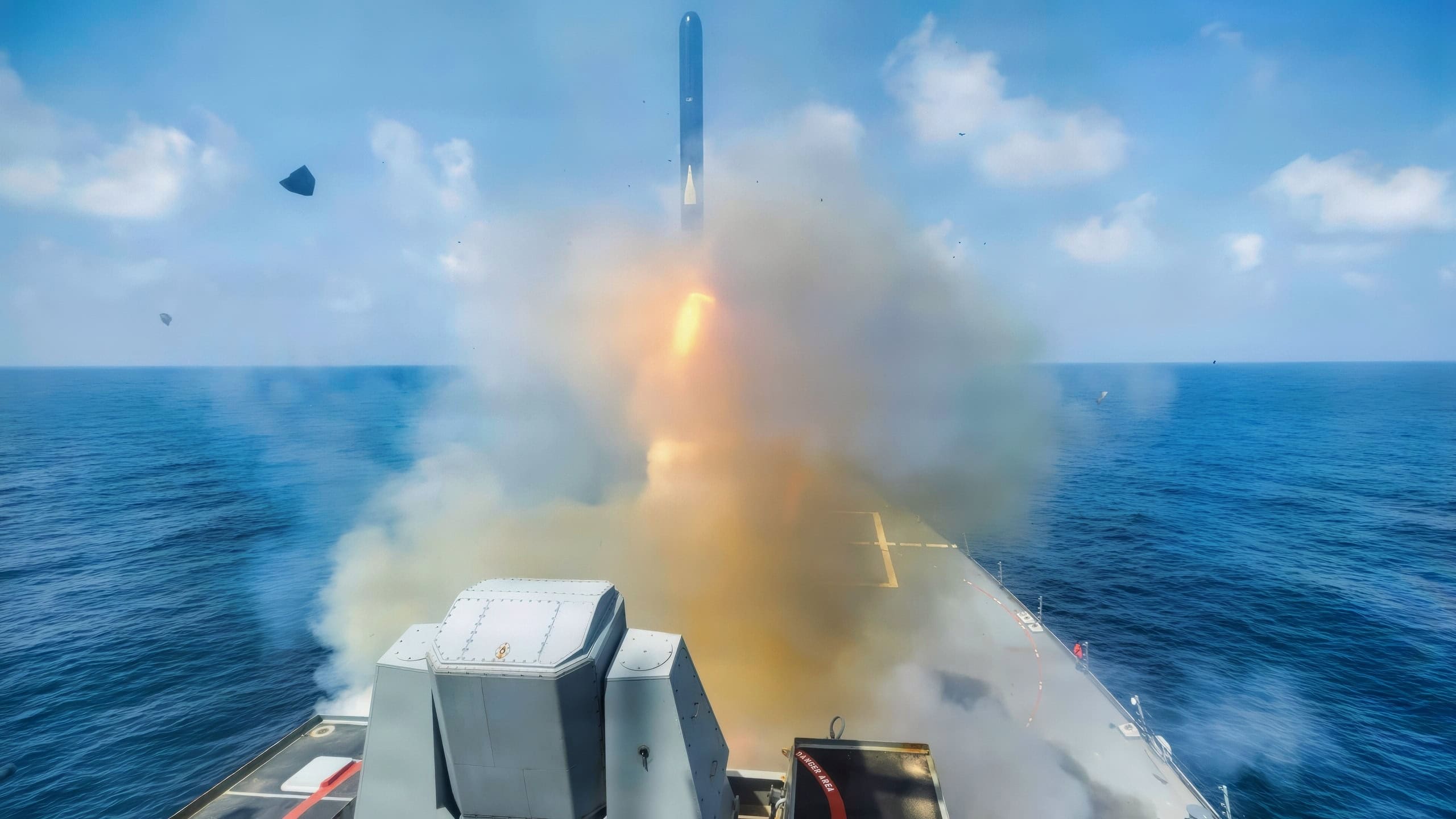
The attractiveness of the German proposal is obvious. Tomahawk is an established, precise long-range cruise missile with ranges of over 1,000 kilometers depending on the variant. Patriot, especially with PAC-3 MSE interceptors, remains practically irreplaceable for ballistic missile defense in Europe. Anyone looking to quickly strengthen European defense cannot avoid these systems. Production in Germany could shorten delivery times, expand maintenance capacities, and create political visibility.
However, license production does not automatically change the ownership of technology, software, target assignment procedures, and export rights. This is precisely where the difference between capacity and capability lies. Capacity means that a factory can produce more bodies, engines, or components. Capability means that a political community can independently decide, adapt, export, reproduce, and modernize in times of crisis. In the American defense architecture, these levels remain closely tied to Washington through ITAR, software control, and system integration.
Politically, this is convenient for Berlin. It can show Washington that Germany is taking on more responsibility without risking a technological break with American key manufacturers. It can claim to European partners that the industrial base is being strengthened. And it can credibly argue to Kyiv that more air defense and range are more practical than the next abstract debate about strategic autonomy.
Rutte Praises Germany and Unintentionally Names the Dependency
On the same day, NATO Secretary General Mark Rutte praised Germany in Berlin with the formula that Germany leads and delivers. This statement is politically significant: After years of German delays, the Federal Republic has indeed become one of the central financiers of European deterrence. It is contributing to the brigade in Lithuania, financing large parts of aid to Ukraine, increasing defense spending, and trying to pull the Bundeswehr out of a state of chronic underfunding.
However, this very progress makes the institutional weakness more visible. If the economically strongest European NATO country operationalizes its new leadership role by wanting to manufacture American precision weapons in Germany, then that is not a trivial matter. It shows that the European security order is pursuing two different integration logics simultaneously: European financing and American key technology.
This is not morally reprehensible. It can even be rational in the short term. Ukraine needs available air defense, not purity debates about origin shares. The NATO eastern flank needs deterrence, not industrial symbolic politics. But a sober analysis must note: The German proposal addresses the time problem better than the sovereignty problem.
Tomahawk Does Not Fit Neatly into Europe's Procurement Logic
Particularly interesting is Tomahawk. Europe already possesses its own cruise missile expertise: Taurus in Germany and Sweden, Storm Shadow and SCALP in the UK and France. Nevertheless, an American system is now at the center of the debate. The reason is not only range. It is the combination of availability, political embedding, and American integration power.
A familiar pattern is repeating here. With the fighter jet F-35, European states accept American system leadership because nuclear sharing, sensor fusion, and series production seem more important in the short term than industrial independence. With Patriot, they accept dependency because no European system fulfills the same role in ballistic missile defense. With Tomahawk, the third stage now threatens: Europe finances range but receives only limited control over technological development.
This is particularly delicate for Germany. The Zeitenwende was never just a budget decision. It was supposed to change the strategic culture. However, if its most visible result becomes a better purchasing and licensing machine for American systems, a paradoxical situation arises: Germany becomes militarily more relevant but not necessarily strategically more autonomous.
The Industrial Question is More Political than Berlin Admits
It would be wrong to downplay the German initiative. Assembly or partial production of Patriot and Tomahawk components in Germany could create jobs, make supply chains more robust, and bring European users closer to maintenance and training. In a long war, every reduced delivery time counts. The European defense industry does not suffer from too few strategy papers but from too few lines, skilled workers, suppliers, and long-term purchase guarantees.
But for this reason, Berlin must clearly state what it actually wants. Does Germany want to bring American weapons to Europe more efficiently? Then the proposal makes sense but is limited. Does Germany want to strengthen European defense autonomy? Then the same energy would need to flow into European air defense, rocket engines, seekers, software architecture, and ammunition reserves. Claiming both simultaneously is politically elegant but analytically unsound.
The crucial question is not whether Tomahawk or Patriot can be assembled in Germany. The crucial question is who decides on technology, export, modernization, and prioritization in case of emergency.
More European NATO Does Not Mean Less American Control
The upcoming Ankara summit is expected to repeat the formula that Europe must bear more burdens and the USA remains indispensable. This formula is not wrong. It is just incomplete. Burden-sharing without technology-sharing shifts costs but not necessarily control. Germany can pay more, produce more, and station more. If critical capabilities remain tied to American approvals, then Europe's contribution grows more than Europe's decision-making scope.
Weberianly formulated: Europe buys time but not yet sovereignty. Perhaps time in 2026 is the scarcest resource. For Ukraine, for the NATO eastern flank, and for a Bundeswehr that has been managed by peace for decades, this is no small gain. But the strategic calculation remains open. A license factory can close a capability gap. However, it cannot answer the institutional question of why Europe still needs American permission to produce its most important deterrence instruments after three years of massive rearmament.
This is the uncomfortable finding: A more European NATO can only function in the short term if it remains more American than its European rhetoric admits.
Source Situation
- Politico Europe, July 1, 2026: Germany wants to make US weapons on home turf, Pistorius says.
- Euractiv, July 1, 2026: Berlin makes bid to build more US weaponry in Germany.
- NATO, July 1, 2026: NATO Secretary General in Berlin, Germany leads and Germany delivers.
- CNBC, July 1, 2026: Europe’s defense boom faces a new test, can it actually deliver weapons.
Germany plans to produce Tomahawk cruise missiles and Patriot missiles domestically with U.S. approval, aiming to enhance European defense capabilities. This initiative reflects a significant shift in NATO's approach to defense spending and military reliance on American technology. The move is seen as a response to the urgent need for air defense systems amid the ongoing conflict in Ukraine, while also raising concerns about Europe's strategic autonomy.
- Germany intends to produce Tomahawk and Patriot missiles domestically with U.S. approval.
- The NATO alliance is pushing for increased defense spending in Europe.
- The Ukrainian conflict has accelerated the demand for air defense systems in Europe.
- Germany is becoming a central financier of European deterrence efforts.
- The reliance on American technology raises questions about European strategic autonomy.