
Hawaii firm tests basalt-fiber drones at U.S. Navy exercise
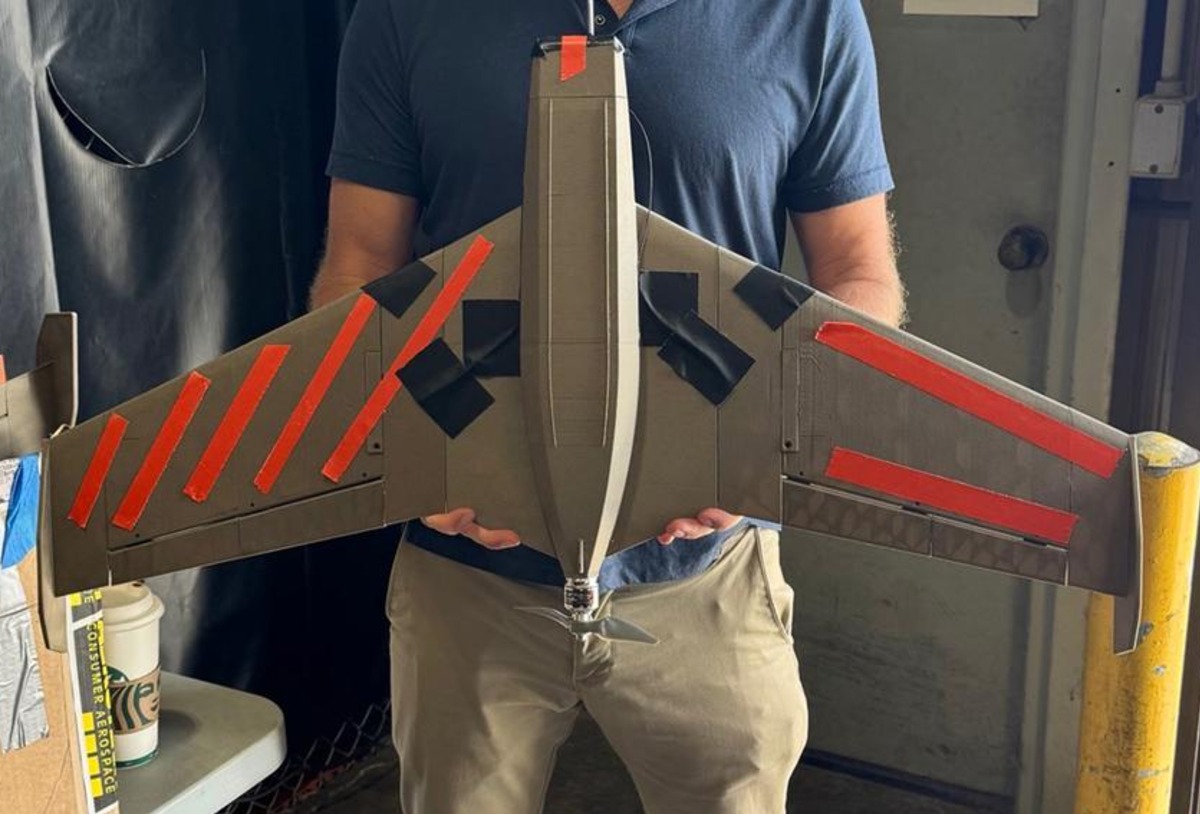
A Maui-based firm used a basalt-fiber composite to 3D print fixed-wing drones and a small surface-water drone tested during the Rim of the Pacific exercise in Hawaii, Stars and Stripes reported.
Voltage Vessels developed the material, called Eclipse X9, by combining fiber spun from volcanic basalt rock with the thermoplastic polyester PETG. Sam Young, founder and CEO of Voltage Vessels, said the compound is stronger than the carbon-fiber and fiberglass materials used to build most drones and boats. He made the comments during a series of interviews this summer.
RIMPAC 2026 ran from June 24 through July with participants from 30 nations. The Navy said the exercise included more than two dozen experiments involving unmanned systems.
“We’re enabling manufacturers in the world to use our material to relieve their pain points, whatever those pain points are, from drone manufacturing to infrastructure to marinas to totes for shipping,” Young said.
Basalt fiber is currently produced at quarries in China, Mongolia and Uzbekistan.
“There’s no place in America where you could actually make basalt fiber yet, but there are plants being produced that will do it,” Young said.
Voltage Vessels has separately submitted a six-meter rigid hull inflatable boat, or RHIB, for U.S. maritime defense evaluation, The Defence Blog previously reported. The University of Maine’s Advanced Structures and Composites Center tested Eclipse X9 under project ID UM-TC-23-1008 and measured tensile strength of about 108 megapascals along the print direction, compared with 49.2 megapascals for HDPro, the established benchmark material for printed marine vessels. The hull was printed on a CEAD large-format industrial printer.
Eclipse X9 can be used in 3D printing as well as in conventional manufacturing with molds, Young said. A vessel made from the material is resistant to ultraviolet rays, non-conductive, non-magnetic and readily recyclable, he said.
Basalt fiber is produced by crushing and melting the rock at roughly 1,500 degrees Fahrenheit, then squeezing it into a continuous filament that is spun into thread. The process requires no chemical additives, unlike the manufacture of glass or carbon fiber. Basalt fiber is used commercially for its heat-resistant properties, including in automobile exhaust systems and protective clothing for firefighters and industrial workers.
The Pentagon established the position of “drone czar” late last month to consolidate and speed up procurement of unmanned systems for U.S. armed forces. The move coincides with a broader push by the U.S. military to expand its drone inventory as an alternative to more expensive, manufacturing-intensive boats and aircraft.
Young said a resilient, 3D-printable material such as Eclipse X9 has the potential to “reshape military logistics and expeditionary manufacturing and maritime sustainment,” citing the abundance of basalt across the island nations of the Pacific.
“I want to enable all the boat builders in the United States and in the world to use large-format additive manufacturing to print their boats for the first time,” Young said.
Content preview only. Full article available at source. View Full Article
Voltage Vessels tested basalt-fiber drones and a small surface-water drone during the Rim of the Pacific exercise in Hawaii from June 24 to July 2026. The U.S. Navy participated in this exercise, which involved over two dozen unmanned systems experiments. The new material, Eclipse X9, is claimed to be stronger than traditional drone materials and has potential military applications.
- Voltage Vessels developed a basalt-fiber composite called Eclipse X9 for drone manufacturing.
- The U.S. Navy tested these drones during the Rim of the Pacific exercise in Hawaii.
- Eclipse X9 is stronger than traditional materials like carbon-fiber and fiberglass.
- The Pentagon established a 'drone czar' to expedite unmanned systems procurement.
- Basalt fiber is produced from volcanic rock and has various commercial applications.