
Houthi Missiles Bring Saudi Arabia's Southern Front Back to Test Patriot and THAAD in 2026
 Ahmed Al-Rashid
Houthi Missiles Bring Saudi Arabia's Southern Front Back to Test Patriot and THAAD in 2026
On July 13, 2026, Yemeni missiles returned towards Saudi Arabia after years of relative calm, followed by news on July 16 of new American strikes in Iran and attacks on military bases in the Gulf, confirming that Riyadh was no longer facing a single front, but a pressure network extending from the Strait of Hormuz to the Red Sea and the southern borders.
The Front That Some Thought Had Fallen Asleep
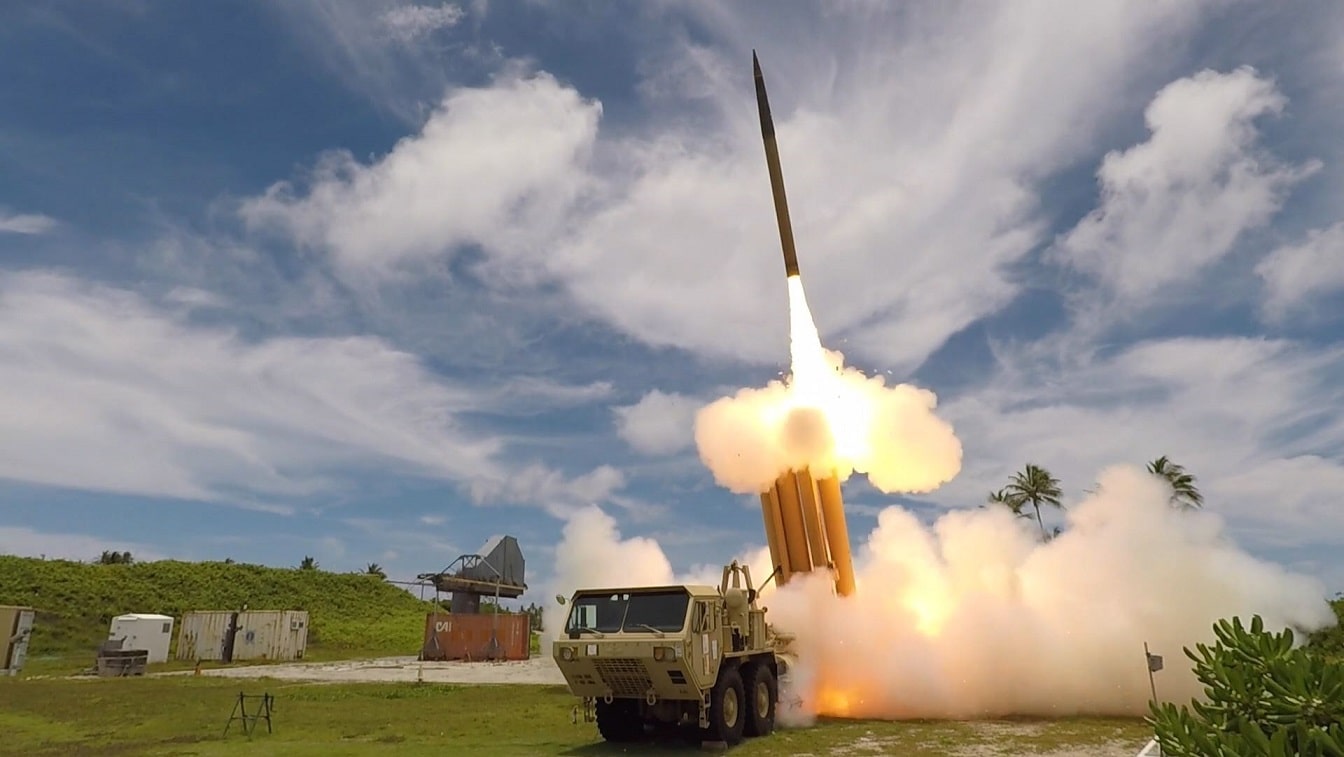
The issue is not that the Houthis launched one or two missiles. In military calculations, the real value of any limited missile attack is that it forces the opponent to redistribute air defense batteries, open additional operations rooms, raise radar readiness, and exhaust interception crews. This cost does not show up in explosion images, but it appears weeks later in maintenance schedules and stocks of intercept missiles.
Saudi Arabia has owned Patriot systems for decades and has signed THAAD deals to enhance the upper layer of defense against ballistic missiles. However, possessing these systems does not mean the sky has become closed. Any officer who has served in the region knows that air defense is not a piece of weaponry but a complete nervous system: radar, command and control, communication, rules of engagement, repeated training, and an interception stock sufficient for a long war, not just a military parade.
What Has Changed Since the First Yemen War
From 2015 to 2021, the Yemeni threat was relatively understood: short- and medium-range ballistic missiles, drones, and some cruise missiles targeting airports and oil facilities. Today, the Iranian factor enters more broadly. The American-Israeli-Iranian war, the Hormuz crisis, and the exchange of strikes around the Gulf all provide the Houthis with a different political and military environment. They are no longer just a Yemeni actor pressuring Riyadh; they have become part of a larger regional rhythm.
This does not mean that Tehran presses a single button in every operation. Good analysis does not require such naivety. But it does mean that the Houthis understand when launching a missile has a political impact greater than its military effect. When Washington strikes Iranian sites, and when Kuwait, Bahrain, and Qatar are concerned about missiles and drones, a missile aimed at southern Saudi Arabia is not only read in Jazan and Najran but also in Riyadh, Washington, and marine insurance markets.
Patriot and THAAD: Between Capability and Cost
Practically, Patriot is suitable for intercepting a wide range of threats, but it is costly to use and limited by the number of batteries and missiles available at any given moment. THAAD adds a higher layer against ballistic missiles, but it is not a magic wand against small drones or low-flying cruise missiles. The Saudi problem is not a lack of system names, but the difficulty of building a multi-layered defensive network that operates under simultaneous pressure from the south, east, and sea.
Here, the triangle of capability that I always return to appears: equipment, training, institution. Saudi Arabia has purchased the equipment and paid a high price for it. Training has undoubtedly improved, especially after the Aramco attacks in 2019 and beyond. However, the defense institution still needs deeper integration between the air force, air defense, national guard, and maritime security. In modern warfare, the line between a Yemeni missile and a drone over the Gulf and a tanker in the Red Sea is no longer a comfortable administrative boundary.
- Patriot provides an important interception layer but consumes expensive munitions against cheap threats.
- THAAD enhances deterrence against ballistic missiles but does not cover all types of threats.
- Drones and cruise missiles require low-altitude radars, guns, and electronic warfare systems.
- Command and control are more important than the number of batteries when fronts coincide.
Why This Concerns Riyadh More Than Washington
The United States can strike Iran today and redeploy its squadrons tomorrow. Saudi Arabia does not have the luxury of leaving geography. Its southern borders remain there, its oil facilities remain there, and its cities and airports remain within the range of missiles and drones that can be developed, smuggled, or assembled locally. Therefore, any escalation in Hormuz immediately returns to an old Saudi question: Is American protection sufficient if Washington itself is a cause of expanding the circle of fire?
This is the paradox that many Gulf officials do not like to say publicly. The American umbrella is necessary, but it is not comprehensive insurance. And when the American president or the Pentagon raises the pressure on Iran, Gulf countries pay part of the security premium in the form of air alerts, disrupted navigation, increased insurance costs, and concerns about oil and gas facilities.
The Real Message from the Houthis
The Houthis' message is not that they can defeat the Saudi army. That is unrealistic. Their message is that they can make Saudi calm conditional on the behavior of another front. If Iran ignites, Yemen moves. If Washington hardens its stance in Hormuz, southern Saudi Arabia becomes a reminder card. And if Riyadh wants to distance itself from a regional war, geography brings it back into the room.
In my estimation, this is the most significant danger in the return of the southern front: it is not the size of the missile, but its timing. A missile that falls in a border area may not change the balance of power, but it changes the priority list within the Ministry of Defense. It demands interception munitions, consumes hours of surveillance flight, opens the civil defense file, and makes foreign investors ask an uncomfortable question about stability.
Conclusion
Saudi Arabia has built a stronger air defense over the past years than it had at the beginning of the Yemen war. But its adversaries have also learned. The party that launches a cheap drone or a modified missile does not need a complete breakthrough; it is enough to force a wealthy nation to operate a multi-billion dollar defense system night after night.
In armies, we say that successful defense is not only measured by what it has shot down but by what it has cost to shoot it down. This is Saudi Arabia's dilemma in 2026: how to protect the south, east, and sea without turning every defensive layer into an open political and military bill.
The southern front has returned, but its return is not just Yemeni. It is a small mirror of the larger war around the Gulf, where Saudi Arabia seeks defensive independence while still relying on systems, munitions, and political decisions that come largely from outside the region.
Houthi forces resumed missile attacks on Saudi Arabia in July 2026, prompting a reassessment of the country's air defense systems, including Patriot and THAAD. The geopolitical landscape has shifted, with Iranian influence complicating the situation. Saudi Arabia faces simultaneous threats from multiple fronts, raising concerns about the effectiveness and cost of its defense network.
- Houthi missiles have resumed targeting Saudi Arabia after a period of relative calm.
- Saudi Arabia is reassessing its air defense capabilities, including Patriot and THAAD systems.
- The geopolitical context has changed, with Iranian influence affecting Houthi operations.
- Saudi Arabia's defense network faces challenges from simultaneous threats from multiple fronts.
- The cost of maintaining air defense systems is a concern for Saudi Arabia.