
Indonesia Buys 12 M-346F Jets But Adds Another Logistics Problem
 Marcus Chen
Indonesia Buys 12 M-346F Jets But Adds Another Logistics Problem
Twelve M-346F Block 20 light fighters will not change the air balance over the South China Sea. They will, however, add one more aircraft type to an Indonesian combat fleet that already asks too much of its maintainers, planners, and pilots.
Defense News reported on July 24 that Indonesia has ordered a dozen Leonardo M-346F light fighters, with first deliveries expected in 2030. Leonardo says the package includes local support, maintenance, overhaul, training, and human capital development. That matters because the airplane is not the problem by itself. The problem is the fleet it is joining.
A Capable Small Jet In A Crowded Hangar
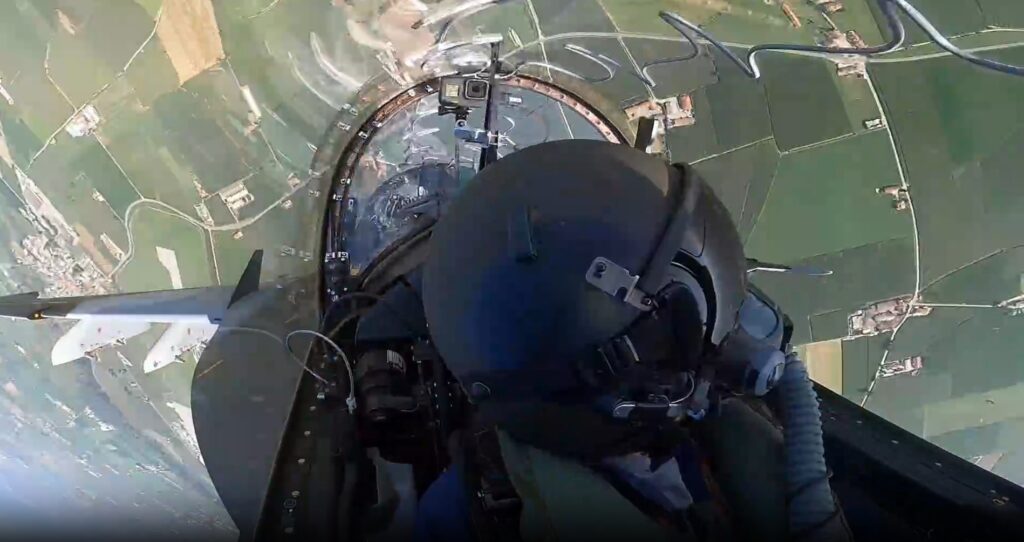
The M-346 started life as an advanced jet trainer, but the F variant is a real light fighter. Leonardo lists a 9.72-meter wingspan, 11.49-meter length, 1,090 km/h maximum level speed, 45,000-foot service ceiling, and twin Honeywell F124-GA-200 turbofans producing 2,850 kilograms of thrust each. Defense News notes that the Block 20 fighter version brings an active electronically scanned array radar, Link 16, seven weapon hardpoints, aerial refueling capability, and electronic countermeasures.
Those are useful features for an archipelagic state. Indonesia needs aircraft that can train pilots, patrol wide maritime approaches, carry precision weapons, and plug into command networks without consuming the same budget or runway footprint as a heavy fighter. A light fighter can be a sensible answer to that requirement.
But Indonesia is not buying the M-346F into a clean force structure. The Indonesian Air Force is already inducting Rafales while still operating American F-16s, Russian Su-27 and Su-30 fighters, and South Korean T-50i aircraft. Jakarta previously invested in the Korean KF-21 program, has shown interest in the Turkish Kaan, and Defense News also noted public interest in the Chinese J-10. Add the M-346F and the issue is no longer procurement diversification. It is operational fragmentation.
The Math Is Maintenance, Not Range
Anyone who has served on a destroyer knows the briefing slide never captures the maintenance burden. A ship can show green boxes for combat systems while three divisions are quietly cannibalizing parts to keep the watchbill alive. Air forces have the same problem, only faster.
Each fighter family brings its own engines, ground support equipment, simulators, software loads, weapons interfaces, training syllabi, spare parts pipeline, contractor relationships, and security rules. The F-16 supply chain points toward the United States. The Su-27 and Su-30 line points toward Russia. The Rafale line points toward France. The T-50i line points toward South Korea. The M-346F line points toward Italy. If Kaan or J-10 ever join the fleet, the map gets worse.
That diversity gives Jakarta diplomatic flexibility. It also reduces the chance that one foreign capital can ground the whole force with an export freeze. But flexibility has a cost. A fighter that cannot share weapons, data links, maintenance crews, or mission planning tools at scale is less useful in a fight than its brochure suggests.
Indonesia is trying to cover roughly 17,000 islands and sea lanes linking the Indian Ocean, South China Sea, and Pacific approaches. In a crisis around Natuna, Sulawesi, or the Malacca and Lombok routes, the operational question is not how many aircraft are in the inventory. It is how many armed sorties can be generated from usable bases after 72 hours, and how many can talk to each other in the same air picture.
That is where a dozen light fighters can disappoint. Twelve aircraft normally means far fewer than twelve available at any given time after training, maintenance, depot work, and alert commitments are deducted. A healthy squadron may put six to eight jets on the line. A mixed logistics system can push that number lower. For maritime air defense and strike, mass is not an abstraction. It is sortie rate.
Why Beijing Will Still Notice
China will not treat the M-346F order as a decisive new threat. The aircraft is not a J-20 killer, and Indonesia is not building an offensive air arm aimed at the Chinese mainland. But Beijing will notice the trend. Indonesia is adding more Western-compatible sensors, data links, and training pathways while preserving diplomatic space.
That matters around the southern edge of the South China Sea. Jakarta does not claim the Spratly Islands in the same way Vietnam or the Philippines does, but Chinese activity around the Natuna area has repeatedly forced Indonesia to signal resolve. A light fighter with aerial refueling, modern radar, and networked communications can help police that space, especially if paired with maritime patrol aircraft, coastal sensors, and shipboard helicopters.
The helicopter piece is worth watching. Leonardo, PT ESystem Solutions, and the Indonesian Ministry of Defense also signed a July 21 letter of intent tied to AW149 medium helicopters for the Indonesian Navy. Defense News reported that the service currently operates eleven Airbus AS565 Panther helicopters and needs more shipboard rotorcraft for search and rescue, disaster relief, and embarked operations. For an archipelago, helicopters may provide more daily maritime utility than another fast jet squadron.
The Better Procurement Test
The test for this deal is not whether the M-346F is a good aircraft. It probably is. More than 170,000 flight hours across the M-346 family suggest a mature platform, and the Block 20 update gives Indonesia a useful training and combat bridge.
The harder test is whether Jakarta can make the M-346F part of a coherent force instead of another isolated fleetlet. That means common mission planning where possible, rational weapons integration, shared training standards, reliable depot capacity, and an air command system that can use data from Rafale, F-16, T-50i, M-346F, naval helicopters, and maritime sensors without turning every exercise into a translation problem.
Indonesia has real reasons to avoid dependence on a single supplier. Its geography also forces a wider procurement imagination than a continental air force would need. But diversification stops being insurance when it prevents concentration of combat power.
The question for 2030 is simple: can Indonesia generate usable sorties across the archipelago, or will it own a museum of excellent aircraft that do not fight as one force?
The M-346F gives Jakarta another tool. It does not solve the core problem. In Southeast Asian airpower, the winner will not be the country with the longest supplier list. It will be the country that can keep aircraft armed, networked, and flying after the first week of pressure. That is the gap Indonesia still has to close.
Indonesia ordered 12 M-346F light fighters from Leonardo, with deliveries expected in 2030. This addition to the Indonesian Air Force's diverse fleet raises concerns about operational fragmentation and logistical challenges. The M-346F is intended to enhance training and combat capabilities, but it may not significantly change the air balance in the South China Sea.
- Indonesia ordered 12 M-346F light fighters from Leonardo.
- First deliveries are expected in 2030.
- The M-346F will add to an already diverse fleet of aircraft.
- Indonesia's air force is facing logistical challenges with multiple aircraft types.
- The M-346F is not expected to significantly alter the air balance in the South China Sea.