
Iran and America's Strikes in the Gulf 2026 Reveal the Fragility of Gulf Base Defenses
 Ahmed Al-Rashid
Iran and America's Strikes in the Gulf 2026 Reveal the Fragility of Gulf Base Defenses
On the morning of June 27, 2026, the Gulf crisis was no longer just a political statement about a fragile ceasefire. Within a few hours, Reuters reported on mutual American and Iranian targets, and Al Arabiya English reported that Washington struck sites inside Iran following an attack on a commercial ship in the Strait of Hormuz, while The Jerusalem Post noted an explicit Iranian warning to Gulf states against facilitating any attacks on their territory. This is not a passing detail in a maritime crisis; it is a practical test of the deterrence system that Washington and Gulf states have built over three decades.
More important than the strike itself is the message's destination. Iran does not need to sink an aircraft carrier to change the calculations of Washington, Riyadh, or Manama. It is enough to link a ship in the maritime corridor, a drone near a base, and a political warning to a host country. Any military personnel who have served in this region know that the Gulf is militarily narrow; a missile does not need to cross an ocean, a drone does not need a long journey, and political decisions do not always have more time than the first minutes of warning.
The Event is Not Just Hormuz but the Network of Bases
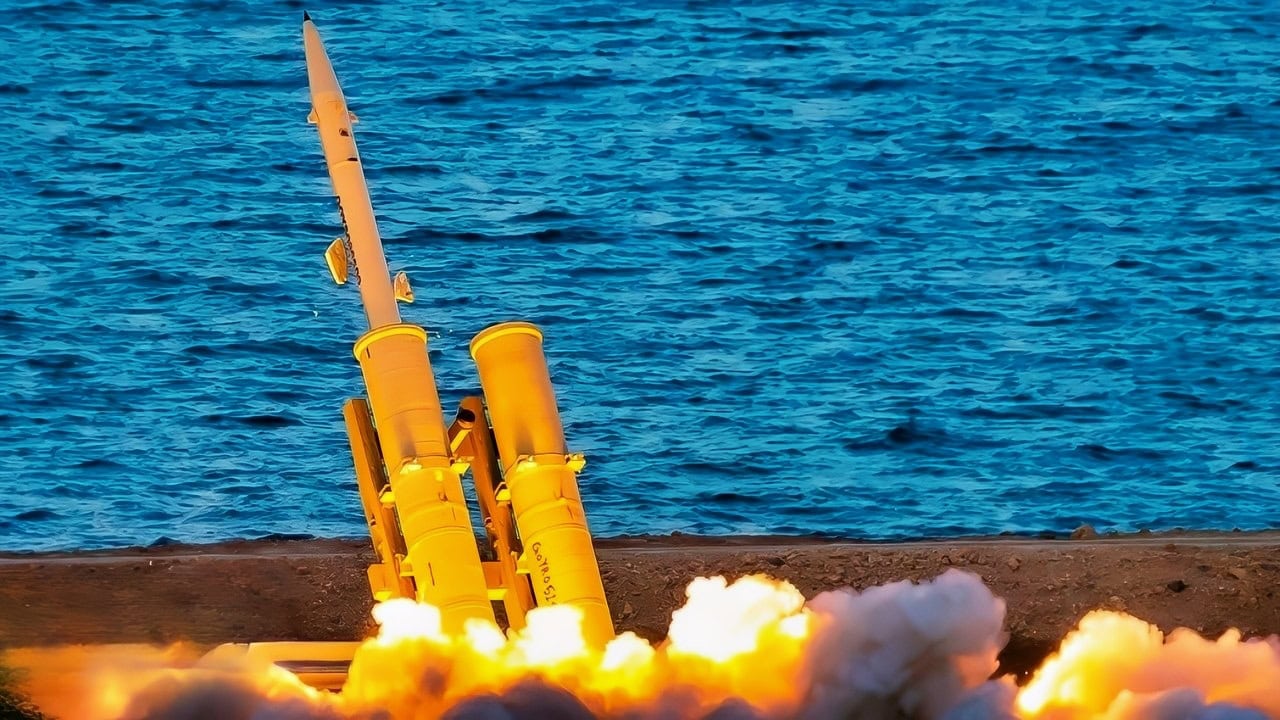
The easy reading suggests that the crisis is about the Strait of Hormuz, where a large portion of Gulf oil passes to global markets. This reading is correct but incomplete. What has transpired in the past hours places American bases in Bahrain, Qatar, Kuwait, the UAE, and Saudi Arabia directly into the equation. An attack on a ship opens the door for an American response, and the American response makes command, control, resupply, and warning facilities a political and military target for Iran or its proxies.
Bahrain here is not just a geographical detail. The presence of the U.S. naval command in Manama gives the United States the ability to manage rapid maritime operations, but conversely places a small country within the Iranian deterrence circle. When reports talk about warnings or drone activity in a Bahraini environment, the real question is not whether the drone hit its target or not, but whether a host country can remain outside the war while the infrastructure from which operations are launched is on its soil? Practically, the answer is often no.
Patriot and THAAD Do Not Create a Complete Umbrella
The Gulf states have spent tens of billions on Patriot and THAAD systems, early warning radars, and interceptor aircraft. Saudi Arabia, the UAE, Qatar, Kuwait, and Bahrain have much better defensive layers than they did two decades ago. But the problem is that Iran is not engaged in a school race in technical specifications. Tehran is building a mix of ballistic missiles, cruise missiles, drones, and inexpensive maritime threats. This mix is designed to confuse defense, not to defeat it in a clean confrontation.
Patriot is effective against many targets, and THAAD is important in the upper layer against ballistic missiles, but the Gulf suffers from a gap between having batteries and having a unified air defense network. A radar in one country, a battery in another, and rules of engagement in the hands of a third party do not automatically turn into a single shield. I say this not to diminish the value of the equipment, but because equipment alone is not enough. The triangle of capability that I always return to is equipment, training, and institution. In the Gulf, the first side is strong, while the other two sides are still under pressure.
Iran Strikes the Political Calculation, Not Just the Military Target
Iran knows that striking a large American base may provoke a harsh response. But it also knows that threatening to strike bases, or carrying out limited attacks around them, creates a wide political impact. Every security alert in Dubai, Manama, or Doha pressures airlines, insurance, and energy companies, and pushes governments to ask the difficult question: Do we want to be part of a new American war? This is Iran's point of strength; it is not in conventional military superiority, but in the ability to turn the American presence from a security guarantee into a political burden.
That is why Tehran's statement against the American-Gulf position, as reported by Al Jazeera, was more than a diplomatic protest. Iran wanted to tell the Gulf Cooperation Council states that the joint statement is not free. In Gulf political culture, there is a significant difference between supporting Washington verbally and allowing airports, bases, and ports to become a visible part of a military operation. Iran is pressing this gray area.
Washington Faces the Dilemma of Munitions and Deployment
The American strikes on missile and drone sites inside Iran, if the details reported by several outlets are accurate, carry a clear deterrent message. But they also reveal an American problem that is no less important: defending the bases requires continuous interceptions, and interceptions cost much more than cheap drones. Recent IISS reports on the missile race and ballistic threats remind us that the stock of interceptors is not an infinite number. Every interceptor missile launched in the Gulf is a logistical and industrial decision, not just a push of a button.
If the United States is forced to protect ships, defend bases, reassure allies, and respond inside Iran at the same time, it enters a distributed war of attrition. Iran may lose launch platforms, but it can make Washington spend valuable defensive resources on protecting a structure spread over a narrow space. Militarily, wide deployment is a strength in peacetime, but at the moment of escalation, it becomes a series of targets that need continuous guarding.
The Gulf States Between Buying Weapons and Buying Decisions
The real Gulf question is not whether to buy more Patriot or THAAD systems. Some purchases are necessary, and perhaps the current crisis will push towards new contracts for interceptors, radars, and electronic warfare. But the deeper question is who owns the decision to use these systems at the first minute? Can a Gulf state integrate its warning with its neighbor's without waiting for an American liaison officer? Can it allow full data exchange while political disagreements between them remain unresolved? Here lies the gap that contracts alone do not address.
We have seen in recent years that money can quickly bring batteries and platforms, but it does not build a culture of joint leadership at the same speed. Trust between operations rooms cannot be bought like ammunition. And a regional air defense system cannot operate if every country sees the radar as part of its sovereignty, not part of a shared sky. In war, the sky does not recognize administrative borders.
What the June 27 Crisis Reveals
The June 27 crisis reveals three truths. First, Iran is still capable of threatening maritime trade and bases simultaneously, even if it cannot wage a long conventional war against the United States. Second, Washington cannot reassure the Gulf merely by executing a retaliatory strike; reassurance requires continuous defense, a stock of interceptors, an evacuation plan, and political communication with every capital. Third, the Gulf states face a painful contradiction: they want strong American protection, but they do not want their territories to appear as an open war platform.
In my estimation, this contradiction will increase, not decrease. The more Iran's asymmetric capabilities grow, the more the Gulf needs the United States. And the more the Gulf relies on the United States, the more Iran can threaten it politically through the American bases themselves. The old military adage says that a fortress that needs a guard from outside is not a complete fortress. Today, the Gulf has expensive walls, but it still asks who holds the key to the gate in times of danger.
The open sources relied upon for the analysis include Reuters, Al Arabiya English, Al Jazeera, The Jerusalem Post, and IISS during June 26 and 27, 2026.
On June 27, 2026, the U.S. conducted strikes against Iranian targets following an attack on a commercial vessel in the Strait of Hormuz. Iran responded with warnings to Gulf states, emphasizing the vulnerability of U.S. bases in the region. The situation highlights the ongoing military tensions and the complex political dynamics affecting Gulf security.
- The U.S. struck Iranian sites following an attack on a commercial vessel in the Strait of Hormuz.
- Iran issued warnings to Gulf states against facilitating attacks on its territory.
- The military capabilities of Gulf states are under scrutiny due to Iran's asymmetric threats.
- The U.S. faces logistical challenges in defending its bases and assets in the region.
- Gulf states are caught between the need for U.S. protection and the desire to avoid being seen as war zones.