
Summary and Key Points: The Northrop Grumman B-2 Spirit stealth bomber presents an insurmountable challenge for Iran’s integrated air defense network.While there is a chance Iran could score a hit on the B-2, the chances are pretty low for a number of key reasons.
-While Tehran relies on S-300PMU2 and Bavar-373 systems, the B-2’s flying wing design and radar-absorbent materials collapse detection ranges, especially against fire-control radars.
-Even low-frequency VHF/UHF sensors struggle to build a precision track, leaving operators with ambiguous returns.
-Supported by EA-18G Growlers and cyber operations, the B-2 Spirit effectively shreds the kill chain.
-Stealth functions as a weapon of uncertainty, ensuring Tehran’s defenses remain unable to reliably target this low-observable aircraft during air operations.
-This layered American approach overcomes all resistance. It dominates.
Doubt as a Weapon: Why Iran’s Air Defenses Face a Layered B-2 Spirit Attack
Iran can complicate a U.S. Air Force B-2 Spirit stealth bomber mission. Under certain conditions — dense alert posture, overlapping radar coverage, a bit of operational luck — it might even register a hit. But reliably detecting, tracking, and destroying a Northrop Grumman B-2 Spirit?
If that’s the mission, then Tehran’s air defense network simply isn’t mission-capable.
Iran vs. B-2 Stealth Bomber: Detection Is Half the Battle
The B-2’s flying wing configuration eliminates vertical surfaces that create radar-reflective edges. Radar-absorbent materials scatter incoming energy away from emitters. Internal weapons bays keep ordnance hidden.
The radar cross-section is compared (imperfectly but illustratively) to that of a large bird.
Against conventional aircraft, Iran’s air defenses detect targets beyond 100 kilometers. Against the B-2, that range collapses — detection occurs at a fraction of that distance, possibly in the tens of kilometers depending on radar frequency and atmospheric conditions. At X-band frequencies where most fire-control radars operate, it gets worse.
That compression is everything. Missile engagements need time. Detect the target. Establish a track. Classify it as hostile. Launch missiles. Guide them to intercept. Each step takes seconds to minutes. Stealth doesn’t just reduce range — it shreds the kill chain.

B-2 Spirit Stealth Bomber 19FortyFive Image. Taken By Harry J. Kazianis at U.S. Air Force Museum in 2025.
Iran’s S-300PMU2 systems predate mature stealth shaping as an operational reality. The Bavar-373, more modern but unproven in combat against low-observable targets, lacks independent verification. Tehran’s claims about rivaling Russian systems remain exactly that: claims.
Iran’s best bet involves low-frequency radar — VHF and UHF bands that can detect stealth aircraft better than standard fire-control systems. These longer wavelengths interact differently with stealth shaping, producing detectable returns. The problem is resolution. Low-frequency radar might tell you a bomber is somewhere in a 10-kilometer box. That’s not enough to guide a missile. You still need precision tracking from higher-frequency systems, which is exactly what the B-2 defeats.
Networked radars using multistatic geometry could triangulate faint returns from multiple angles, theoretically building a track where individual radars fail.
In practice, you need synchronized sensor networks, reliable datalinks, and processing that can separate signal from noise in real-time — all while the bomber maneuvers, deploys decoys, and operates under electronic attack. The math works on a whiteboard. It collapses under operational stress.
Iran Wouldn’t Fight the B-2 Alone
The United States doesn’t send B-2s solo, hoping stealth carries the day. A strike package includes electronic warfare aircraf,t jamming radars, cyber operations degrading command and control, decoy drones creating false tracks, and stand-off missiles destroying air defense nodes before the bomber arrives.
Iran’s air defense network would face assault from multiple vectors. EA-18G Growlers blind radar sites with jamming. Cyber intrusion disrupts communications. AGM-88 HARMs target SAM radars that go active. All of this happens while Iran tries to detect and engage an aircraft designed to be nearly invisible.
Can Iran shoot down a B-2 in a vacuum? Possibly. Can it do so while its entire integrated air defense system gets systematically dismantled? That’s a different problem.
The Serbia Lesson
In 1999, Serbian forces shot down an F-117 Nighthawk over Belgrade using legacy SA-3 missiles. It required predictable flight paths, clever radar tactics exploiting brief vulnerability windows, visual missile cueing, and extraordinary luck. Once. Against an older stealth platform. Under specific circumstances.

F-117 Nighthawk at National Museum of Air Force 19FortyFive Photo
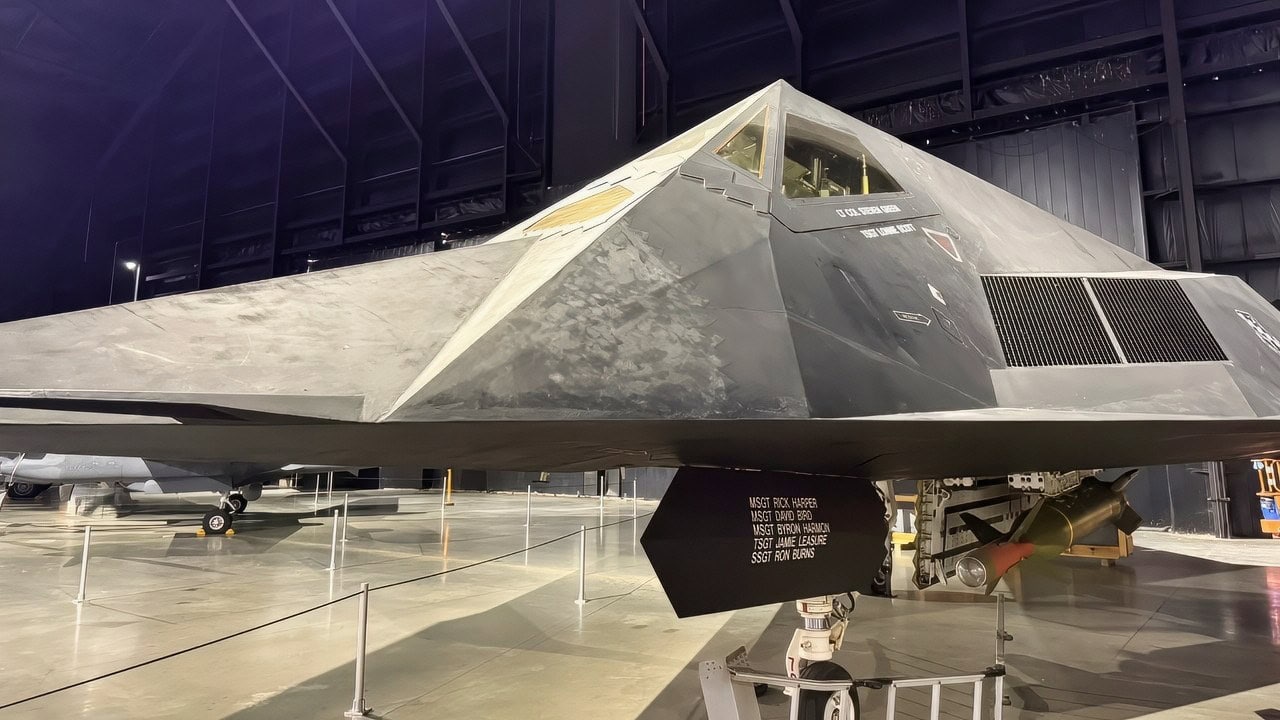
F-117A Nighthawk at USAF Museum. Image taken by 19FortyFive Owner, Harry J. Kazianis.
The B-2 incorporates decades of improvements — better stealth coatings, more sophisticated electronic warfare, improved threat detection. Serbia demonstrates that stealth isn’t magic. It also demonstrates how much has to go right for defenders, and how rarely it does.
Could Iran get lucky? War is probabilistic. Generate a rough track through low-frequency radar, flood the airspace with missiles, force evasive maneuvers at the right moment — an intercept becomes theoretically possible. That scenario needs prior warning, intact radar networks, functional command and control, high readiness, and accurate targeting.
Each of those requirements is a target in U.S. strike planning. Radar sites get hit by HARMs. Command bunkers take JDAMs. Early warning networks go dark under cyber attack. Iran would have to execute a complex intercept while losing the infrastructure that enables it.
What Iran Actually Faces
Iran’s challenge isn’t just technological. Stealth’s real weapon isn’t invisibility — it’s doubt.
Radar operators see ambiguous returns. Birds? Weather? A bomber carrying bunker-busters? By the time they’re confident in the track, engagement windows have narrowed. Launching too early on uncertain data, you’ve wasted interceptors and revealed SAM locations. Wait for confirmation, the target’s already gone.
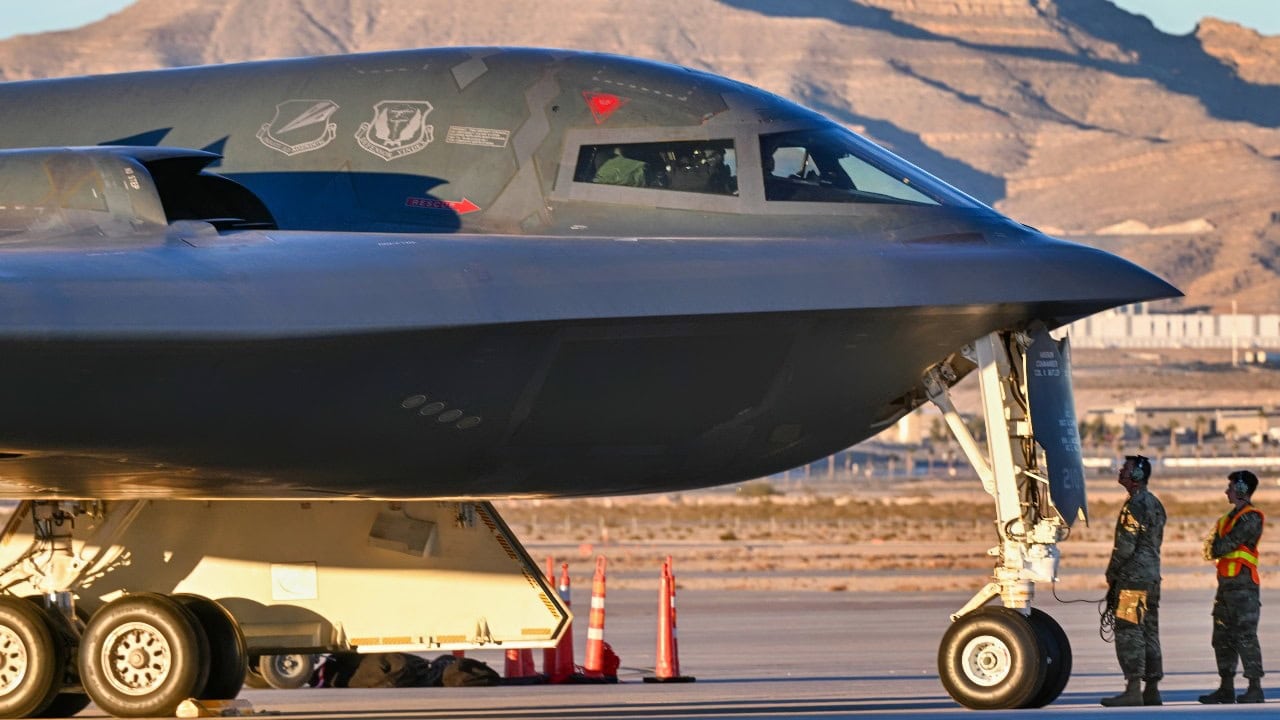
A B-2 Spirit prepares to take-off from Nellis Air Force Base, Nev. during Bamboo Eagle, Jan. 29, 2024. Bamboo Eagle provides Airmen, allies, and partners with a multidimensional, combat-representative battle-space to conduct advanced training in support of U.S. national interests. (U.S. Air Force photo by Senior Airman Bryson Britt)
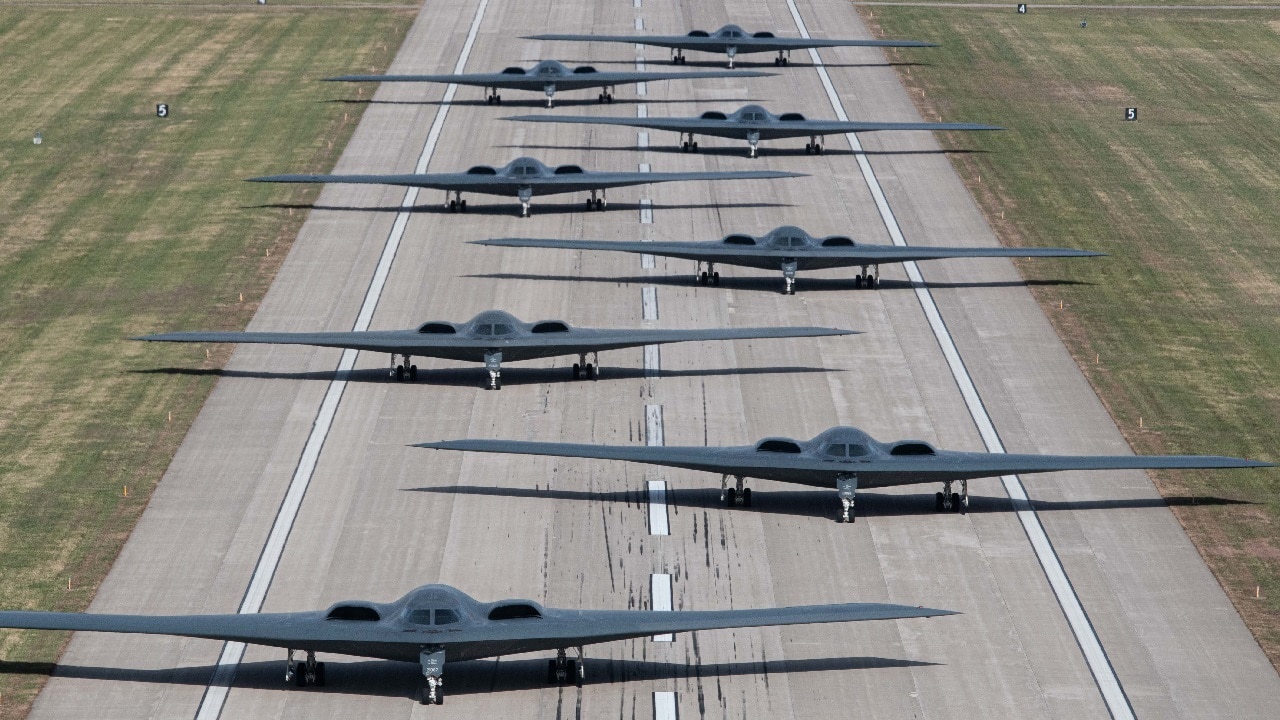
B-2 Spirit stealth bombers assigned to Whiteman Air Force Base taxi and take-off during exercise Spirit Vigilance on Whiteman Air Force Base on November 7th, 2022. Routine exercises like Spirit Vigilance assure our allies and partners that Whiteman Air Force Base is ready to execute nuclear operations and global strike anytime, anywhere. (U.S. Air Force photo by Airman 1st Class Bryson Britt)
That uncertainty cascades. Detection teams question their sensors. Command authorities second-guess their operators. Missile crews hesitate on marginal launch solutions. You end up fighting ghosts instead of aircraft.
Iran can contest American airspace. It can force mission changes with systems like the S-300PMU2 and Bavar-373, raise operational risk, and potentially cause aircraft losses under specific circumstances. Reliably shooting down a B-2 Spirit? That requires Iran’s air defenses to remain intact, networked, and functional while defeating not just stealth technology but the entire layered American approach to air operations.
The physics don’t support it. The engineering works against it. The historical record from three decades of B-2 operations suggests nothing in Iran’s arsenal changes that calculation.
About the Author: Dr. Andrew Latham
Andrew Latham is a non-resident fellow at Defense Priorities and a professor of international relations and political theory at Macalester College in Saint Paul, MN. You can follow him on X: @aakatham. Dr. Latham writes a daily column for 19FortyFive.com.