

Iran’s F-14s Were Credited With 78 Phoenix Victories. The U.S. Navy Scored None – The U.S. Navy fired three AIM-54 Phoenix missiles in combat and received no credited aerial victory. Iranian F-14 crews produced a far larger combat record. A widely cited reconstruction by aviation historians Tom Cooper and Farzad Bishop credits the Phoenix with 78 victories. That is not an official audited score. Smithsonian’s Air & Space warned that Iranian records were altered or incomplete, making an exact total impossible to establish.
Iran acquired the weapon because the Shah faced Soviet MiG-25 reconnaissance aircraft crossing Iranian airspace at extreme speed and altitude. Iran evaluated the F-15 and F-14, then selected the Tomcat because its AN/AWG-9 radar and Phoenix missile offered the long-range performance the mission demanded.
A June 1974 State Department cable said Iran’s 80-aircraft order would return almost $1.8 billion to the United States before missile costs. The same record shows Iran and the Navy sharing advance support to ease Grumman’s cash-flow problem. NAVAIR records a separate approval for 274 Phoenix missiles at $150 million. Iran received 79 Tomcats and 284 Phoenix rounds, including 10 training missiles, before the 1979 revolution stopped deliveries.
The revolution nearly destroyed the force before Iraq invaded. Pilots and technicians were jailed, dismissed, killed or driven abroad, while American contractor support disappeared. Most aircraft were unavailable or lacked working radars. Iranian units restored roughly a dozen Tomcats for border patrols as tensions moved toward open war in September 1980.
Soviet MiG-25 Flights Put the F-14 in Iranian Service
The Tomcat was designed to defend American carriers against Soviet bombers carrying anti-ship missiles. As its only foreign operator, Iran applied the same system to national air defense. The AWG-9 could search far ahead and guide Phoenix missiles toward several targets. The AIM-54A weighed almost 1,000 pounds, carried a roughly 132-pound warhead and activated its own radar seeker near the target.
In a 1973 Navy test, one F-14 launched six Phoenix missiles in 38 seconds and scored four direct hits against six separate drones. Iran also bought training. By 1979, 120 Iranian pilots and radar intercept officers had completed instruction, with another 100 in training. Technicians studied the engines, avionics and weapons at American facilities. That investment supplied expertise needed after Washington ended support.
Iran Rebuilt the Tomcat Force After the Revolution
The embargo left Iran dependent on cannibalized aircraft, repaired components and irregular sources of spare parts. Phoenix missiles also required serviceable electronics and thermal batteries. Battery shortages suspended Phoenix employment in 1986, though Tomcats continued flying other missions.
The force declined from an early goal of about 60 operational jets to 40 in 1984 and 25 in 1986. Average availability hovered near 40 percent. Even so, the Tomcat became Iran’s most valuable interceptor and an airborne radar platform for other fighters and ground defenses.
The Phoenix Worked Because Iran Used It Sparingly
The first Iranian F-14 victory came on September 7, 1980, when a Tomcat used its 20 mm gun against an Iraqi Mi-25 helicopter. Six days later, Major Mohammad-Reza Attaie recorded the first Phoenix victory against an Iraqi MiG-21 during a border patrol.
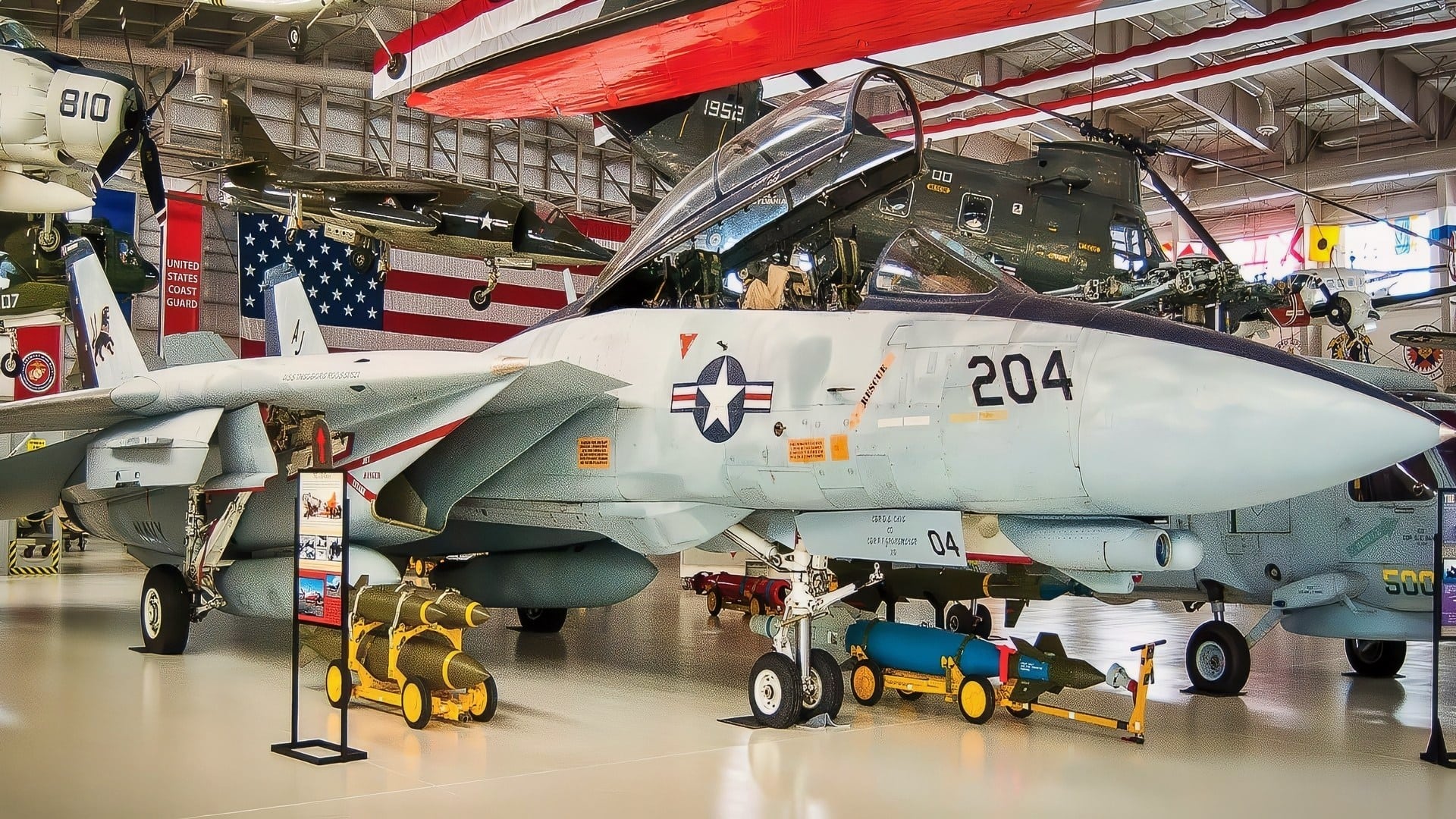
National Naval Aviation Museum F-14. Image Credit: Creative Commons.
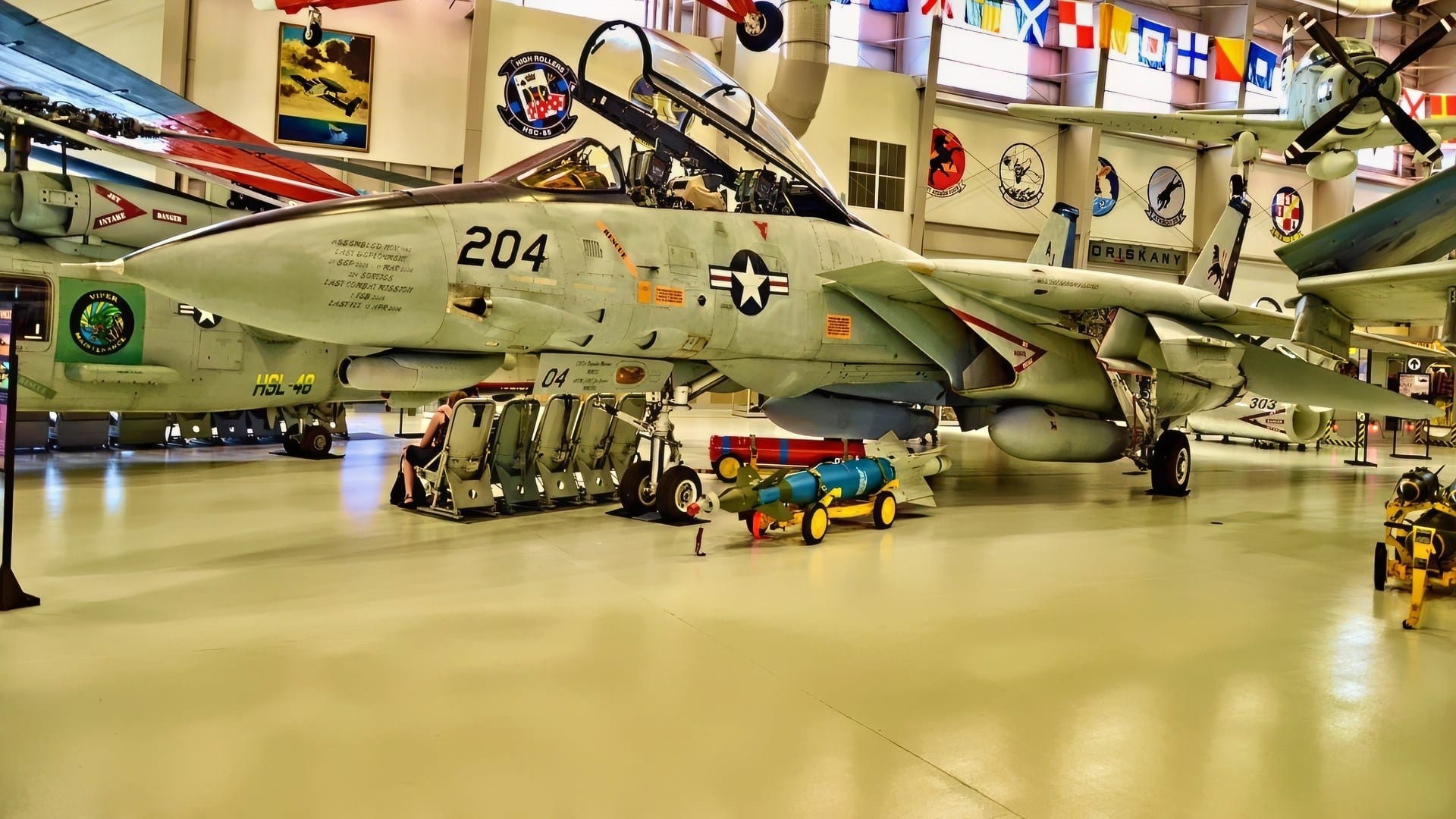
National Naval Aviation Museum. Image Credit: Creative Commons.
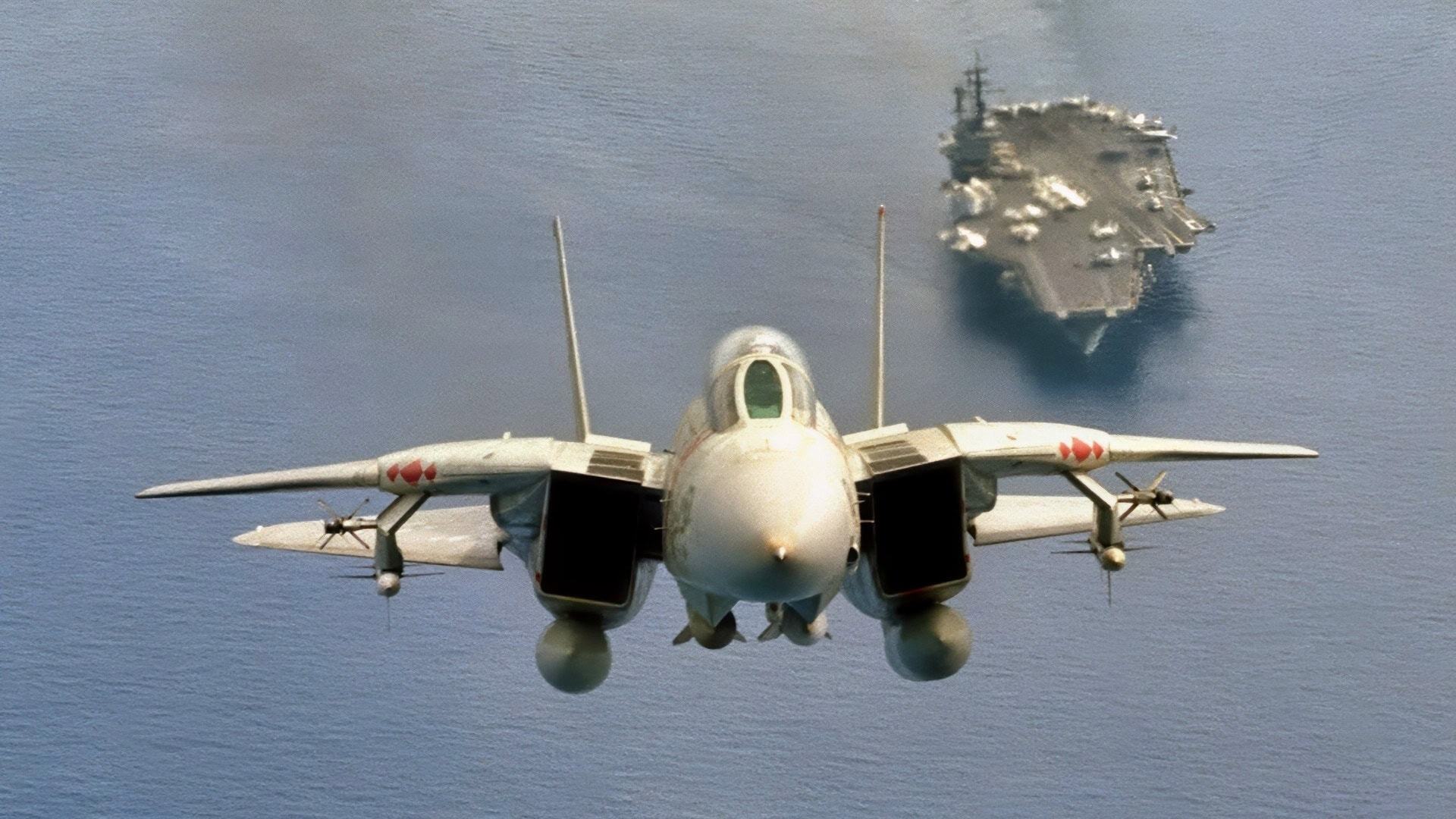
F-14 Tomcat Flying Near Aircraft Carrier. Image Credit: Creative Commons.
Iran concentrated patrols around Tehran, industrial sites and Kharg Island, the country’s principal oil-export terminal. Iraqi aircraft attacking those targets often faced the AWG-9 before they could see the Tomcat. Tankers and ground controllers helped place a small number of fighters where they mattered most.
Air University’s Ronald Bergquist found that both air forces conserved fighters because neither had a secure replacement pipeline. Iran used its scarce Tomcats as a deterrent as well as a weapon. Radar warning sometimes broke up raids, sending Iraqi formations home or causing them to release weapons before reaching the defended area.
The 78-Kill Figure Needs Careful Attribution
Cooper and Bishop’s reconstruction assigns 78 victories to Phoenix missiles across the war. Their research also supports a broader estimate of roughly 150 Iranian F-14 victories published by the U.S. Naval Institute. Those totals rely on pilot interviews, Iranian material, and attempts to match claims with Iraqi losses.
The evidence shows effective Iranian use of the F-14 and Phoenix. It does not certify every claim. Iraqi records were also lost, restricted, or disrupted by later wars. Several famous engagements involved claims that one Phoenix destroyed more than one aircraft flying in close formation.
The U.S. Navy Never Fought the Same Phoenix War
American Tomcats achieved five air-to-air victories with Sidewinders and Sparrows, not Phoenix missiles. The massed Soviet bomber attack behind the AIM-54’s fleet-defense mission never came. When Navy crews fired Phoenixes over Iraq in 1999, two missiles failed to reach Iraqi MiG-25s. A later VF-2 attempt from USS Constellation also ended without a kill.
Iran faced repeated raids across an eight-year war. It accepted maintenance losses and missile scarcity because the system protected oil exports and cities. The Navy carried Phoenix as a deterrent against a threat that never attacked its carriers; Iran employed it against aircraft entering defended airspace.
The surviving record establishes extensive Iranian Phoenix combat use and a far stronger result than the American experience. It does not provide an official Iranian or Iraqi ledger confirming all 78 credited victories.
About the Author: Harry J. Kazianis
Harry J. Kazianis (@Grecianformula) was the former Senior Director of National Security Affairs at the Center for the National Interest (CFTNI), a foreign policy think tank founded by Richard Nixon based in Washington, DC. Harry has over a decade of experience in think tanks and national security publishing. His ideas have been published in the NY Times, The Washington Post, The Wall Street Journal, CNN, and many other outlets worldwide. He has held positions at CSIS, the Heritage Foundation, the University of Nottingham, and several other institutions related to national security research and studies. He is the former Executive Editor of the National Interest and the Diplomat. He holds a Master’s degree focusing on international affairs from Harvard University.