
Iran War Burns Through 2026 Patriot Missiles Ukraine Needs
 Alexandra Reeves
Iran War Burns Through 2026 Patriot Missiles Ukraine Needs
Pete Hegseth wants everyone to believe America can fight in the Gulf, arm Ukraine, deter China, and refill the magazine at the same time. That may be true on a PowerPoint slide. It is much harder to believe when the scarce item is a Patriot interceptor.
Speaking at the Shangri-La Dialogue in Singapore on May 30, the U.S. defense secretary said Washington was ready to restart attacks on Iran if diplomacy fails. Reuters reported his line plainly: the United States was “more than capable” of recommencing operations, and its stockpiles were “more than suited” for that mission. The same remarks were meant to reassure Asian allies that the Pentagon had not been dragged away from the Indo-Pacific by the Iran war.
Ukraine heard something different. Kyiv heard that the munitions it needs most are still being treated as a globally flexible American reserve, not as the fixed price of keeping Russian ballistic missiles from gutting Ukrainian cities.
The Patriot shortage is no longer theoretical
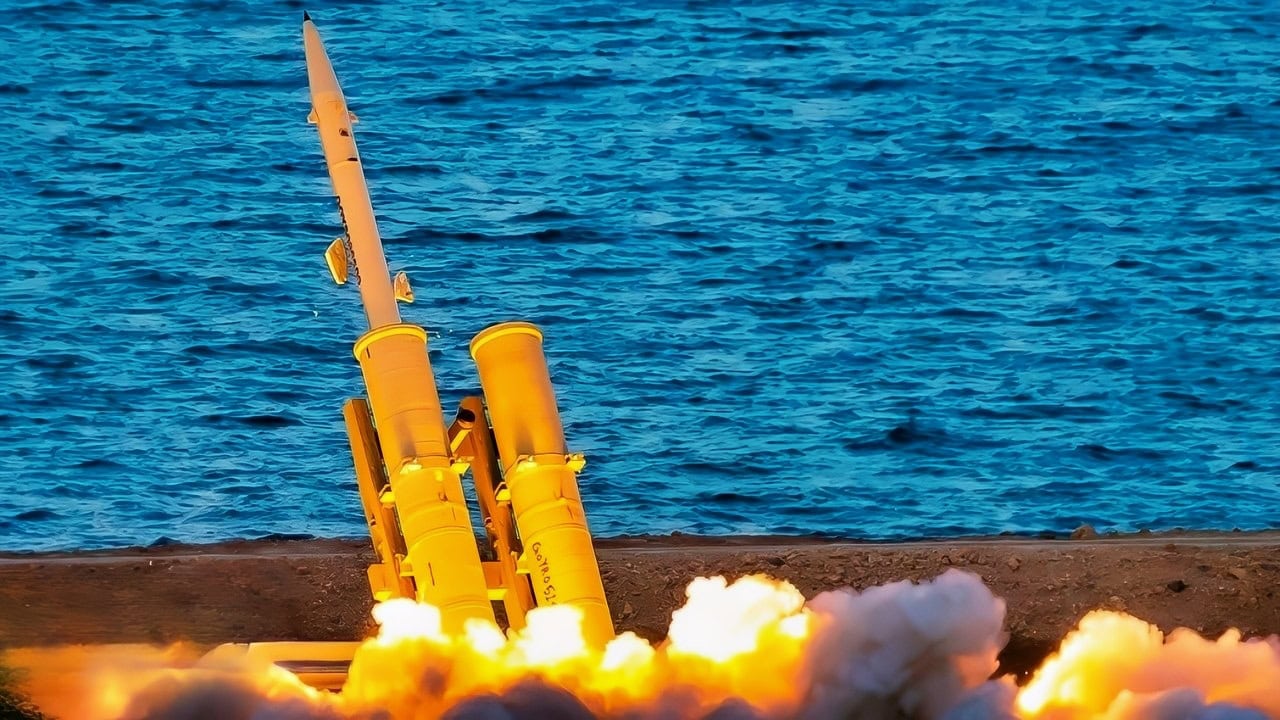
Two days before Hegseth spoke, the Associated Press reported that President Volodymyr Zelenskyy was pressing President Donald Trump and Congress for more Patriot missiles. Zelenskyy said he had not received a reply to his letter and warned that deliveries to Ukraine were falling dangerously short as the Iran war diverted and depleted U.S. stocks.
That warning matters because Patriot is not just another air defence system in Ukraine. It is the system Kyiv relies on against Russia's most dangerous ballistic missile attacks. A Shahed can be chased by mobile guns, electronic warfare, or cheaper interceptor drones. A ballistic missile compresses decision time, arrives at high speed, and demands a much smaller set of defensive tools.
The U.S. Missile Defense Agency describes Patriot PAC-3 as a mature hit-to-kill weapon within the missile defence architecture, fielded to detect, track, and engage short-range ballistic missiles and cruise missiles. Lockheed Martin says the PAC-3 MSE variant improves altitude, agility, and range with a dual-pulse solid rocket motor. Those words sound technical. The operational point is simpler: if Russia launches ballistic missiles at Kyiv, Odesa, or energy infrastructure, Ukraine needs Patriots in the canisters before the raid begins. Money promised after the raid is not air defence.
PURL works only if America has missiles to sell
NATO has tried to solve the politics of this problem through the Prioritised Ukraine Requirements List, or PURL. European allies and partners pool money to buy U.S.-made weapons for Ukraine. On paper, this is the tidy compromise: Europe pays, America supplies, Ukraine receives.
On May 19, European Pravda reported that General Alexus Grynkewich, NATO's Supreme Allied Commander Europe, said everything allies had paid for under PURL was flowing, including air defence interceptors. That was a useful reassurance. It was not the same as saying the pipeline is big enough.
Zelenskyy's official address on May 29 was more blunt. He said Russia was preparing a new massive attack, called air defence Ukraine's key priority, and said PURL “must work.” He added that partners were pooling funds to buy missiles, including for Patriot systems, but that sufficient supplies depend on America. That is the sentence Brussels should not skip over.
Europe can write cheques. It cannot conjure PAC-3 interceptors from a production line that is already being pulled toward CENTCOM, INDOPACOM, U.S. homeland requirements, and Ukraine at once. Hegseth's claim that the United States can do two things at one time may be correct in the abstract. The problem is that Ukraine is asking whether Washington can do the same one thing twice: spend Patriot missiles in the Middle East and still ship enough of them to Europe.
The Iran war is now a European security issue
This is where the usual Washington framing becomes misleading. The Iran war is not a separate Middle East file sitting beside the Ukraine file. It is now directly connected to European security through the U.S. missile inventory.
If renewed strikes on Iran trigger another missile exchange, American and allied batteries in the region will burn through high-end interceptors quickly. Iran does not need to defeat Patriot to change the equation. It only needs to force repeated launches, drain reserves, and make U.S. planners nervous about transferring the next batch to Ukraine.
Russia will understand that. Moscow has spent the past year learning how to saturate and sequence Ukrainian air defences with drones, cruise missiles, decoys, and ballistic systems. If it sees that the Patriot pipeline is politically funded but physically constrained, it has every reason to keep pushing the part of the campaign Ukraine cannot cheaply absorb.
The uncomfortable lesson for NATO is that financial burden-sharing is not enough. PURL is useful, but it is still an American-stockpile mechanism. It does not give Europe sovereign control over the interceptor most urgently needed against Russian ballistic attacks. Until European production of equivalent antiballistic systems catches up, Ukraine's sky remains partly hostage to decisions made in Washington, Singapore, and the Gulf.
What to watch next
The next indicator is not another speech about allied unity. It is whether Ukraine receives actual Patriot interceptors before Russia's next major strike wave, and whether the United States can restart operations against Iran without quietly slowing transfers to Kyiv.
There are three hard questions now. First, will Washington publish enough detail for allies to know whether PURL deliveries are merely continuing or actually matching Ukraine's burn rate? Second, will European governments move beyond paying for U.S. missiles and accelerate their own antiballistic alternatives? Third, will Moscow test the gap with larger ballistic-heavy strike packages while America is busy proving Hegseth right?
The short answer is that Ukraine needs fewer reassurances and more loaded launchers. Hegseth may be right that America can fight two crises at once. But if the same Patriot missile is needed in both, someone is going to wait. Right now, the country most likely to wait is the one under Russian missiles tonight.
Ukraine is facing a critical shortage of Patriot missiles as U.S. stockpiles are being depleted due to the Iran war. President Zelenskyy has urged for more missile supplies, emphasizing the need for timely deliveries to counter potential Russian attacks. The situation highlights the interconnectedness of U.S. military commitments in the Middle East and European security needs, with NATO's funding mechanisms proving inadequate to meet Ukraine's urgent requirements.
- Ukraine is experiencing a shortage of Patriot missiles due to U.S. stockpiles being diverted to the Iran conflict.
- President Zelenskyy has requested more Patriot missiles from the U.S. government.
- The Iran war is impacting European security by affecting missile supply chains.
- NATO's PURL mechanism is not sufficient to ensure Ukraine receives the necessary interceptors.
- Russia is preparing for a new massive attack, increasing the urgency for air defense systems in Ukraine.