
Iranian Missile Attack on Kuwait Exposes Patriot and THAAD Stockpile Crisis in Gulf 2026
 Ahmed Al-Rashid
Iran's Missile Attack on Kuwait Reveals Patriot and THAAD Stockpile Crisis in the Gulf 2026
On the night of May 27, Kuwait was not just a Gulf state hearing distant explosions. It was, once again, a live testing ground for the question that many decision-makers in the Gulf avoid: Do our countries have independent air defense, or do we have the right to use an American umbrella when Washington allows it? The U.S. Central Command's announcement that Kuwait intercepted missiles launched by Iran, describing the attack as a blatant violation of the ceasefire, came days after U.S. strikes on missile launch sites and mine-laying boats in southern Iran, and hours after the downing of four attack drones near the Strait of Hormuz and a strike on an Iranian control station in Bandar Abbas.
This sequence is more important than the number of missiles themselves. Iran was not looking to destroy Kuwait as a complete military target, but rather to send a calculated message to Washington through a Gulf territory hosting American forces. Militarily, this is the worst kind of test for Gulf states: a limited attack enough to avoid a full-scale war, yet dangerous enough to consume valuable interceptors and reveal the rhythm of the joint defense network.
Kuwait is Not the Target but the Military Mailbox
Associated Press's report on the attack noted that Kuwait spoke of its territory being attacked, while Iran claimed it responded to U.S. strikes by targeting an American base in an unnamed Gulf state. The Khaleej Times, citing Reuters, reported that the Kuwaiti military stated its air defenses were dealing with missile threats and hostile drones, and urged residents to consider the sounds of explosions as a result of interceptions, not confirmed ground casualties.
This official language is not a media detail. Kuwait did not explicitly attribute the attack to Iran in its initial statement, while Washington did. This difference reflects an old Gulf equation: the host country of the bases wants American protection, but it does not want to become a declared party in an American-Iranian war. Iran understands this sensitivity well, and thus strikes on the edge of ambiguity. It does not need to breach Kuwait's defenses to achieve a political effect; it is enough to force Kuwait to activate radars, launch interceptions, and reassess the cost of hosting American forces.
Any military officer who has served in the region knows that the danger does not begin when the missile falls, but when the command is forced to make an interception decision within seconds. The ballistic missile or drone does not just carry a warhead; it brings with it an urgent political question: who has the engagement decision, the Kuwaiti officer, the American operations center, or a joint coordination room that cannot explain its details to public opinion?
The Gulf's Problem is Not a Lack of Money but a Lack of Depth
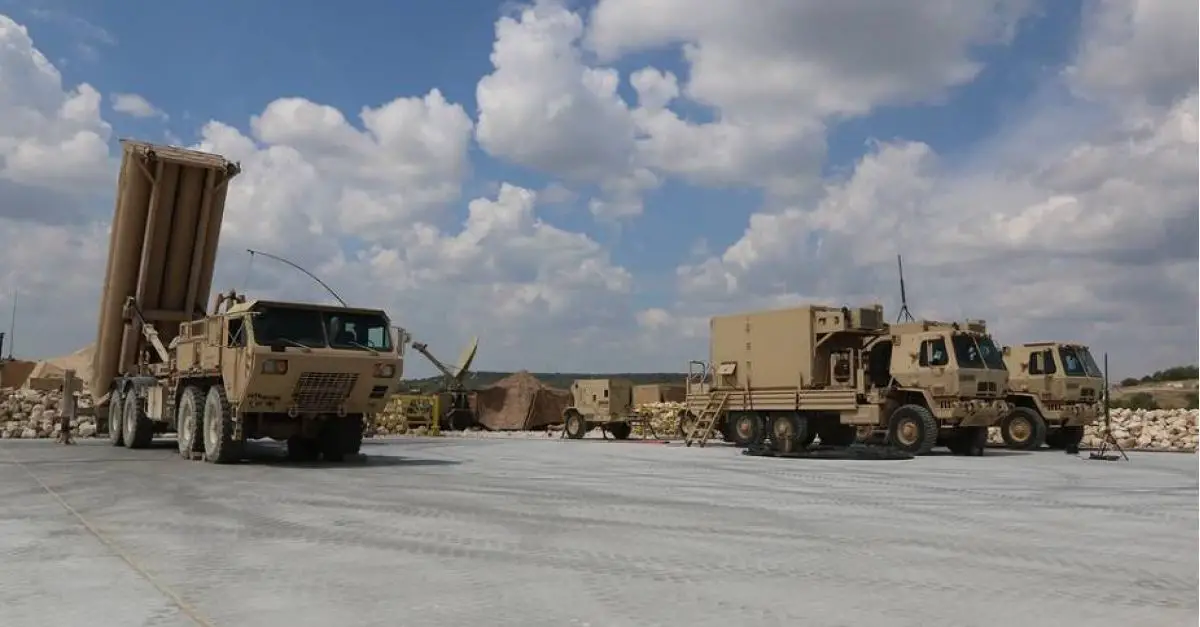
Kuwait, like the rest of the Gulf states, has layers of air defense relying on American systems like Patriot, and on a broader American early warning network connecting radars, bases, and ships. Some Gulf states also possess THAAD or are seeking it, and invest in long-range radars and short-range systems against drones. On paper, the picture looks strong. But paper does not launch interceptors or replenish stockpiles.
Here, another AP report on the analysis from the Center for Strategic and International Studies becomes more important than Kuwait's own statement. The analysis states that the United States needs at least three years to rebuild the stockpile of three systems heavily used in the Iran War: Tomahawk, Patriot, and THAAD. The report mentioned a harsh phrase in its meaning: the problem today is not money, but time. If this is the case for the United States, which has the largest industrial base, what about a Gulf state that buys the battery, missile, spare part, and training contract from abroad?
The Gulf has become accustomed to reading military superiority through the value of contracts. A billion here, five billion there, and a statement talking about the latest defense systems. But in a missile war, strength is not measured by the number of batteries displayed in a military parade, but by the number of available interceptors after the third week of fighting. Patriot PAC-3 MSE and THAAD do not operate like light ammunition. Each interceptor is a complex industrial product, requiring supply chains, engines, special materials, and acceptance tests, followed by training and integration.
The Cost of Interception Shapes the Adversary's Strategy
Since the beginning of the escalation rounds in 2026, Iran has not relied solely on a single large strike. The most troubling Iranian model for the Gulf is the mix of ballistic missiles, cruise missiles, cheap drones, and boats or sea mines near Hormuz. The goal of this mix is not always to breach defenses, but to force them to spend their most expensive munitions on threats of varying value. When a drone costing tens of thousands of dollars is dealt with by an interceptor missile costing millions of dollars, the defending side has won the engagement but lost the attrition equation.
Kuwait, in this context, is not a separate case from Qatar, the UAE, or Saudi Arabia. Every Gulf state has energy facilities, ports, bases, and airports that are difficult to cover completely. Even if the nighttime interception succeeds, the next question is harsher: how many times can the batteries repeat that before political calculations in Washington begin? And are Kuwait's interceptions prioritized over American ships in Hormuz or over stockpiles needed in the Pacific?
This is not a doubt about the efficiency of Gulf air defense crews. On the contrary, successful interception indicates reasonable training and alert capability. But military capability is not a single moment of success. It is the ability to repeat success under pressure, with secure communications, sufficient munitions, continuous maintenance, and a chain of command that does not become paralyzed when military and political overlap.
Borrowed Gulf Deterrence
Washington claims that its strikes near Bandar Abbas were defensive and limited, aimed at maintaining the ceasefire. Iran claims it is responding to U.S. strikes. Meanwhile, Kuwait speaks of intercepting threats and urges residents to remain calm. Between these three narratives lies the practical truth: the Gulf lives within borrowed deterrence. The weapon may be on Gulf soil, but escalation, de-escalation, and determining the ceiling of response remain tied to an American administration negotiating with Iran while simultaneously striking it.
Here, a familiar paradox in the region emerges. Gulf states have paid for decades for the best Western defense systems because they want security decision independence. But in moments of danger, they discover that independence is not sold with the battery. Operational sovereignty cannot be purchased from a catalog. It is built through manufacturing part of the munitions, real joint training, regional command centers, and a political acceptance that air defense must be a Gulf network, not scattered national arsenals.
The attack on Kuwait, even if it did not cause significant casualties, should be read as an early warning. If Iran is capable of pushing Kuwait to activate its defenses during a ceasefire, it is capable of making every American-Iranian negotiation round a new test for the Patriot and THAAD stockpiles in the Gulf. In my estimation, the question that should be raised in Gulf defense ministries this week is not how many missiles we intercepted, but how many missiles remain, and who decides when we get more.
Open Sources
- Associated Press, May 28, 2026, report on Kuwait's interception of missiles launched by Iran and CENTCOM's description of the attack as a violation of the ceasefire.
- Khaleej Times and Reuters, May 28, 2026, statement from the Kuwaiti military about intercepting missile threats and hostile drones.
- Associated Press, May 27, 2026, analysis on the need for the United States to take at least three years to rebuild the stockpile of Tomahawk, Patriot, and THAAD after the Iran War.
- Axios, May 28, 2026, details of the downing of four Iranian drones and a strike on a control station in Bandar Abbas near the Strait of Hormuz.
Iran launched missile attacks targeting Kuwait on May 27, 2026, which were intercepted by Kuwaiti air defense systems. The U.S. Central Command labeled the attack a violation of the ceasefire. This incident highlights the challenges faced by Gulf states in maintaining effective air defense amid regional tensions and raises concerns about the adequacy of missile stockpiles.
- Iran launched missile attacks on Kuwait on May 27, 2026.
- Kuwait's air defense intercepted the missiles, utilizing Patriot and THAAD systems.
- The U.S. Central Command described the attack as a blatant violation of the ceasefire.
- The incident raises concerns about the adequacy of Kuwait's air defense capabilities.
- The report indicates a potential crisis in the stockpile of air defense missiles in the Gulf.