
Iran's Attacks on Bahrain and Kuwait Reveal the Cost of Patriot and the Gulf Deterrence Gap 2026
 Ahmed Al-Rashid
Iran's Attacks on Bahrain and Kuwait Reveal the Cost of Patriot and the Gulf Deterrence Gap 2026
On Saturday morning, the Bahraini government stated that Iran launched ballistic missiles and drones towards it and Kuwait, and that the attacks were intercepted. At the same time, U.S. forces announced that they had intercepted threats directed at the Strait of Hormuz and Gulf allies, and then struck Iranian coastal radar sites in response. This is not just a new episode in the exchange of fire between Washington and Tehran, but a practical test of the Gulf air defense system that has been built over decades on a simple premise: that purchasing higher tiers of Western technology is sufficient to prevent danger from reaching cities and oil facilities.
From a military perspective, a successful interception does not necessarily mean that defense is successful in the long term. A missile that does not hit its target today may have achieved another purpose: depleting stockpiles, raising insurance costs, forcing crews to operate under continuous alert, and demonstrating that U.S. bases in the Gulf are not a cost-free umbrella. Here lies the issue that decision-makers in Gulf capitals do not like to hear: Patriot, THAAD, NASAMS, and Barak systems do not work alone, nor do they produce deterrence merely by appearing in military parades.
Limited Attack with Wide Political Implications
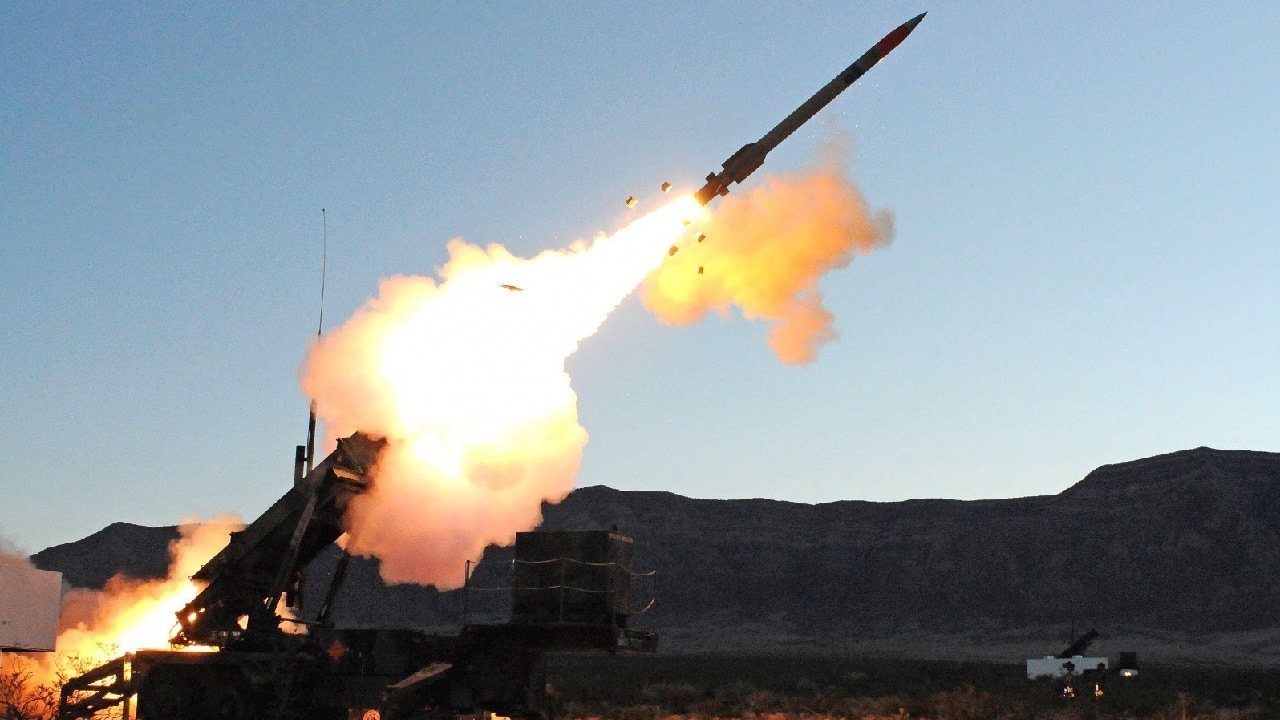
The details reported by the Associated Press indicate that Bahrain and Kuwait were at the heart of the latest round, while Washington spoke of intercepting Iranian missiles and drones and targeting Iranian coastal radars. Days earlier, Al Jazeera presented a broader picture of several Gulf countries that activated their air defenses after Iranian waves that Tehran claimed were targeting U.S. sites. According to that reading, the Gulf paradox has become stark: the U.S. presence makes host countries targets, but at the same time, it is the element that helps them mitigate the effects of attacks.
This meaning is important because Bahrain and Kuwait are not the UAE or Saudi Arabia in terms of geographical depth or defensive size. Bahrain hosts the U.S. Fifth Fleet in a narrow space, and Kuwait stands at a sensitive intersection between Iraq, Iran, Saudi Arabia, and the Gulf. When missiles and drones enter this area, the question is not only about the battery's ability to launch but about the entire state's ability to manage civil alerts, airport safety, energy continuity, and port operations.
Interception Capability is Not Long War Capability
The Gulf air networks look impressive on paper. Saudi Arabia has a wide network based on Patriot PAC-3 and THAAD, the UAE combines Patriot and THAAD with Israeli platforms like Barak, Qatar has introduced Patriot and NASAMS, Kuwait relies on Patriot PAC-3 alongside shorter-range layers, and Bahrain has acquired Patriot PAC-3 MSE. These are respectable systems, some of which have demonstrated good capability against ballistic, cruise, or drone threats.
However, the equation of conflict with Iran is not measured solely by the interception rate. Iran uses a mix of ballistic missiles, cruise missiles, and relatively cheap drones like the Shahed family. If producing a single drone costs tens of thousands of dollars, while an advanced interception missile costs hundreds of thousands or millions of dollars, Tehran does not need to penetrate every layer of defense to score a point. It is enough to make the opponent launch an expensive missile at a cheap target, and to repeat that until stockpiles, budgets, and human resources become part of the battlefield.
Any military personnel who has served in the region knows that weather, dust, short distances, and the density of civilian facilities around bases are not secondary details. Air defense does not exist in the manufacturer's manual, but in a joint operations room, supply chains, real exercises, and rapid political decisions that allow for radar data exchange across borders. When these elements are delayed, the most expensive radar in the world becomes just an eye that sees the danger but does not always have the right hand to deal with it.
Israel Enters Through Air Defense
Another new development that should not be overlooked is Israel's almost public entry into the Gulf defense equation. Reports from Middle East Eye conveyed the confirmation from U.S. Ambassador to Israel Mike Huckabee that Israel sent Iron Dome batteries and personnel to operate them to the UAE during the war with Iran, and subsequent reports indicated the sending of a version of Iron Beam to defend against drones and missiles. Even if some details remain undisclosed, the military message is clear: the Abraham Accords are no longer just diplomatic and tourism arrangements, but have become an operational channel for air defense.
This creates a new reality for Abu Dhabi and the rest of the Gulf. Cooperation with Israel provides access to real combat experience in intercepting drones and short-range missiles, but it also adds a political burden for Arabs that cannot be ignored. In my estimation, some Gulf capitals will accept this burden quietly because they see the Iranian threat as immediate, and that Washington may not always want to bear the cost alone. But silence does not eliminate the problem; it only postpones its announcement.
What the Latest Round Reveals
The latest round reveals three truths. First, the Gulf does not have the luxury of separating the security of U.S. bases from the security of Gulf cities. Any missile targeting a U.S. site in Bahrain or Kuwait practically passes over a civilian community, a port, an airport, and energy facilities. Second, Gulf air defense is still more fragmented than it should be; there is a shared purchase of concern, but not always a shared operation of capabilities. Third, Iran is betting on time and cost, not on a single decisive strike.
- Patriot and THAAD provide a critical layer against missiles, but they are not an economical solution against swarms of cheap drones.
- Gulf deterrence needs a large and low-cost interception stockpile, not just shiny deals with big headlines.
- Radar data exchange between Gulf countries is more important than purchasing an additional battery that does not see the full picture.
- Reliance on the United States and Israel increases operational effectiveness, but reduces political independence margins.
Summary by Ahmed Al-Rashed
The problem is not that Patriot failed in Bahrain or Kuwait; on the contrary, the interceptions prove that the system is capable when visibility, readiness, and U.S. support are available. The problem is that the success itself exposes the fragility of the model. Every successful interception raises questions about how many missiles are left, when the next batch will arrive, and who will press the launch button if the war expands.
In the Gulf, there is an old saying that those who rent the roof do not own the house. Gulf countries have purchased many roofs over the past two decades, some American, some European, and some Israeli now. But they have not yet built a common defensive house in the full sense. Therefore, Iran's attacks on Bahrain and Kuwait do not say that the Gulf is defenseless; they say something more precise and difficult: the Gulf can repel the strike, but it is still looking for a way to ensure that every strike does not become a new test of its reliance on others.
Sources
- Associated Press, report on intercepting Iranian attacks towards Bahrain and Kuwait and the exchange of fire with the United States, July 25, 2026.
- Al Jazeera, analysis of Gulf countries' ability to defend against renewed Iranian attacks, July 14, 2026.
- Middle East Eye, confirmation of Israel sending Iron Dome batteries to the UAE and reports on Iron Beam.
- Arab Gulf States Institute, analysis of Gulf countries diversifying air defense systems after Iranian strikes.
Iran launched ballistic missiles and drones towards Bahrain and Kuwait on Saturday morning, which were intercepted by U.S. military forces. In response, the U.S. targeted Iranian coastal radar sites. This incident highlights the ongoing military tensions in the region and the challenges faced by Gulf states in their air defense systems.
- Iran launched ballistic missiles and drones towards Bahrain and Kuwait.
- The U.S. military intercepted threats directed at the Gulf region.
- Iran's attacks test the Gulf air defense systems.
- Israel has sent Iron Dome batteries to the UAE for defense against Iranian threats.
- Gulf states are struggling with integrated air defense capabilities.