
Iron Dome in the UAE 2026 Reveals the Cost of Israeli Air Defense in the Gulf
 Ahmed Al-Rashid
Iron Dome in the UAE 2026 Reveals the Cost of Israeli Air Defense in the Gulf
On July 5, 2026, the name Iron Dome returned to the Gulf spotlight in an uncomfortable manner. A report in Haaretz stated that a minister in Benjamin Netanyahu's government confirmed the deployment of the Iron Dome system to the UAE during the Iran War, while an analysis issued by CSIS on July 6 went further, indicating that Abu Dhabi not only received the system but also Israeli personnel to operate it. This is not merely a technical detail in an air defense file. It is an intense snapshot of what the security equation in the Gulf has become after the 2026 war with Iran.
Short-Range System in a Long Shadow War
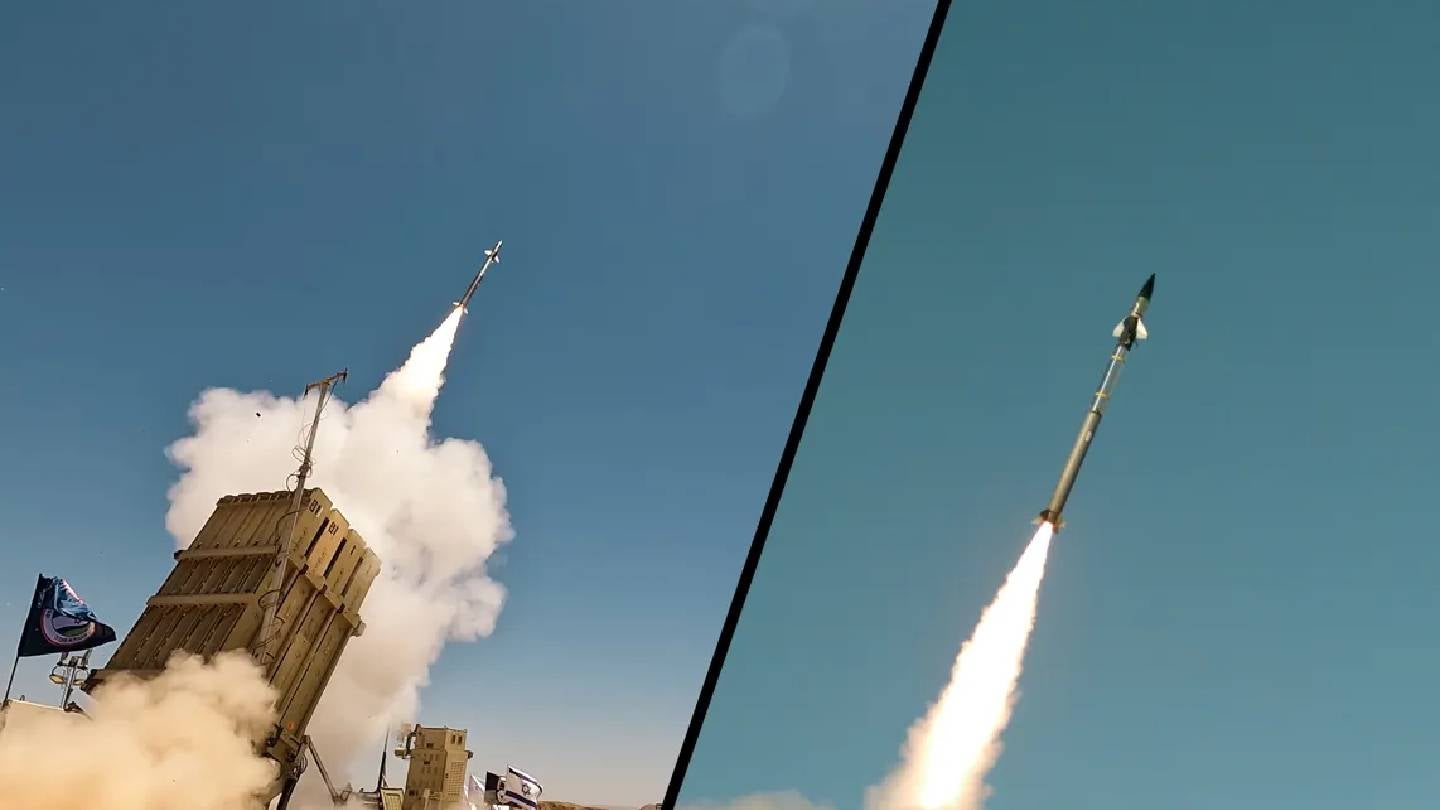
The Iron Dome was originally designed to intercept short-range missiles, artillery shells, and drones in a narrow Israeli environment, where distances are short and warning times are limited. One battery does not protect a country, nor even a large city entirely, but it can protect an airport, an airbase, an energy facility, or a command and communications node. Therefore, its presence in the UAE, if true, means that Abu Dhabi was looking for rapid point protection, not a comprehensive solution to the air defense problem.
Practically, this explains why the UAE turned to an Israeli system despite having advanced American and Western systems. Patriot and THAAD deal with different threats, especially higher-trajectory ballistic missiles. However, composite attacks that combine cheap drones, cruise missiles, and loitering munitions drain the more expensive missiles and expose gaps in the lower layers. Any military personnel who has served in the region knows that the problem is not just in purchasing the radar or the launcher, but in linking each layer to another within minutes, not hours.
The UAE Did Not Just Purchase a System but Borrowed an Operational Decision
The most important point in the Haaretz leaks and the CSIS analysis is not the name Iron Dome, but the issue of the presence of Israeli crews. When a Gulf state needs foreign experts to operate a sensitive system during a regional war, it means that the triangle of capability is incomplete. The equipment is present, the threat is present, but the training and institution have not reached the level of operational independence. In the Gulf, we like to count batteries and aircraft, but war counts working hours, maintenance lines, and decision-making speed.
This does not detract from the Emirati professionalism in building air and defense forces that are more disciplined than many Arab armies. The UAE has seriously invested in aviation, drones, air defense, and command and control. However, like the rest of the Gulf states, it faces a dilemma that cannot be solved by money alone. Israeli technology provides immediate capability, but it also brings with it political and operational dependency. Hence, the real question becomes not whether the Iron Dome works, but who holds the political activation button when the system is in Abu Dhabi and the crew is from Tel Aviv.
Iran Reads the Science on the System Before Reading Its Specifications
For Tehran, the introduction of an Israeli system into the Gulf theater is not an innocent defensive measure. Iran does not separate radar from political flags. If the Iron Dome appears in the UAE during a war involving Israel, the United States, and Iran, the Iranian message will be that Abu Dhabi has transformed from a cautious economic partner to part of the expanded Israeli defense structure. This is what turns the tactical interception gain into a political deterrence cost.
CSIS's analysis pointed out an important paradox: despite the UAE's strong relationship with Israel and its acquisition of the Iron Dome in Abu Dhabi, it was targeted more than any other Gulf state during the war. This sentence alone is enough to disturb the Gulf decision-maker. The public relationship with Israel is supposed to provide technology and deterrence, but it may also give Iran a propaganda and operational reason to expand its target bank. In my opinion, this is the lesson that Riyadh will read before Abu Dhabi does.
Saudi Arabia Sees the Emirati Experience as a Warning, Not a Model
Saudi Arabia is observing the matter from a different angle. The Kingdom wants the F-35 and clearer American guarantees and deeper air defense capabilities, but it does not want to pay the price of normalization that does not guarantee it full protection or reduce the risk of Iranian targeting. The Emirati experience tells Riyadh that Israeli technology may be useful in a critical moment, but it does not eliminate the account of Arab reputation or the account of Iranian retaliation.
This explains why the idea of regional Arab-Israeli air defense has not become an easy matter despite the clear military need. Militarily, linking Gulf radars, Israeli warnings, and American capabilities makes a lot of sense. The geography of the region demands it. The Iranian missile does not respect political borders, and the drone does not ask whether the sky is over the UAE, Bahrain, or Saudi Arabia. But politically, every data link with Israel needs a cover that is difficult to provide as long as Gaza, the West Bank, Syria, and Lebanon are present in the Arab consciousness.
Washington Pushes for a Regional Network but Does Not Guarantee the Cost of the Network
The United States has been trying for years to build an integrated air and missile defense in the Middle East. A regional security meeting led by CENTCOM with 12 countries in Bahrain, as reported this week, falls into this context. The American idea is simple and tempting: linking sensors, sharing early warnings, and distributing interceptions instead of each country acting alone. The problem is that Washington is asking allies to accept a network that has a political price, while the Iran War has proven that the American decision itself can come quickly and without sufficient consultation with Gulf capitals.
Here, the old Gulf paradox appears in a new guise. The more Iranian risks increase, the more Gulf states need the United States and Israeli technical capabilities. And the closer they get to this structure, the more likely they are to be treated by Iran as a direct party in a conflict they do not want to engage in. Purchasing air defense in this case becomes like putting on armor with a larger target drawn on it. Armor is necessary, but the drawing is not a detail.
Specifications Are Not Enough to Build Defensive Sovereignty
Technically, the Iron Dome is capable of dealing with short-range missiles, shells, and drones within a limited range, and its real operation depends on radar, software, decision speed, and missile inventory. However, in the Gulf environment, distances are wider, and vital installations are more dispersed, and the Iranian threat does not come from a single axis. Protecting Abu Dhabi or Dubai or energy facilities requires multiple layers that include space warning, long-range defense, ballistic missile interception, electronic jamming, and cheap systems against drones.
Therefore, the Iron Dome in the UAE is not a definitive answer, but a bandage on a deeper wound. The wound is the weakness of Gulf institutional integration. The Gulf Cooperation Council has the money, facilities, and bases, but it does not yet have a unified air defense command in the strict operational sense. Each country wants its own umbrella, and when war begins, it discovers that the sky is one. As the Arab proverb says, one hand does not clap, and in air defense, it does not intercept either.
Conclusion
The story of the Iron Dome in the UAE reveals that the Iran War did not make military normalization with Israel easier, but rather more complicated. The system may save a specific target on a difficult night, but it opens a larger question about sovereignty, dependency, and the cost of appearing in the Israeli trench. For the UAE, the benefit was immediate and limited. For Saudi Arabia and the rest of the Gulf, the lesson is broader: there is no defensive independence if the equipment is foreign, the operation is foreign, and the political decision is governed by two fears at the same time, the fear of Iran and the fear that the ally itself becomes an additional source of danger.
The Gulf equation after 2026 is no longer between buying weapons and not buying them, but between possessing the capability and possessing the right to use it without calling others into the command room.
Sources
- CSIS, How the Iran War Weighs on the U.S.-Saudi Partnership and Prospects for Normalization with Israel, July 6, 2026.
- Haaretz, Netanyahu Minister Confirms Israel Sent Iron Dome System to UAE During Iran War, July 5, 2026.
- CENTCOM, regional security dialogue with 12 nations in Bahrain, reported July 1, 2026.
Israel deployed the Iron Dome air defense system to the UAE on July 5, 2026, during the Iran War, along with Israeli personnel to operate it. This move indicates the UAE's need for rapid point defense amid regional tensions. Despite its partnership with Israel, the UAE faced increased targeting during the conflict, raising concerns about political and operational dependencies on Israeli technology.
- Israel sent the Iron Dome system to the UAE during the Iran War.
- Israeli personnel were deployed to operate the Iron Dome in the UAE.
- The UAE sought point defense rather than a comprehensive air defense solution.
- The deployment raises concerns about political and operational dependencies on Israel.
- The UAE experienced increased targeting despite its relationship with Israel.