
ISIS-Sahel displays weapons captured in Niger — three attacks reported and a warning for 2026
 Marie Dubois
ISIS-Sahel showcases captured weapons in Niger — three attacks reported and a warning for 2026
In Inates, in western Niger, war is not only measured by the number of dead. It is also measured by what remains on the ground after a garrison flees: artillery rockets, machine guns, anti-aircraft guns, and especially images that the enemy can then disseminate. On June 28, several Nigerian media outlets relayed a video attributed to the Islamic State showing a significant cache of weapons that was reportedly seized during an attack on a Nigerien base. MEMRI, for its part, reported that the Islamic State's Sahel Province had published photos documenting three attacks against the Nigerien army.
It is important to set the limit from the outset: the complete authenticity of the video, the exact origin of each weapon, and the actual quantity of the material shown have not been independently confirmed. But in operations, an unverified image can still produce a very real effect. It reassures fighters, attracts recruits, demoralizes isolated posts, and forces command staffs to revise their perception of risk.
Inates remains a fragile lock in the Liptako
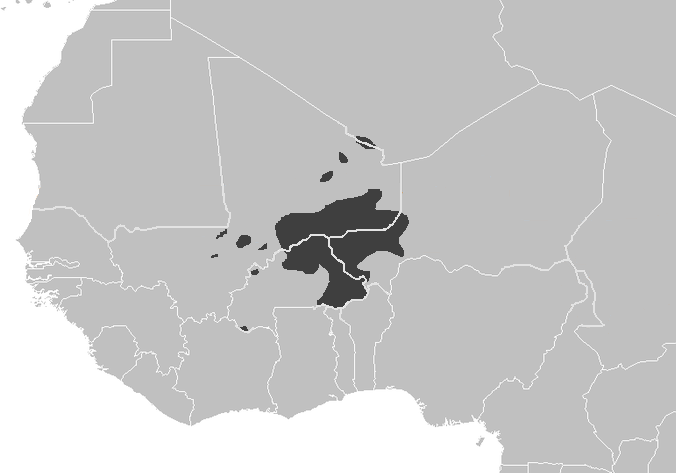
Inates is not just any point on the map. The locality is located in the Tillabéri region, near the Malian border, in that area of Liptako where tracks, dry riverbeds, and scattered villages matter more than administrative lines. For years, this part of Niger has formed a movement corridor between Mali, Niger, and Burkina Faso. It is ideal terrain for groups that know how to avoid main roads and strike detachments before reinforcements can arrive.
On the ground, an isolated base in this sector must do everything at once: protect its own perimeter, escort convoys, monitor villages, secure secondary routes, maintain communications, and keep enough ammunition for several hours of combat. If the attacker succeeds in cutting the alert, fixing the defenders, and entering the depot, the nature of the battle changes. They are no longer just looking to kill soldiers. They are looking to transform the state's arsenal into an insurgent logistical reserve.
The capture of weapons is worth more than a statement
The images described by Daily Post Nigeria and New Telegraph show, according to their articles, heavy or semi-heavy weapons: artillery rockets, machine guns, and anti-aircraft guns. Even if the list must remain cautious, the category of material is significant. In the Sahel, a heavy machine gun mounted on a pickup can alter the balance of an ambush. An anti-aircraft weapon used in horizontal fire can become a brutal tool against a forward post or a convoy. Rockets, even if poorly employed, offer a harassment capability that forces the opponent to disperse their positions.
This is not an industrial escalation. The Islamic State in the Sahel is not becoming a conventional army because it showcases weapons taken from a base. But it reduces its costs. Every recovered crate is one that it does not need to buy, transport from Libya, or smuggle through a criminal network. In a war of attrition, this is decisive.
There is also a psychological dimension. Sahelian groups have understood that attacking a camp produces two results: the tactical result, on the ground, and the narrative result, online. Photographs of loot speak to fighters more directly than a long statement. They say: the army abandons its weapons, we can take them, the border protects no one. It is crude, but effective.
Niger pays for geography and strategic isolation
Since the break with Paris and the departure of American forces, Niamey has sought to regain political control over its security space. This decision responded to a real demand for sovereignty. I understand it, including as a former French officer: foreign presence in the Sahel has often ended up becoming an argument for both the juntas and the jihadists. But a proclaimed sovereignty does not replace an intelligence chain, persistent ISR capability, medical evacuations, and theater logistics.
Niger thus finds itself with a very concrete problem. It must monitor a vast arc, from the Malian area to Lake Chad, with forces that must also secure cities, mines, roadways, and border posts. Russian or other partners can provide advisors, drones, or political discourse. They cannot, in a few months, rebuild a network of human and technical intelligence that takes years.
This reported attack in Inates is part of a larger series. JNIM has already demonstrated its ability to strike Niamey and threaten bases. The Islamic State, for its part, seeks to prove that it remains dangerous in border areas where media attention often shifts to Bamako or Ouagadougou. The competition between jihadist organizations does not always produce more territorial control; it often produces more tactical audacity.
The Nigerian risk is real but not automatic
Nigerian media have emphasized one point: there is no evidence that the weapons shown have been transferred to Nigeria. This is a necessary clarification. Too often, every incident in Niger is immediately transformed into a direct threat against Abuja. The reality is colder. Borders are porous, networks exist, but moving heavy weapons is not as simple as smuggling motorcycles or magazines.
The danger lies elsewhere. If armed groups can retain these weapons in Niger, even temporarily, they can protect their camps, escort columns, reinforce an attack against a post, or exchange part of the material for other resources. Northwestern Nigeria, the Lake Chad basin, and the Tillabéri-Gao strip are not a single unified theater. They communicate intermittently, through men, money, and opportunity.
For Abuja, the lesson is therefore less spectacular than an invasion scenario: it is necessary to follow the networks. Captured weapons change hands, sometimes quickly, sometimes in small quantities. A crate of ammunition today in Inates may reappear in an attack against a remote post six weeks later, without any statement announcing it.
What Sahelian armies need to correct
The first response is not to multiply large sweeping operations. In this region, they consume a lot of fuel, often warn the enemy in advance, and leave bases even more vulnerable while units are out. The priority is more prosaic: harden depots, disperse ammunition, improve observation posts, maintain truly mobile reaction teams, and prevent each garrison from becoming an open store after a breach.
It is also necessary to treat the recovery of material as a strategic indicator. When a group begins to regularly publish images of loot, it may signal a weakness in the defense of camps, but also a change in its ambition. Those who take rifles seek to endure. Those who take anti-aircraft weapons want to deny approach, intimidate helicopters, or at a minimum, gain that reputation.
In the Sahel, a captured weapon is never just a weapon. It is a proof of vulnerability offered by the state to its adversary.
The next point to watch is not the video itself. It is the area where this material will reappear. If Inates becomes a source of armament for other attacks in Tillabéri or towards the Malian border, Niamey will face a more serious problem than a successful raid: a logistical leak within its own apparatus. And in the Liptako, this kind of leak always ends up costing on a track, at the wrong moment, far from the cameras.
ISIS-Sahel exhibited captured weapons in a video, claiming responsibility for three attacks against the Nigerien army on June 28, 2023, in Inates, Tillabéri region. The group aims to demonstrate its ongoing threat in border areas, despite the lack of confirmed details regarding the weapons' origins. The situation highlights the challenges faced by Niger in maintaining security and sovereignty in the region.
- ISIS-Sahel exhibited a large cache of captured weapons in a video.
- Three attacks against the Nigerien army were reported.
- The authenticity of the video and the origin of the weapons are not independently confirmed.