
Israeli drone tested near tense Thai-Cambodian border
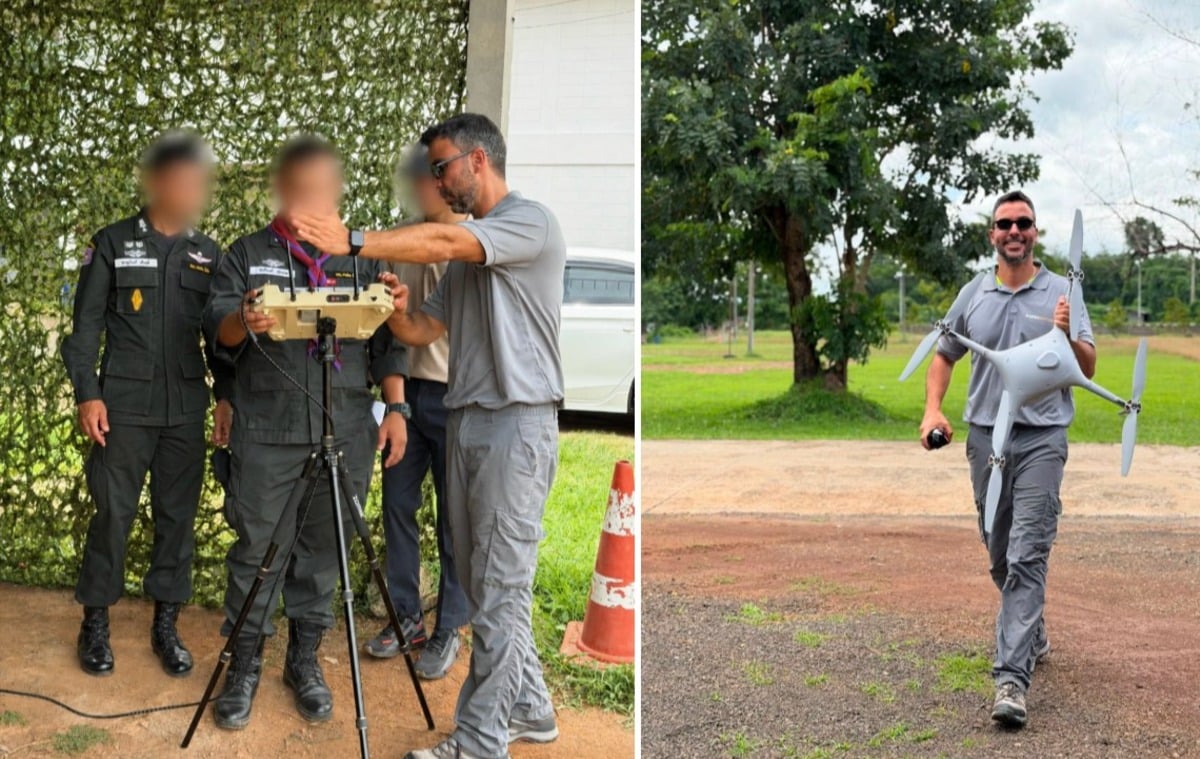
An Israeli-made surveillance drone has proved it can keep working even when the satellite navigation system it normally relies on gets jammed, a capability that could matter enormously along a border where two neighboring militaries have spent the past year accusing each other of flying hundreds of unauthorized drones overhead.
Aero Sentinel, an Israeli manufacturer of low-observable tactical drones, demonstrated its surveillance technology to Thailand’s Border Patrol Police near the Cambodian border, according to a social post from the company’s chief marketing officer, Ofir Avram.
The demonstration, led by Aero Sentinel’s chief pilot Or Shabat, took place in what the company described as complex terrain under GPS-denied conditions, meaning the drone had to operate without reliable access to the satellite positioning system most aircraft depend on to navigate accurately. GPS-denied environments occur when a signal is deliberately jammed or spoofed by an adversary, or when terrain and infrastructure interfere with satellite reception, and the ability to fly and complete a mission without that signal has become one of the most sought-after capabilities among militaries watching drone warfare evolve in conflicts from Ukraine to the Middle East.
Avram framed the trial as a strong showing for the company’s technology.
“We recently demonstrated by our chief pilot Or Shabat our capabilities to the Thai Border Patrol Police near the Cambodian border, operating in highly complex terrain and under challenging GPS-denied conditions. The demonstration delivered outstanding results, exceeding all expectations and proving our system’s reliability and operational effectiveness where it matters most. Mission accomplished. On to the next destination,” said Avram.
Thailand’s Border Patrol Police, known locally as Tor Chor Dor, is a paramilitary law enforcement agency under the Royal Thai Police that has operated along Thailand’s borders since 1951, historically taking the lead on counterinsurgency, border security and intelligence gathering in remote frontier regions rather than conventional military combat. The agency has a long history of working alongside the Thai military in border security operations, and its personnel are often the first responders in areas where tension flares between Thailand and its neighbors.
That tension has been running hot along the Thai-Cambodian border for more than a year. Fighting between Thai and Cambodian forces killed dozens of people and displaced more than a million residents during clashes that began in mid-2025, rooted in a long-running territorial dispute over the colonial-era demarcation of the roughly 800-kilometer (500-mile) border the two countries share. Even after the countries agreed to a ceasefire, the Royal Thai Army accused Cambodia of violating that truce by flying more than 250 unmanned aerial vehicles over Thai border provinces in a single night, prompting Thailand to impose a temporary nationwide ban on civilian drone flights and step up nightly military patrols in the affected provinces. Thai officials have separately released footage showing their own forces striking what they described as a Cambodian drone control center, underscoring just how central unmanned aircraft have become to the standoff on both sides of the border.
Against that backdrop, a demonstration proving reliable drone performance in GPS-denied conditions carries obvious appeal for a border security force operating in an environment where jamming and interference, whether accidental or deliberate, have become a routine hazard rather than a rare complication. Aero Sentinel has built its commercial reputation specifically around this kind of resilience, and the company has said its systems saw earlier real-world use during Israel’s 2025 military campaign against Iranian targets, where the drones were reportedly employed for sensitive intelligence missions aimed at identifying high-value targets inside adversary territory.
This latest Thailand demonstration lands amid a period of rapid expansion for Aero Sentinel across multiple international markets. The company has signed an exclusive distribution agreement with the German firm 2LNK GmbH to supply its G2 and G3 drone systems into Kazakhstan’s security and defense market, according to prior reporting from The Defence Blog, and the company recently confirmed it is scaling up serial production in Israel, buying components well ahead of need and adding capabilities like visual navigation, a technology that lets a drone determine its position using onboard cameras rather than relying solely on GPS, directly relevant to the kind of contested, jammed environment the Thailand demonstration was designed to test.
Content preview only. Full article available at source. View Full Article
Aero Sentinel demonstrated its Israeli-made surveillance drone to Thailand's Border Patrol Police near the Thai-Cambodian border, showcasing its ability to operate in GPS-denied conditions. This capability is significant given the ongoing tensions between Thailand and Cambodia, where both nations have accused each other of unauthorized drone flights. The demonstration highlighted the drone's reliability and operational effectiveness in complex terrain, amidst a backdrop of increased military activity along the border.
- An Israeli-made surveillance drone was tested near the Thai-Cambodian border.
- The drone demonstrated capabilities in GPS-denied conditions.
- The demonstration was conducted for Thailand's Border Patrol Police.
- Aero Sentinel has a history of providing drone technology for military operations.
- Tensions between Thailand and Cambodia have been high due to drone incursions.