
Ukrainian firm tests mobile version of its acoustic drone detector
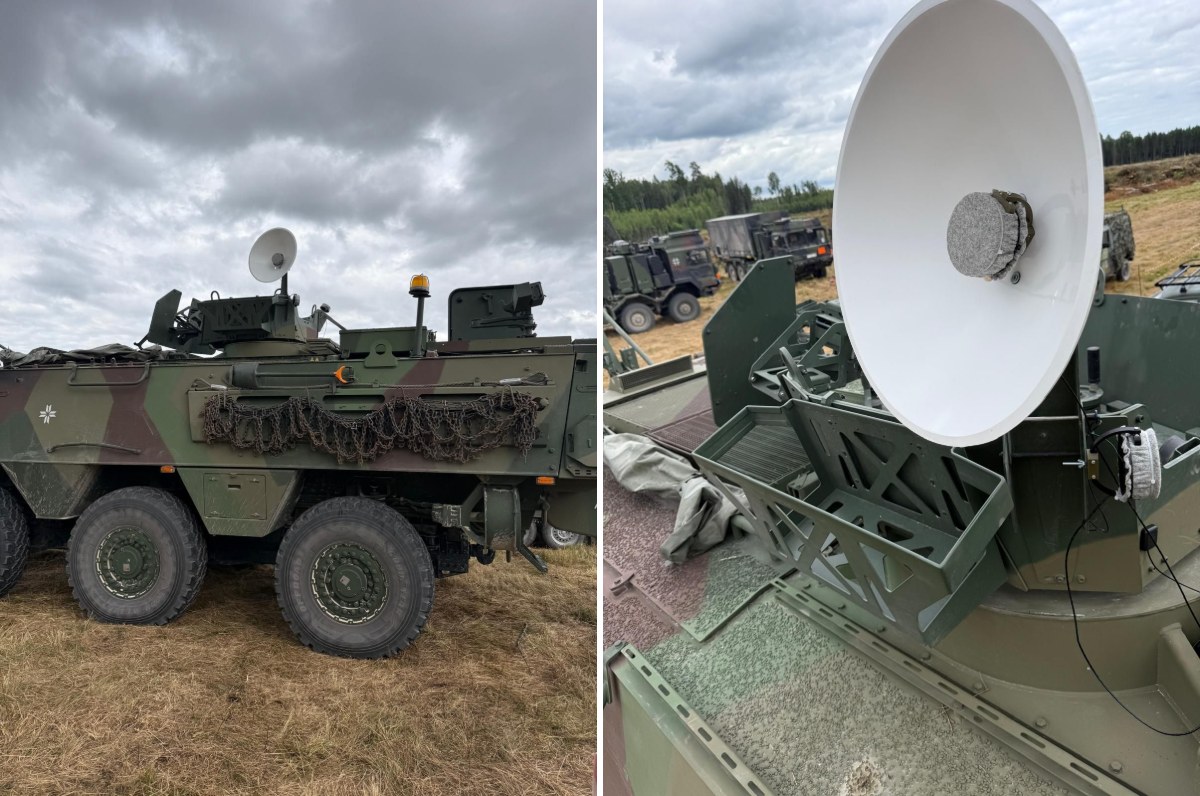
A Ukrainian company that built its drone-detection network by listening for the sound of incoming Shahed attack drones has tried something its own engineers had never planned for, and it worked well enough to change how the technology might be deployed across NATO’s eastern flank.
Zvook, a Ukrainian defense and space manufacturing company headquartered in Lviv, announced that during NATO’s BATT26 exercise it mounted its passive acoustic early warning sensors on a moving vehicle for the first time, working alongside the Latvian National Armed Forces to test whether a detection system built for fixed installations like telecom towers could function just as well rolling down a road.
Zvook’s technology works by listening rather than transmitting, a passive detection method that identifies drones through the distinctive sound signatures their motors and propellers produce rather than emitting a radar signal that could reveal a defender’s position to an enemy equipped with anti-radiation weapons. That approach has made the system one of the more closely watched pieces of Ukraine’s homegrown air defense infrastructure since the company’s sensors first went operational on Ukrainian frontlines in 2022, and Zvook has continued refining the technology throughout the war, including a compact tactical version specifically tuned to detect fiber-optic FPV drones, the small, first-person-view attack aircraft that have become a defining weapon of the conflict and are notoriously difficult for radio-frequency detection methods to catch.
Company representatives described the BATT26 experiment as a case study in how real defense innovation actually happens, framing the challenge not as a failure to plan properly but as an opportunity created by unplanned circumstances during a multinational exercise where several different systems had to work together inside a shared operational environment.
“Innovation doesn’t always begin in a laboratory. Sometimes it begins in the field. During BATT26, one challenge reminded us what defence innovation is really about. Multiple systems were being integrated into a shared operational environment. As often happens during experimentation, not everything worked exactly as originally planned. Instead of waiting for the ‘perfect’ solution, engineers, military personnel, and partners gathered around one simple question: How do we accomplish the mission?” the company said.
The company was candid that the mobile deployment did not perform flawlessly on its first attempt, describing the outcome as promising rather than polished.
“Together with the Latvian National Armed Forces, our team explored a different approach. For the first time, Zvook’s passive acoustic early warning sensors were mounted on a moving vehicle, something beyond our standard deployment concept, where sensors are typically installed on fixed infrastructure such as telecom towers or other permanent locations. It wasn’t part of the original plan. That is exactly why experimentation exists. The result? It worked. Not perfectly, there were challenges, valuable lessons, and improvements to identify. But the concept proved itself under operational conditions, opening new possibilities for future mobile deployments,” the company said.
Zvook’s core network inside Ukraine relies on sensors mounted permanently on radio towers and similar infrastructure at heights of roughly 10 to 12 meters (33 to 39 feet), positioned strategically near entry points along Ukraine’s border with Russia to catch incoming Shahed drones, cruise missiles and low-flying aircraft before they reach populated areas or critical infrastructure. That fixed network reportedly feeds detections into Ukraine’s Delta situational awareness system within about 12 seconds, giving mobile anti-aircraft teams equipped with tablets enough warning to intercept threats while they are still at range. A vehicle-mounted version of that same detection capability would open up an entirely different category of use, allowing a military to extend acoustic drone detection to convoys, mobile command posts, or rapidly repositioned units in a way that permanently installed towers simply cannot support, a capability with obvious relevance for NATO forces operating along a border where drone incursions have become a persistent, evolving threat rather than an occasional nuisance.
The company previously demonstrated its passive acoustic system at the Dronetex launch event at Odense Airport in Denmark, where it joined a coalition of European and Ukrainian defense firms, including DefSecIntel Solutions, Weibel Scientific, TYTAN Technologies and Marduk Technologies, to showcase how multiple combat-tested detection and counter-drone systems could operate together as an integrated architecture rather than as isolated products competing separately for the same procurement budgets. That earlier demonstration, and this latest experiment in Latvia, both reflect a broader pattern of Ukrainian defense companies using NATO exercises and multinational trials as a proving ground, seeking to translate battlefield-tested technology developed under wartime pressure into systems allied militaries are willing to adopt during peacetime procurement cycles that typically move far slower than Ukraine’s own innovation pace has demanded.
Zvook credited the Latvian Armed Forces and the BATT26 organizers directly for making the unplanned experiment possible, closing its announcement with a broader argument about how the company believes defense innovation should actually work going forward.
“A sincere thank you to the Latvian Armed Forces, the BATT26 organizers, and all partners who showed what true collaboration looks like. Because the future of defence will not be built by individual companies. It will be built by people who trust each other, solve problems together, and are willing to test what has never been tested before,” the company said.
Content preview only. Full article available at source. View Full Article
Zvook tested a mobile version of its passive acoustic drone detection system mounted on a vehicle during NATO’s BATT26 exercise in Latvia. This innovative approach, developed in collaboration with the Latvian National Armed Forces, aims to enhance drone detection capabilities by utilizing sound signatures instead of radar. The experiment demonstrated promising results, indicating potential for future mobile deployments in military operations.
- Zvook tested a mobile version of its acoustic drone detector during NATO’s BATT26 exercise.
- The system was mounted on a moving vehicle for the first time.
- The technology identifies drones through sound signatures rather than radar signals.
- The experiment was conducted in collaboration with the Latvian National Armed Forces.
- The mobile deployment opens new possibilities for drone detection in military operations.