
J-15T Ground-Based Full Process Training Accelerated, Fujian Ship 2026 High-Paced Deployment First to Supplement Personnel
 Li Minghui
J-15T Land-Based Full Process Training Accelerates, Fujian Ship to Operate at High Tempo in 2026, First to Supplement Personnel
On July 14, the People's Liberation Army Navy publicly released a set of not-so-exciting training footage of carrier-based aircraft: J-15 series planes completing takeoffs, landings, taxiing, and maintenance re-launch on a land-based simulated aircraft carrier deck. This detail is more worth watching than a promotional photo of a fully armed missile. In simple terms, what the Fujian ship really needs to supplement is not whether a single aircraft can be launched, but whether a complete set of personnel and processes can operate continuously.
Land-Based Training Focuses on Cycles, Not Single Landings
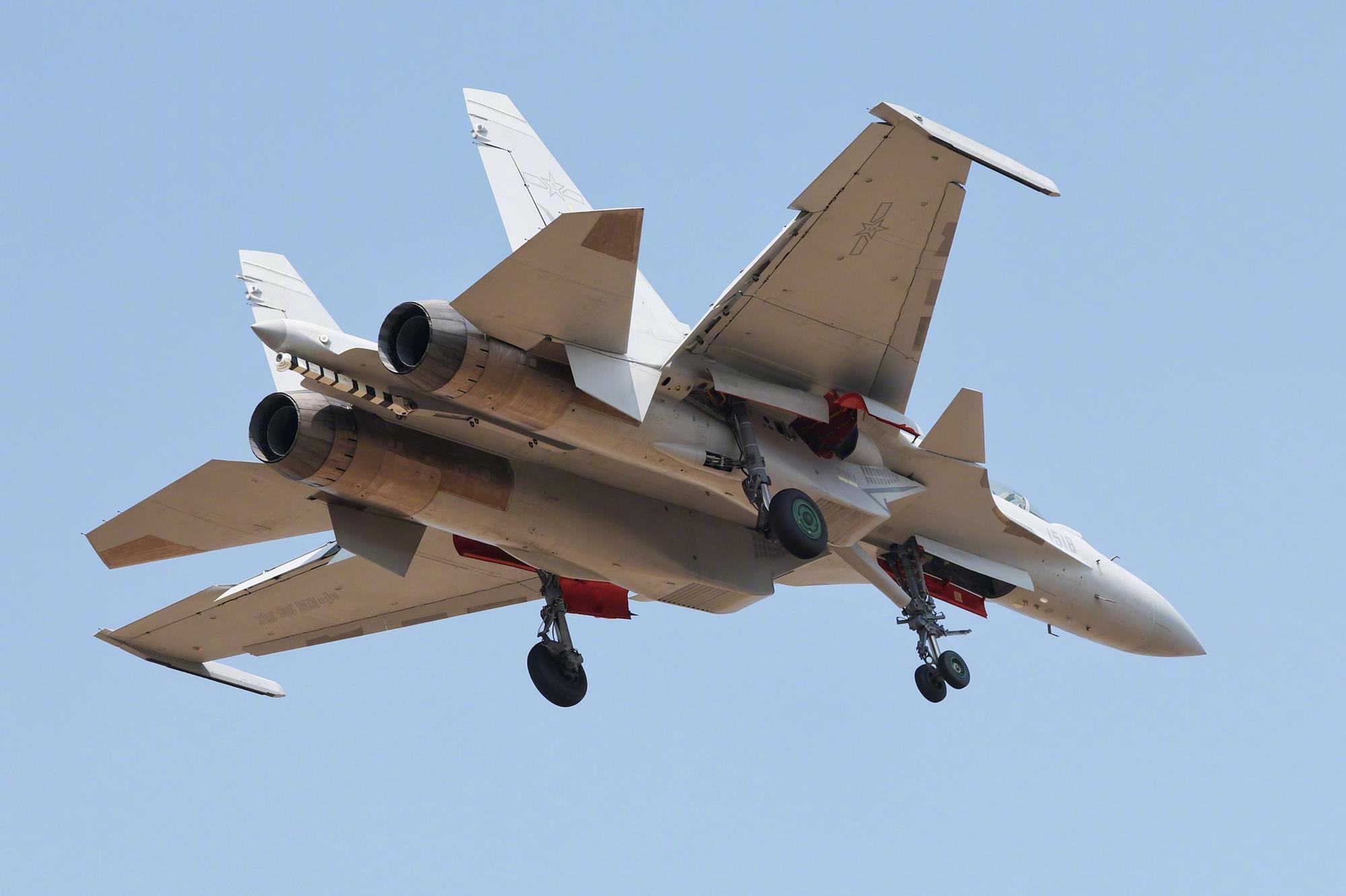
Army Recognition and Migflug both noted that this training used a land-based runway marked with carrier landing zone lines, focusing not on showcasing a specific maneuver, but on integrating pilots, landing command, refueling, armament loading, maintenance, towing, and launch personnel into the same closed loop. It is widely believed that similar training likely relies on the carrier aviation training system near Dalian, where jump ramps, arrestor gear, deck markings, and land-based catapult tracks have been observed for a long time.
The value of such venues is quite simple: making mistakes on land is cheaper than at sea. A qualified landing only proves that a pilot can land; continuous dozens or hundreds of full-process training sessions prove that the unit can rhythmically launch, recover, repair, and re-launch aircraft. I believe this is precisely the intermediate step for China's carrier aviation from "being able to use an aircraft carrier" to "using an aircraft carrier according to operational tempo."
The J-15T Changes the Choice of Takeoff Weight
The J-15 family remains the core of China's carrier aviation in terms of quantity. Public information generally states that the J-15 is approximately 21.9 meters long, has a wingspan of about 14.7 meters, and a maximum takeoff weight close to 33 tons, with about 12 hardpoints. Early J-15s on the Liaoning and Shandong ships were limited by jump takeoff, often having to make trade-offs between fuel and weapons, especially under short takeoff points, low wind speeds, or high-temperature conditions.
- The J-15T adds a catapult tow bar and strengthens the front landing gear to adapt to the Fujian ship's electromagnetic catapult.
- The new onboard radar and cockpit are believed to have upgrades, transitioning air combat weapons from PL-8 and PL-12 to PL-10 and PL-15.
- Images released in early July show a J-15T carrying four YJ-83K anti-ship missiles taking off from the Fujian ship; each YJ-83K weighs about 725 kilograms, with a warhead of about 165 kilograms and a commonly estimated range of about 180 kilometers.
This number does not seem exaggerated, but four YJ-83K missiles already approach 2.9 tons of external load, not counting air-to-air missiles, auxiliary fuel tanks, and jamming pods. The significance of the electromagnetic catapult is not to make the aircraft "automatically go farther," but to give commanders an additional choice between fuel, ammunition, and sortie frequency. Whether this choice can be realized again returns to the deck cycle and the proficiency of support personnel.
The Challenge of the Fujian Ship Lies in Mixed Fleet Operations
The Fujian ship is not only prepared for the J-15T. The U.S. Department of Defense's 2025 annual report and several defense media have mentioned that China's next step is to incorporate the J-35 stealth carrier-based aircraft, J-15D electronic warfare aircraft, KJ-600 fixed-wing early warning aircraft, Z-20 carrier-based helicopters, and several unmanned platforms into the carrier aviation group. The real complexity here is not the performance of individual aircraft, but the sequencing: who launches first, who occupies the deck, who recovers first, which aircraft needs refueling, and which batch of ammunition needs to be loaded onto the deck in advance.
Taking the KJ-600 as an example, it can fly higher and stay airborne longer than early warning helicopters, theoretically extending the detection and command radius of the carrier group. However, fixed-wing early warning aircraft will also occupy catapults, deck scheduling windows, and maintenance resources. If the J-35 is deployed on the ship, it will bring issues of stealth coating maintenance, dedicated support, and data link coordination. The "advancement" of the Fujian ship precisely means a longer support chain.
From Quantity Growth to Institutionalized Operations
Japan has previously reported that from May 25 to June 16, 2025, the Liaoning ship had approximately 550 fixed-wing aircraft and helicopters take off and land, while the Shandong ship had about 230. These numbers cannot be directly equated to wartime sortie rates, as mission duration, aircraft types, availability, and ammunition configurations are not transparent, but they at least indicate that the PLA Navy is accumulating large-scale deck cycle data.
Public sources indicate that the focus of the training on July 14 was to expand the pool of pilots and deck support personnel, rather than announcing that the Fujian ship has already achieved mature high-intensity combat capability. This distinction is very important.
My judgment is conservative: the key for the Fujian ship in 2026 is not whether it can complete a beautiful electromagnetic catapult launch, but whether it can integrate the J-15T, J-35, KJ-600, and J-15D into a stable day-and-night cycle. China's military industry has already solved the hardware thresholds for large ships and catapults; what remains to be seen is whether maintenance, ammunition, spare parts, and pilot training can keep up. The real unanswered question is, if deployed continuously at sea for 30 days, how many sorties with mission payloads can the Fujian ship reliably launch each day?
Main sources: Army Recognition, Migflug, and public reports from the Chinese military network.
On July 14, 2023, the People's Liberation Army Navy conducted training exercises for J-15T aircraft on a land-based carrier simulation in Fujian Province. The focus was on operational processes and crew training, emphasizing the need for continuous operational readiness. The J-15T is being prepared for electromagnetic catapult launches on the Fujian aircraft carrier, indicating advancements in naval aviation capabilities. The exercises involved multiple aircraft types, highlighting the complexity of future naval operations.
- J-15T aircraft conducted training on land-based carrier simulation on July 14, 2023.
- The training emphasized crew and operational process continuity rather than individual aircraft performance.
- The J-15T is being adapted for electromagnetic catapult launches on the Fujian aircraft carrier.
- The training involved multiple aircraft types, indicating a complex operational environment.
- The report highlights the importance of logistics and crew training for sustained naval operations.