
Japan Air Self-Defense Force F-2 Conducts First Test of Type 12 Air-Launched Missile, Realizing 1000-Kilometer Counterattack Capability
 Tanaka Takashi
Japan Air Self-Defense Force F-2 Conducts First Test of Type 12 Air-Launched Variant, Realizing 1000 km Counterattack Capability
On July 30, an F-2 from the Flight Development Experimental Group took off from Gifu Base carrying an unfamiliar large anti-ship missile. According to Naval News, this is the air-launched variant of the Type 12 surface-to-ship guided missile capability enhancement type, and it is said to be the first confirmation of an air self-defense force aircraft carrying it. The photo is publicly available information via local spotters and is not an official announcement from the Ministry of Defense. This point should be noted when reading.
Nevertheless, the significance on the ground is not small. Japan's "stand-off defense capability" is not a plan that is completed solely with the Ground Self-Defense Force's vehicle-mounted launchers; it becomes a deterrent only when linked with the Japan Maritime Self-Defense Force's escort ships, the Air Self-Defense Force's F-2, and future F-35s and unmanned systems. This F-2 integration test indicates that this third leg has entered the actual machine stage.
Changing the Meaning of Range with F-2 Integration
Traditionally, the Japan Air Self-Defense Force's anti-ship attacks have been based on relatively short to medium-range weapons represented by the ASM-1 and ASM-2. Naval News explains that the ASM-1 has a range of about 50 km and the ASM-2 about 200 km. In contrast, the air-launched variant of the Type 12 capability enhancement type is said to reach a maximum range of about 1000 km. Even a simple numerical comparison shows that the role of the F-2 shifts from "approaching enemy ships to attack" to "constraining maritime areas from outside the enemy's air defense zone."
The missile is reported to have a low-detectability shape and is equipped with an Up-To-Date Command (UTDC) function that updates target information after launch via satellite. Given that it will be used against moving surface ships, this function is not merely an additional feature. Without a mechanism for long-range accuracy and target updating, it could become a "weapon that just flies far" at sea.
Continuity with Ground-Based Type 25
This air-launched variant did not appear suddenly. In March 2026, the Ground Self-Defense Force deployed the Type 12 capability enhancement type to the Kengun Garrison in Kumamoto Prefecture, formalizing it as the Type 25 surface-to-ship guided missile. Naval News's March report positions this as Japan's first domestically produced stand-off missile in operational deployment. AP also reported that the Ministry of Defense prioritized long-range missiles and drones in the fiscal 2026 budget, advancing the initial deployment of the Type 12.
It is important to note that the ground-based, ship-based, and air-launched variants should not be viewed as separate systems. With vehicle-mounted launchers remaining in the southwestern islands, escort ships protecting maritime traffic routes, and the F-2 flexibly changing launch points, if all three are connected to the same target information network, the Chinese Navy's surface forces will face pressure from more directions than before when moving from the East China Sea to the Western Pacific.
Advantages and Disadvantages in Alliance Operations
For the Japan-U.S. alliance, domestically produced anti-ship missiles with a range of 1000 km do not replace the U.S. military's strike capabilities. Rather, the focus will be on how quickly the U.S. military's wide-area ISR, satellites, P-8A, unmanned systems, and submarine information can be connected with the Self-Defense Forces' island defense firepower. In my view, the challenges lie more in target identification before and after launch, engagement authority, and re-attack decisions than in the integration of the F-2 itself.
The Ministry of Defense is said to be advancing plans to develop low-orbit satellite constellations, target observation munitions, and tactical unmanned systems. This is a step in the right direction. However, peacetime monitoring and wartime fire control are different matters. Especially around the Senkaku Islands and the Miyako Strait, civilian ships, coast guard vessels, and naval ships may coexist in the same maritime area. A range of 1000 km also extends the political distance in case of misidentification.
Implications for Southwestern Defense
Reports indicate that Hyakuri Base is scheduled to be the deployment site for the F-2 starting in fiscal 2027. While Hyakuri is far from the southwestern islands, it holds significance as a maintenance and training base on the Honshu side. The question is to what extent forward deployment to the southwestern region is anticipated. The F-2 is limited in number and cannot avoid aging. Even with long-range missiles, if the aircraft, runways, air defense, ammunition depots, and maintenance personnel are dispersed and unable to survive, there is a risk of exhausting capabilities in a single day of simultaneous fire.
The value of the Type 12 air-launched variant lies not in the distance of 1000 km, but in the operational breadth that makes the opponent think, "I don't know from where I will be shot."
This test is a scene in the process of Japan shifting its counterattack capability from paper policy to operational deployment. It is a welcome advance, but overestimation is to be avoided. The true challenge lies not in the missile's range, but in the ability to continuously track maritime targets, share information within the alliance, and the time it takes for political decisions to authorize a launch. If that is delayed, even a 1000 km arrow will only be half its length on the battlefield.
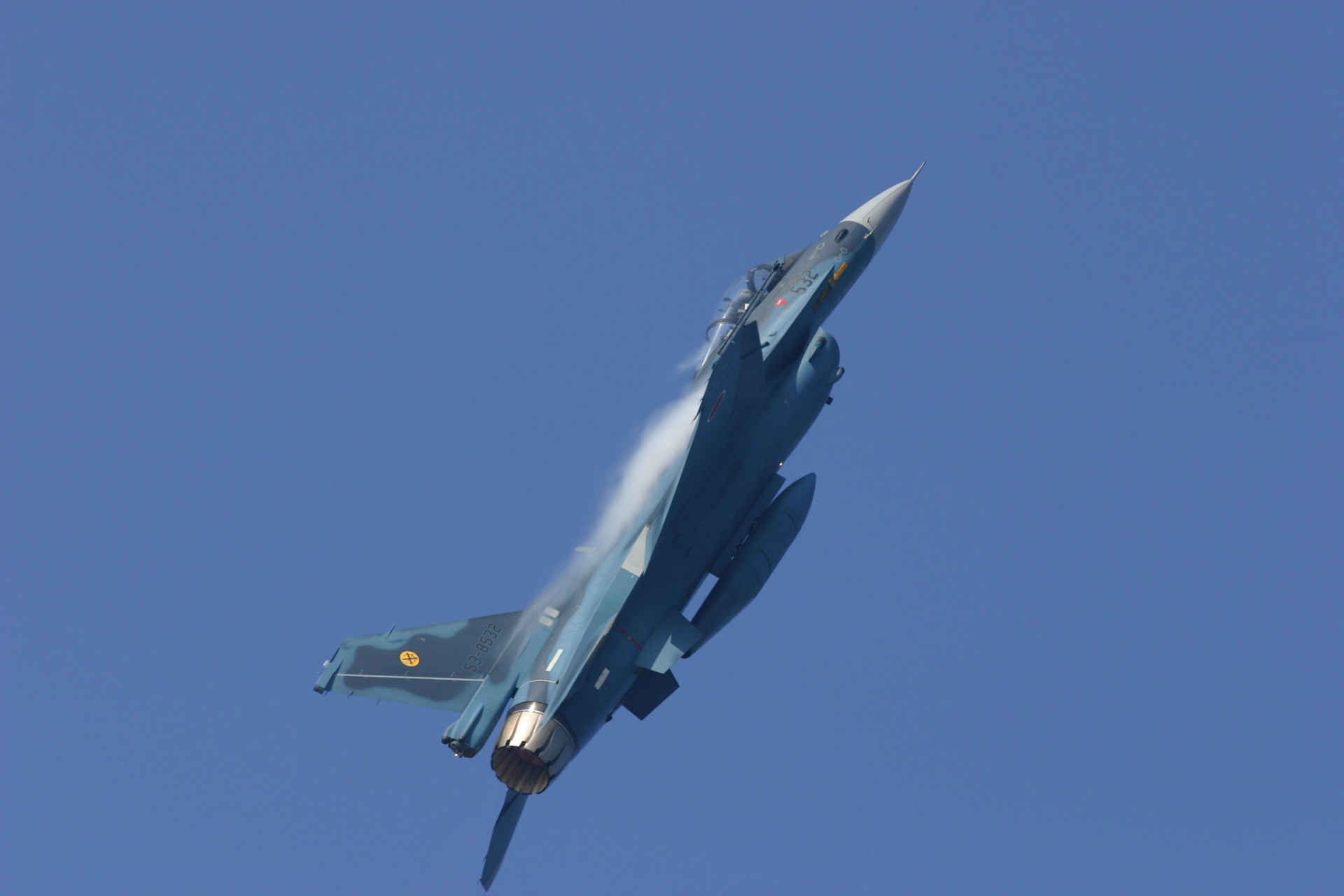
Image source: Photos published on the Japan Air Self-Defense Force website, via Wikimedia Commons, CC BY 4.0. The F-2 photo in the article is not from the day of the integration test but is a reference image of the Japan Air Self-Defense Force F-2 that will be integrated with the air-launched variant missile.
On July 30, the Japan Air Self-Defense Force conducted the first test flight of the Type 12 air-launched anti-ship missile at Gifu. This missile, with a range of approximately 1000 kilometers, enhances Japan's stand-off defense capabilities, allowing engagement from outside enemy air defense zones. The test signifies a strategic shift in Japan's naval engagement approach, integrating various platforms for a comprehensive defense strategy.
- Japan Air Self-Defense Force conducted the first test flight of the Type 12 air-launched anti-ship missile on July 30.
- The missile has a range of approximately 1000 kilometers, significantly enhancing Japan's stand-off defense capabilities.
- The F-2 aircraft is now capable of engaging targets from outside enemy air defense zones.
- The test indicates a shift in Japan's naval engagement strategy, moving from short-range to long-range capabilities.
- The integration of the Type 12 missile with various platforms (land, sea, air) is crucial for Japan's defense strategy.